
Last updated November 25, 2026
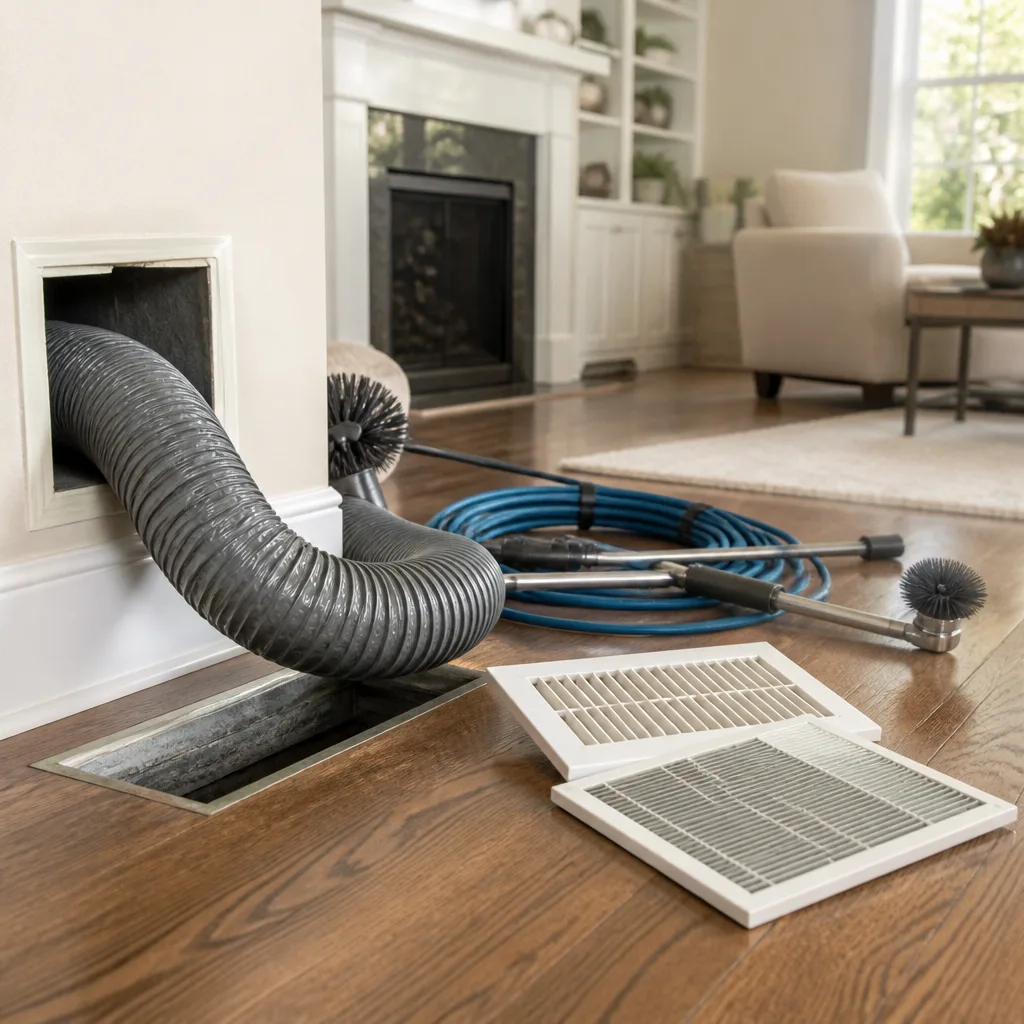 Whole-home duct cleaning
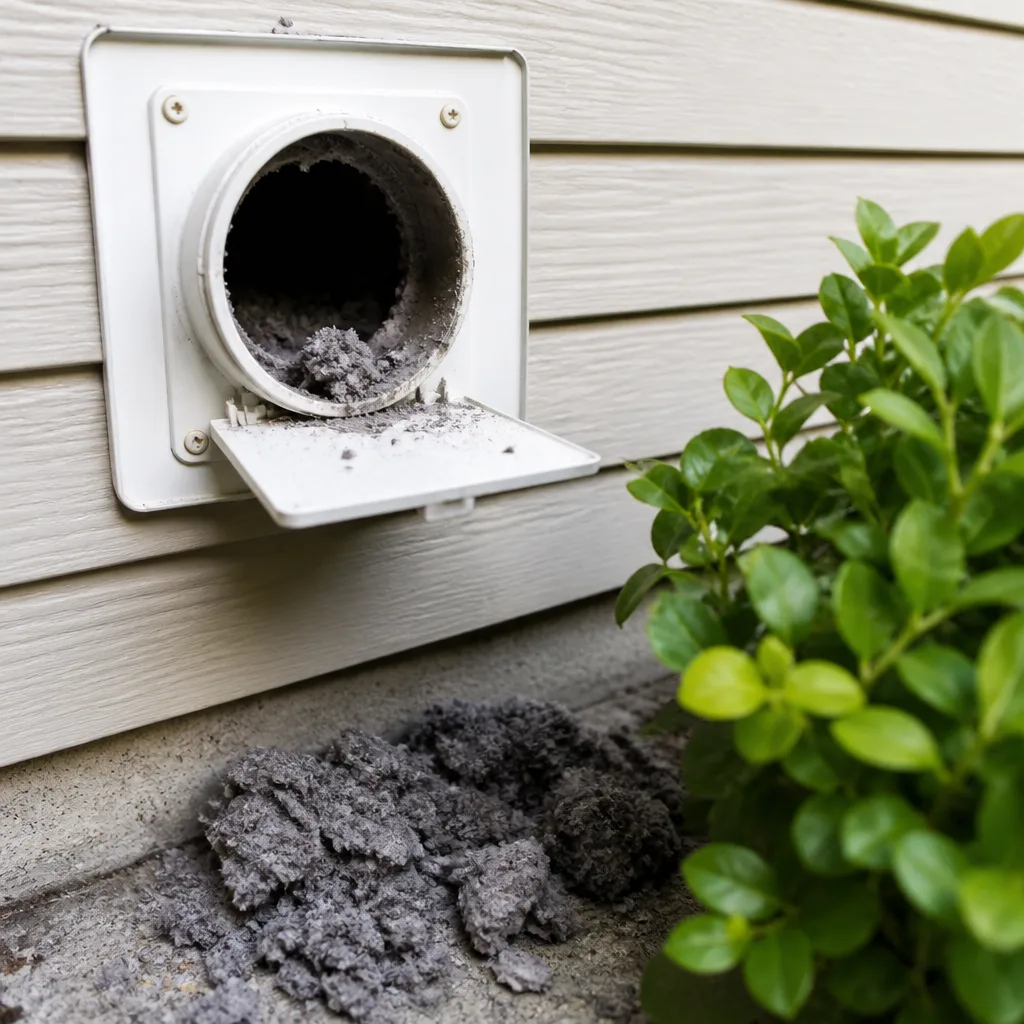 Dryer vent cleaning
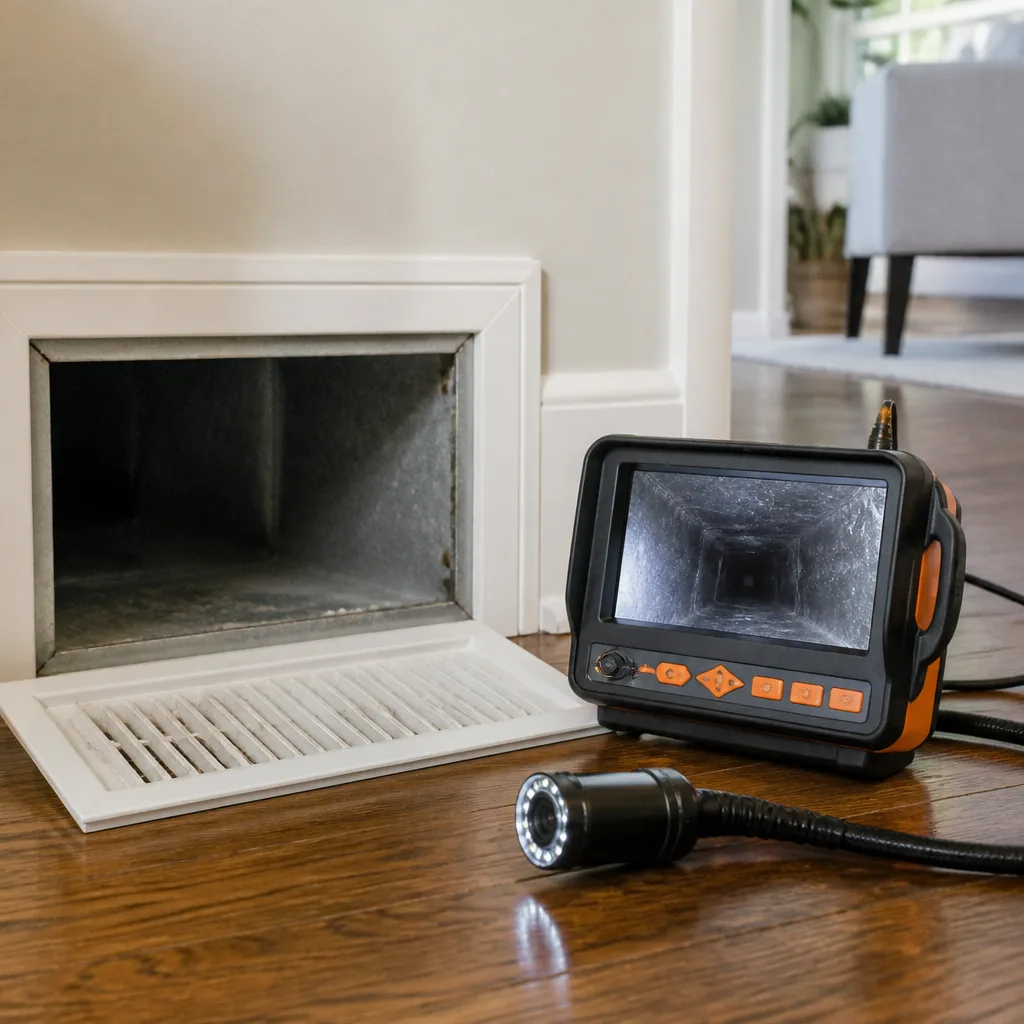 Camera inspection
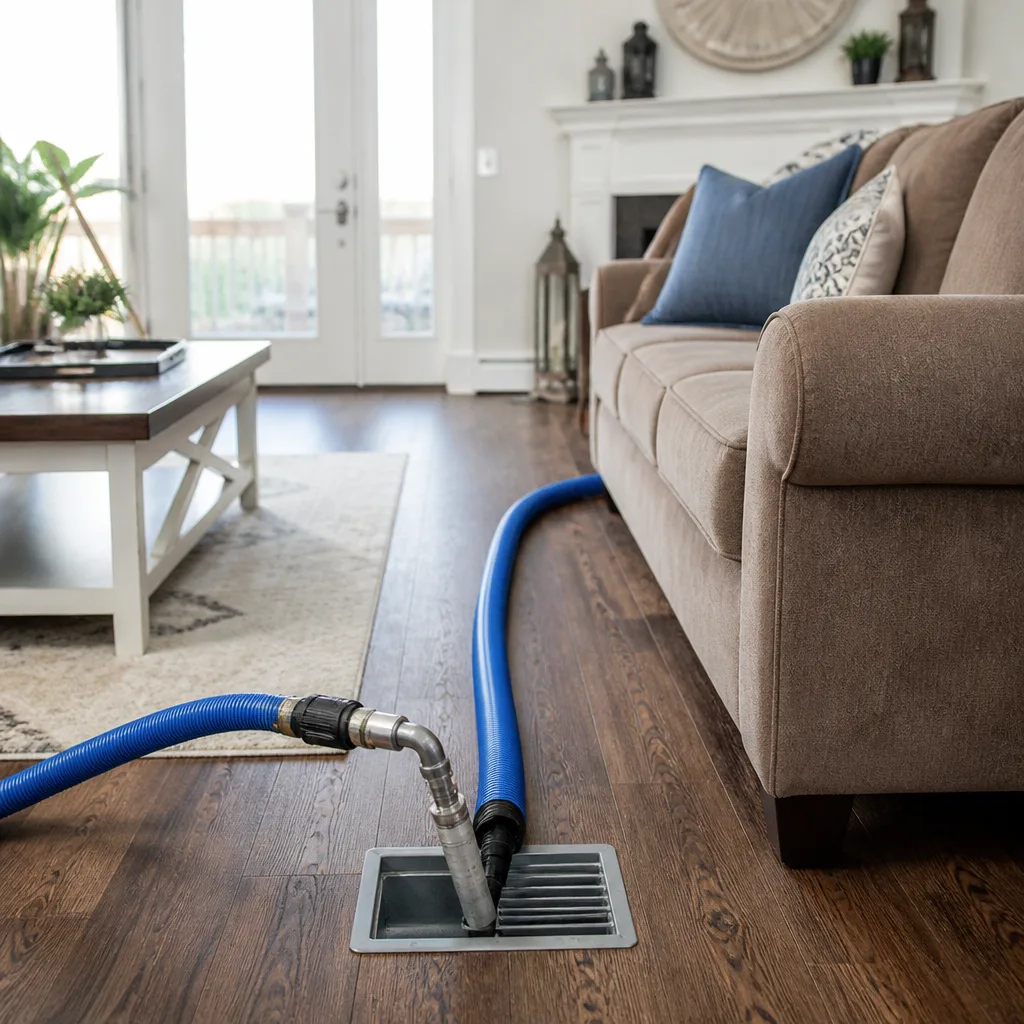 Sanitizing & deodorizing
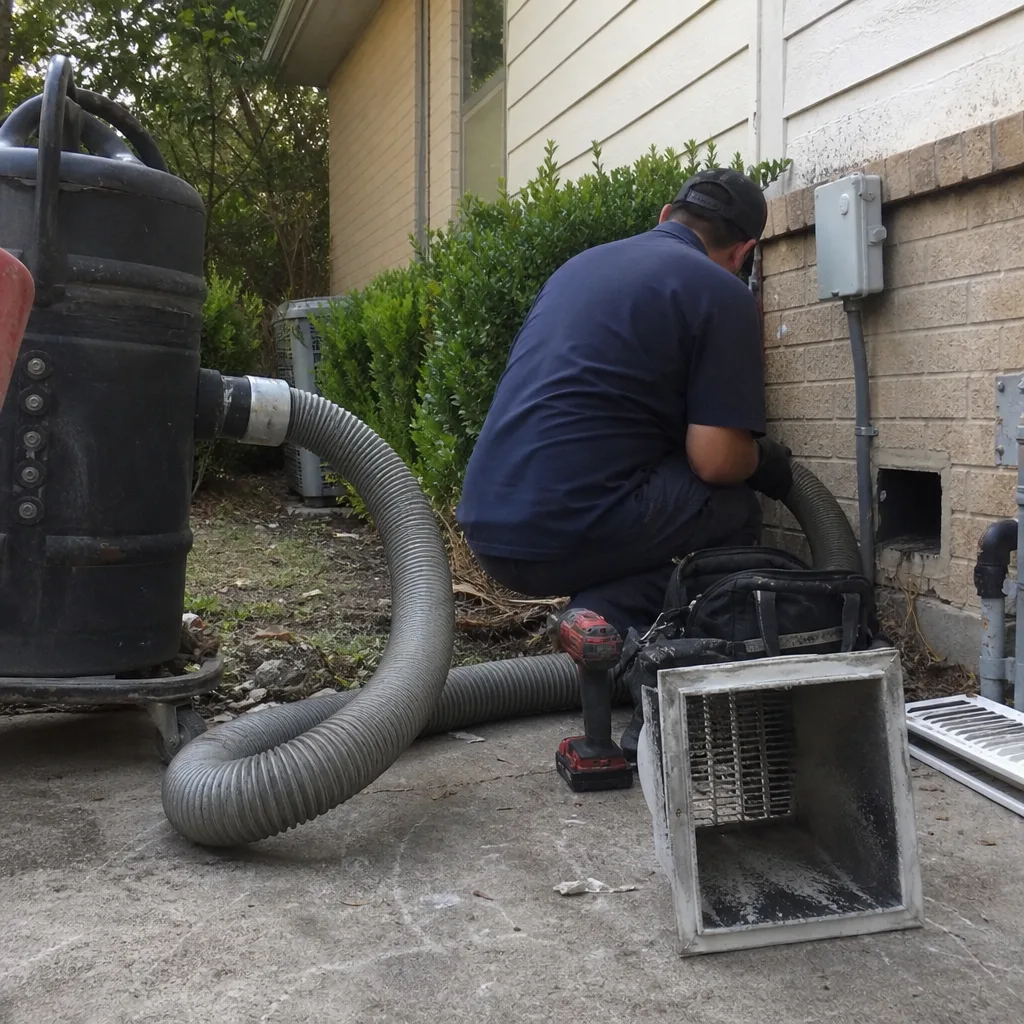
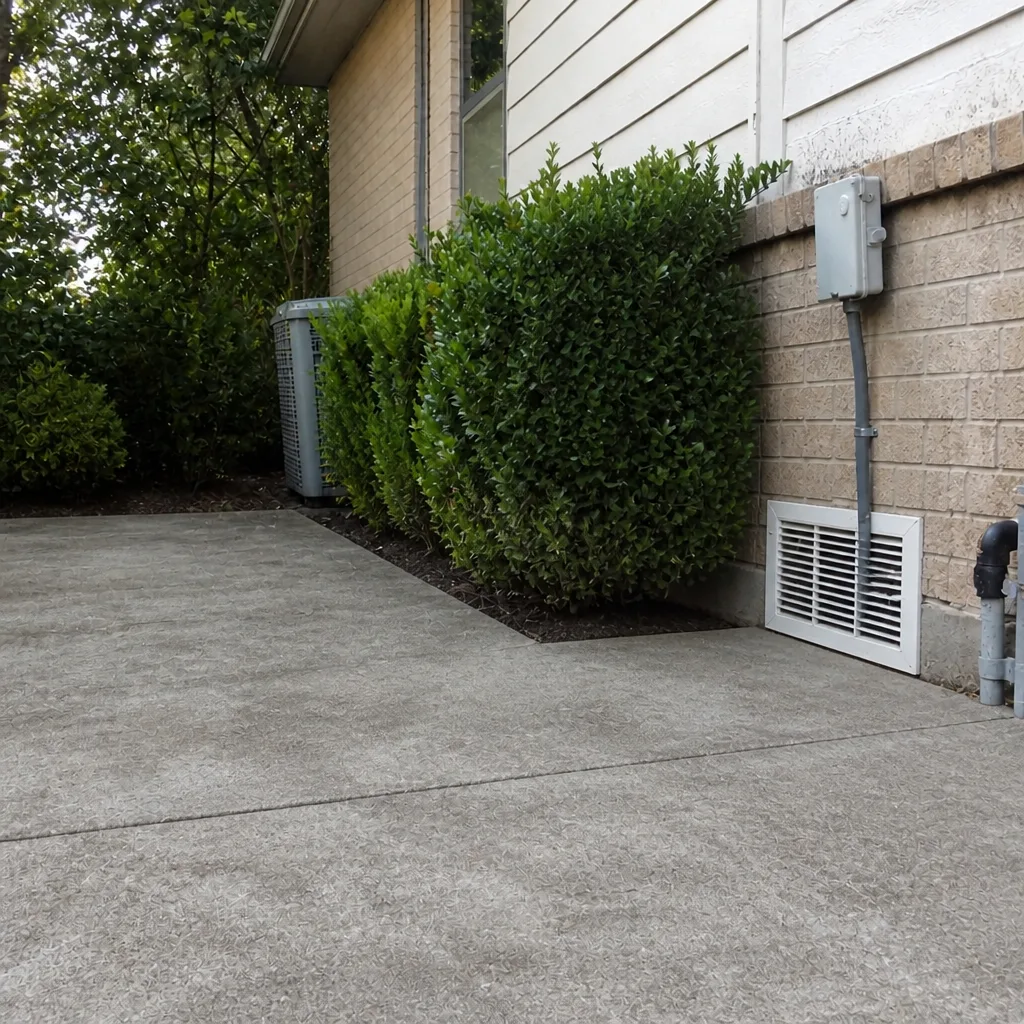
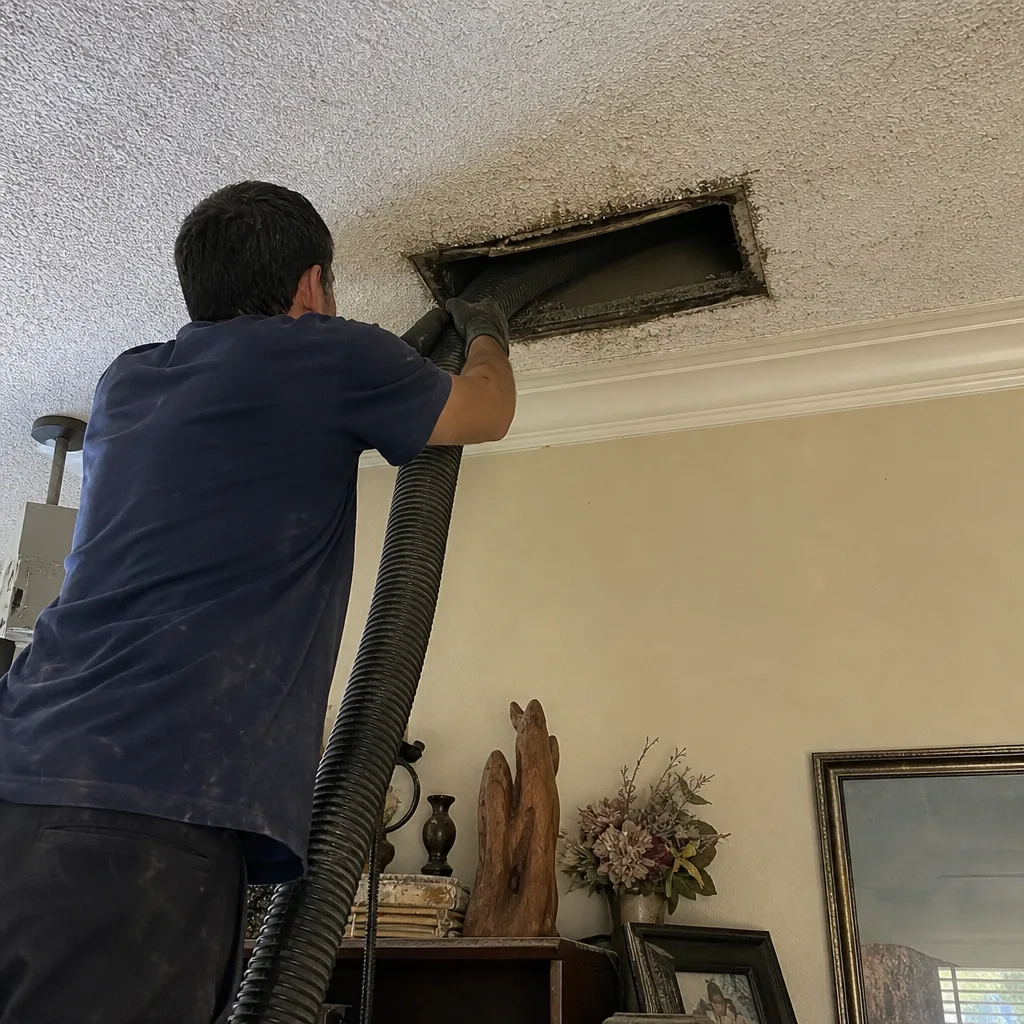
Whole-system duct and dryer vent check with before-and-after photos - you see exactly what came out of your vents
That "$99 whole-house special" is a bait ad - the real number appears once they are in your hallway, or the "clean" is a shop-vac at the register. We photograph the inside of your ducts before and after instead.
How to Hire an Air Duct Cleaning Contractor in Memorial: A Step-by-Step Guide
Texas does not license air duct cleaning contractors separately from HVAC work, which means anyone with a van and a vacuum can legally clean your ducts. That single fact explains why $49 coupon mailers land in Memorial mailboxes every week, and why so many homeowners end up with a surface wipe-down instead of a real cleaning. The company that shows up may have no more equipment than a shop vac and a drill-mounted brush. This guide gives you a technical interview framework, not a “check the reviews” checklist. You’ll learn the three equipment questions to ask before booking, how to read a written scope, and how to spot the solicitation tactics that show up across the Houston suburbs after every storm. Memorial homeowners deserve to know what’s actually entering their ductwork, and this guide gets you there.
Styles & brands we work with
- Whole-home duct cleaning
- Dryer vent cleaning
- Camera inspection
- Sanitizing & deodorizing
Quick Answer
Hiring an air duct cleaning contractor in Memorial means verifying equipment and method before price: ask for the collection unit’s CFM rating, confirmation that brush heads match your duct diameter, and whether the contractor uses source-removal or contact-vacuum cleaning. Confirm the contractor follows the NADCA ACR standard, requires a written scope and photo documentation before work starts, and quotes a whole-system flat price rather than a per-vent figure. Texas has no separate duct cleaning license, so equipment verification is your only real protection against a low-ball quote that balloons on site.
Table of Contents
- Why Texas Doesn’t License Duct Cleaners and What That Means for You
- The Three Equipment Questions to Ask Before You Book
- Why NADCA and the ACR Standard Beat Any Review Rating
- Houston-Area Red Flags: Door-to-Door Canvassing, Per-Vent Pricing, and “Mold Found” Scripts
- How to Verify the Contractor Is Really Using the Equipment They Claim
- What a Legitimate Pre-Work Walkthrough Looks Like
- Reading the Written Scope: What Should Be in It
- What Duct Cleaning Should Cost in Memorial
- Common Mistakes to Avoid
- When to Call a Professional
- Frequently Asked Questions
- The Bottom Line
Why Texas Doesn’t License Duct Cleaners and What That Means for You
Texas regulates HVAC contractors through a state licensing framework, but air duct cleaning is not a separately licensed trade. A company that cleans ducts does not need a duct-specific license to operate legally in Memorial. That’s not a loophole; it’s just how the state code is structured, and it’s the same across most of the country. The practical consequence is simple: the license you’d normally use as a quality filter doesn’t exist here, so you have to filter on equipment and method instead.
What does exist is the ACR standard, the Assessment, Cleaning, and Restoration standard published by the National Air Duct Cleaners Association (NADCA). It defines what a source-removal cleaning actually involves: assessment before cleaning, containment where needed, mechanical agitation of the entire interior surface, negative-pressure collection, and verification after. A contractor who follows ACR will tell you up front what they’re going to do, because the standard requires it. A contractor who doesn’t follow it will talk about price per vent.
In Memorial, that difference is not abstract. The housing stock around Memorial Villages and the neighborhoods off Memorial Drive is mostly older construction, often with ductwork that’s been retrofitted, extended, or resealed more than once. Flexible duct runs, transitions at plenum connections, and coil assemblies get missed by contractors who only clean what they can see through the register grill. The best question you can ask isn’t “are you licensed?” It’s “walk me through your method from the air handler to the last register.” A specialist will answer in detail. A generalist will change the subject back to price.
One more local wrinkle: because Memorial is inside the Houston metro, the duct cleaning market here is dense. You’ll see ads from carpet cleaners, general handyman services, and HVAC repair companies that offer duct cleaning as an add-on. None of those are automatically a bad option, but none of them carry equipment built specifically for duct work. When a company runs plumbing, roofing, and duct cleaning out of the same van, the duct cleaning equipment is usually the compromise.
The Three Equipment Questions to Ask Before You Book
Ask these three questions on the phone, before the appointment, and write down the answers. If the person on the other end can’t answer them, that’s the answer.
1. What is the CFM rating of your collection unit?
CFM stands for cubic feet per minute, and it’s the measure of how much air your contractor’s collection unit can move. A truck-mounted or high-powered portable vacuum in the professional range moves far more air than a shop vac. The reason this matters is simple physics: source-removal cleaning relies on negative pressure to pull dislodged debris out of the system before it settles back into the ductwork. If the vacuum can’t keep up with the agitation tool, the debris you just loosened lands right back in the same run.
Ask what unit they’ll bring and what CFM it’s rated for. Legitimate Rotobrush and Nikro systems are built for this work, and a specialist will know the number off the top of their head.
2. Will your brush heads fit my duct size?
Duct cleaning brushes come in different diameters, and the brush has to match the duct. Too small and it skims the surface; too large and it can damage flex duct or get stuck at a transition. A contractor with only one brush size is a contractor who cleans one size of duct. Ask whether they carry multiple brush diameters and whether they’ll check your duct size during the walkthrough before choosing the tool.
3. Do you use source-removal or contact-vacuum cleaning?
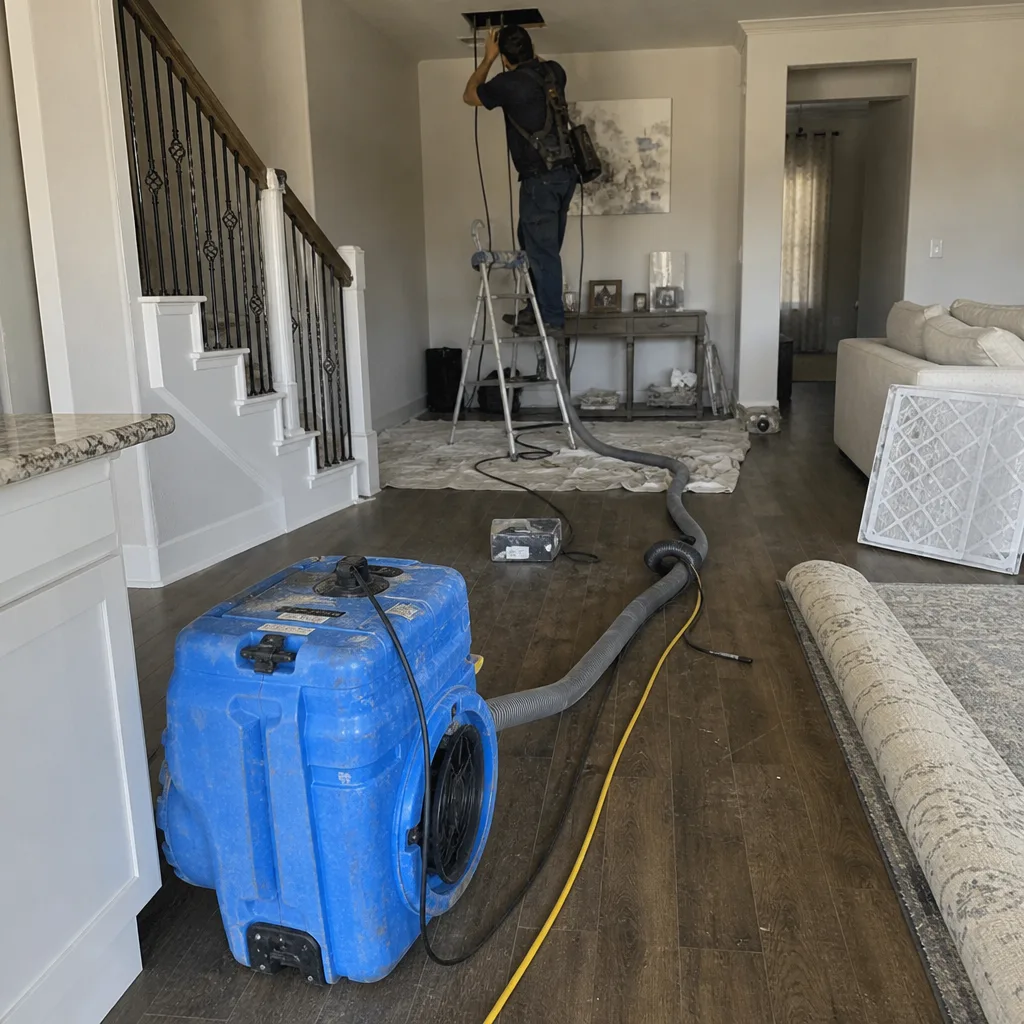
Contact-vacuum cleaning uses a high-powered vacuum at each register to pull surface debris out of the visible opening. It’s part of the job, but it doesn’t clean the duct interior. Source-removal cleaning uses mechanical agitation (a rotating brush or air whip) fed through the duct work to dislodge debris along the full length of the run, combined with negative pressure to collect it. ACR-standard work is source-removal. If a contractor describes their process as “vacuum at each vent,” that’s contact-vacuum only, and it doesn’t meet the standard.
Why NADCA and the ACR Standard Beat Any Review Rating
A five-star review tells you someone had a good experience. It doesn’t tell you what happened inside their ducts. In an unlicensed trade, a review platform rating is a snapshot of customer service, not technical quality. A contractor can be polite, punctual, and still clean ducts with equipment that doesn’t meet the job. Ask instead whether the contractor follows NADCA’s ACR standard, because the standard is specific enough to be checked.
ACR covers six things, and each one is a benchmark you can verify:
- Assessment of the system before cleaning, including visual inspection with a camera where needed
- Containment to keep debris from migrating into living space during cleaning
- Source removal using mechanical agitation along the full interior surface
- Negative-pressure collection to pull debris out of the system
- Cleaning of components: registers, grills, plenum, coil, and air handler connections
- Post-cleaning verification and documentation of what was cleaned
You don’t have to memorize the standard. Ask a prospective contractor two questions: “Do you follow the NADCA ACR standard?” and “Will you show me before-and-after photos of my own system at the end?” A specialist says yes to both without hesitation. A company that can’t answer either one is selling price, not process. On a scheduled job like this, no one is buying speed. They’re buying the certainty that every run got cleaned and that the debris actually left the house.
In Memorial, that means the technician should be able to tell you which runs feed which rooms, which ones are flex versus rigid, and where the system has been extended or modified. That knowledge only comes from specializing in duct work. If you want a contractor who does only this, that’s the point: Air Duct Cleaning Memorial exists specifically for that reason.
Houston-Area Red Flags: Door-to-Door Canvassing, Per-Vent Pricing, and “Mold Found” Scripts
Storm season brings a specific kind of solicitation to the Houston suburbs. A crew shows up at the front door after a heavy rain with a story about dust or debris in the ducts, offers a coupon price, and books you on the spot. Some of those crews are legitimate. Many aren’t, and the pattern is recognizable.
Door-to-door canvassing after a storm
Legitimate duct cleaning is scheduled work, not emergency work. Nobody needs ducts cleaned inside twenty minutes. A contractor who arrives uninvited with a discount offer and a stack of appointments is running a volume operation. Ask them to leave a card and call the number on it later, after you’ve looked them up. If they’re genuinely established in Memorial, the number will reach the same business.
Per-vent pricing
Per-vent pricing is the single biggest predictor of a bait-and-switch. A quote of “$59 per vent” or “$89 for the first ten vents” sounds linear until the technician is on site and “discovers” that your system has sixteen vents, two returns, and a plugged coil. The price climbs, and the homeowner is stuck because the equipment is already in the driveway. A legitimate specialist quotes a whole-system flat price per system, in writing, before work starts. Anything else is a moving target.
The “mold found” upsell script
Microbial contamination in ductwork is real, and treating it is legitimate work. But the script goes like this: the technician opens the register, shines a flashlight, points at a dark spot, and announces “mold” with no testing and no scope change. Then comes the pitch for a treatment at a price that dwarfs the original quote. Red flag. A source-removal specialist with real air-quality capability (equipment like Abatement Technologies filtration and containment units) uses that equipment because it isolates and verifies, not because it makes a better pitch. Mold assessment should come with photo documentation, an explanation of what was seen and where, and a separate written scope before any treatment is agreed to.
Coupon pricing that resets on site
The “$49 whole home” coupon is a lead-generation tool. The price on the coupon pays for the appointment, not the cleaning. When the technician arrives, the scope changes. Treat any quote below the honest whole-system range as the opening line of a negotiation, not the price of a job.
How to Verify the Contractor Is Really Using the Equipment They Claim
Every legitimately specialized duct cleaning contractor in Memorial will name the equipment they use. Ask them to do more than name it. Ask them one question: “Before the truck leaves, can I see the serial number plate on the Nikro or Rotobrush unit you’re bringing?”
Why this works: professional-grade equipment is manufactured by specific companies, and each unit carries a serial plate. A contractor who really owns a Rotobrush or a Nikro system will know exactly where the plate is and won’t hesitate to show it. A company that claimed the equipment to close the sale and doesn’t actually own it will stall, change the subject, or tell you the plates aren’t “relevant to the work.” They are relevant. They’re the only physical proof you have that the tools the sales call promised will show up at your door.
A few other checks that take less than a minute:
- Ask what vehicle will arrive. Professional duct cleaning equipment is bulky and heavy enough that it travels in a dedicated rig, not a sedan with a shop vac in the trunk.
- Ask whether agitation tools and collection unit are both brought inside. Source-removal cleaning requires both. A technician who arrives with only a vacuum doesn’t have the equipment to do the method they quoted.
- Ask to see the equipment at the start of the walkthrough, before any cleaning begins. This is a normal request and a specialist will happily show you.
- Ask whether the unit has a HEPA or multi-stage filter stage. Collection equipment that returns filtered air to the room protects your living space during the job. Professional-grade systems include that stage.
- Watch for compressed-air “whip” tools and camera inspection gear. Both are standard on a professional cleaning. The absence of either tells you the contractor’s process is narrower than it should be.
This one verification step filters out most of the market noise. A shop-vac plus wand operation can’t produce a serial number on a Rotobrush or Nikro unit, because it doesn’t have one. Asking for it takes thirty seconds, and it tells you more than any review site.
What a Legitimate Pre-Work Walkthrough Looks Like
The walkthrough is where you find out whether the company is a specialist. Before any equipment enters the home, a proper walkthrough takes fifteen to thirty minutes and looks like this:
- System mapping. The technician identifies every supply register, every return, and the air handler location, and traces which runs serve which rooms. In Memorial homes with additions or retrofits, this step often turns up ducts that don’t appear on the county records. A technician who skips it is guessing.
- Photo documentation. Registers, plenum connections, coil surfaces, and any visible debris are photographed before cleaning. Those photos become the “before” in your before-and-after record, and they lock in what was found on arrival.
- Visual and camera inspection inside the runs. A camera on a flexible wand lets the technician see the interior of the ducts and confirm the condition of flex runs, transitions, and connections. If your system has any ductwork that’s been improperly spliced or disconnected, this is where it shows up.
- Leak check at joints and plenum connections. Sealing is part of the job, not an add-on. Loose connections waste the conditioned air you’re paying to cool in a Houston summer, and they pull unfiltered attic air back into the system.
- Written scope before any equipment comes in. The scope names what will be cleaned, what will be treated, what will be repaired, and the flat price for each. It also states what is not included, which is the part bait-and-switch contractors leave out.
If a contractor arrives, walks to one register, and starts talking price, you’re not in a specialist’s walkthrough. You’re in a sales call. The full version takes longer and produces a document you can compare against another quote.
When a walkthrough does turn up leaks or disconnected runs, repair and sealing can often be handled in the same visit. That’s an argument for hiring a company that does air duct cleaning and duct repair under one roof, rather than needing a second vendor for the fix. Our technicians have up to 13 years of experience with this equipment, and Duct Repair & Sealing is part of the same visit.
Reading the Written Scope: What Should Be in It
Ask for the scope in writing before booking. Any contractor confident in their work will produce one. The document doesn’t need to be long, but it should name every line item for the specific system in your home. Here’s what to look for:
- Number of supply registers and returns, named individually, not “up to 12”
- Whether the air handler and coil are included (they’re separate cleaning targets and should be listed)
- Method: source removal with mechanical agitation, stating the equipment line (Rotobrush, Nikro, or comparable)
- Containment and filtration: what equipment will protect the living space during cleaning
- Sanitizing or air-quality treatment, if it’s been recommended, with the equipment and any product named
- Repairs or sealing disclosed in the walkthrough, with a flat price attached to each
- Photo documentation: before, during, and after, provided to you at the end
- Flat price for the whole system, not a per-vent line
If the scope only lists a number of vents and a price, push back. If it names a “system sanitization” without telling you what’s in the product or what equipment is being used to apply it, push back. The scope should be specific enough that a second contractor could read it and know exactly what was promised.
What Duct Cleaning Should Cost in Memorial
Air duct cleaning in Memorial typically runs in the range of a few hundred dollars for a straightforward single-system home and more for larger systems with multiple returns, coil cleaning, and sealing included. Prices in the Houston metro track with system size and how much work the walkthrough turns up, not with per-vent counts. A whole-system flat quote is the honest format.
- Standard whole-system cleaning (typical single-system home): quoted as a flat price per system, based on the walkthrough scope
- Coil and air handler cleaning: usually included in the scope or quoted separately with the flat price for the system
- Sanitizing or air-quality treatment: quoted per job based on which areas need treatment and the equipment used to apply it
- Duct repair and sealing: quoted per job based on what the walkthrough found
The written estimate sets the final price, and it’s determined before any equipment enters your home. If a contractor can’t tell you the price until they start the job, that’s a per-vent structure wearing a flat-price costume. Walk away. In Memorial, the honest pricing conversation happens on the walkthrough, or on the phone if the system is straightforward.
Something else worth knowing: a company that specializes in duct work alone will often give a tighter quote than a generalist, because the equipment is already paid for and the process is routine. When we quote a system in Memorial, the price reflects the walkthrough and the equipment, and it doesn’t move after the crew arrives. Call (833) 468-3620 for a free estimate.
Common Mistakes to Avoid
- Booking on a coupon price alone. The coupon is a lead generator, not a quote. Ask for the flat system price over the phone before you schedule, and get it in writing.
- Skipping the walkthrough because the contractor offered to “just get started.” The walkthrough is where the scope and price are set. Without it, the technician is diagnosing on your dime, and the quote can move mid-job.
- Hiring a company that offers duct cleaning as an add-on. When the same crew runs plumbing, roofing, and duct work, the duct cleaning equipment is the first thing trimmed for cost. Nothing wrong with a one-trade business, but the equipment is what matters, not the number of services.
- Accepting a “mold found” diagnosis with no testing or scope. Ask for photo documentation, an explanation of what was seen, and a separate written scope with a flat price before agreeing to treatment.
- Ignoring dryer vent cleaning because it seems like a separate service. In Memorial homes where the laundry room is far from an exterior wall, dryer vent runs get long and accumulate lint. It’s a fire-safety service, and it should be offered in the same visit rather than outsourced.
- Assuming a high review count is a quality signal. In an unlicensed trade, reviews measure customer service, not process. Ask about ACR adherence and equipment instead.
- Not asking whether repair and sealing are available. A cleaning that leaves leaks and loose joints in place wastes the conditioned air you’re paying to cool. A specialist who can also repair and seal saves you a second call.
When to Call a Professional
Duct cleaning is scheduled work, not emergency work, so the trigger is usually one of a few scenarios. Call when you’ve recently finished a renovation and drywall dust has migrated into the returns and registers. Call when a new HVAC system has just gone in, because installers can leave debris, tape, and shavings inside the runs. Call when allergies or respiratory sensitivities in the household have increased and the filters aren’t keeping up. Call when the ducts haven’t been cleaned in many years and you can see debris at the register openings. Call when the dryer is taking longer to dry clothes, because that’s the first sign of a restricted dryer vent cleaning need. And call when you’re ready to have the hvac cleaning side of the system checked along with the ducts, since the coil and air handler are part of the same air path. Air Duct Cleaning Memorial offers free estimates in Memorial – call (833) 468-3620. We answer 24/7. Fast dispatch from 7am to 7pm, Sunday through Friday.
Frequently Asked Questions
No. Texas does not license air duct cleaning contractors separately from HVAC, so any company can legally clean ducts in Memorial without a duct-specific license. That’s why equipment verification matters more here than in licensed trades: ask for the CFM rating of the collection unit, confirmation of brush-head compatibility with your duct size, and whether source-removal or contact-vacuum cleaning is used. Call (833) 468-3620 for a free estimate from a specialist.
Air duct cleaning in Memorial is quoted as a flat price per whole system, based on the walkthrough scope, and typically falls into a range that scales with system size, number of returns, and whether coil cleaning, sanitizing, or sealing are part of the job. Per-vent pricing looks cheaper on the phone but almost always climbs once the technician is on site. Call (833) 468-3620 for an exact quote – estimates are free.
Cheap quotes are cheaper because the equipment is cheaper and the method is narrower. A $49 coupon buys a contact-vacuum pass at the registers, not a source-removal cleaning of the full duct interior. A quote that stays low through a full walkthrough and a written scope is the honest version. Call (833) 468-3620 and we’ll walk you through what a legitimate scope should include.
Ask for before-and-after photos of your own system, taken during the walkthrough and after cleaning, plus the serial plate on the collection unit that was brought to the job. Any legitimate specialist will provide both without being asked. A contractor who can’t produce documentation of the equipment and the work is asking you to take their word for it. Call (833) 468-3620 for a free estimate with a documented scope.
Most Memorial homes can go several years between cleanings if the system is well-sealed and filters are changed on schedule, and more often after a renovation, a new HVAC installation, or a period of heavy dust. The honest answer depends on what the walkthrough finds, not a fixed calendar. Call (833) 468-3620 and we’ll tell you what your system actually needs.
A source-removal cleaning requires a high-CFM collection unit, multiple brush-head diameters for different duct sizes, a camera for inspecting inside the runs, and filtration equipment to protect the living space. In our work, that’s Rotobrush and Nikro collection systems, with Abatement Technologies filtration units brought in for sanitizing jobs where containment matters. Ask for the equipment names and the serial number, and don’t schedule until you have an answer. Call (833) 468-3620. We answer 24/7. Fast dispatch from 7am to 7pm, Sunday through Friday.
The Bottom Line
Texas doesn’t license duct cleaners, so the hiring decision comes down to equipment and method. Ask the three equipment questions before booking: CFM of the collection unit, brush-head compatibility with your duct size, and source-removal versus contact-vacuum method. Confirm ACR adherence and a written scope with photo documentation before any equipment enters the home. Refuse per-vent pricing and treat any “mold found” diagnosis without testing as a red flag. Verify the equipment with a serial number request. Do that, and Memorial homeowners can tell a specialist from a sales call in about fifteen minutes. It’s a scheduled job, so there’s no rush, and no reason to accept anything less than a documented process. Call (833) 468-3620 for a free estimate from Air Duct Cleaning Memorial. We answer 24/7. Fast dispatch from 7am to 7pm, Sunday through Friday.
Written by the team at Air Duct Cleaning Memorial.
See the difference
 Before
 After
 Before
 After
 Before
 After