
Last updated November 25, 2026
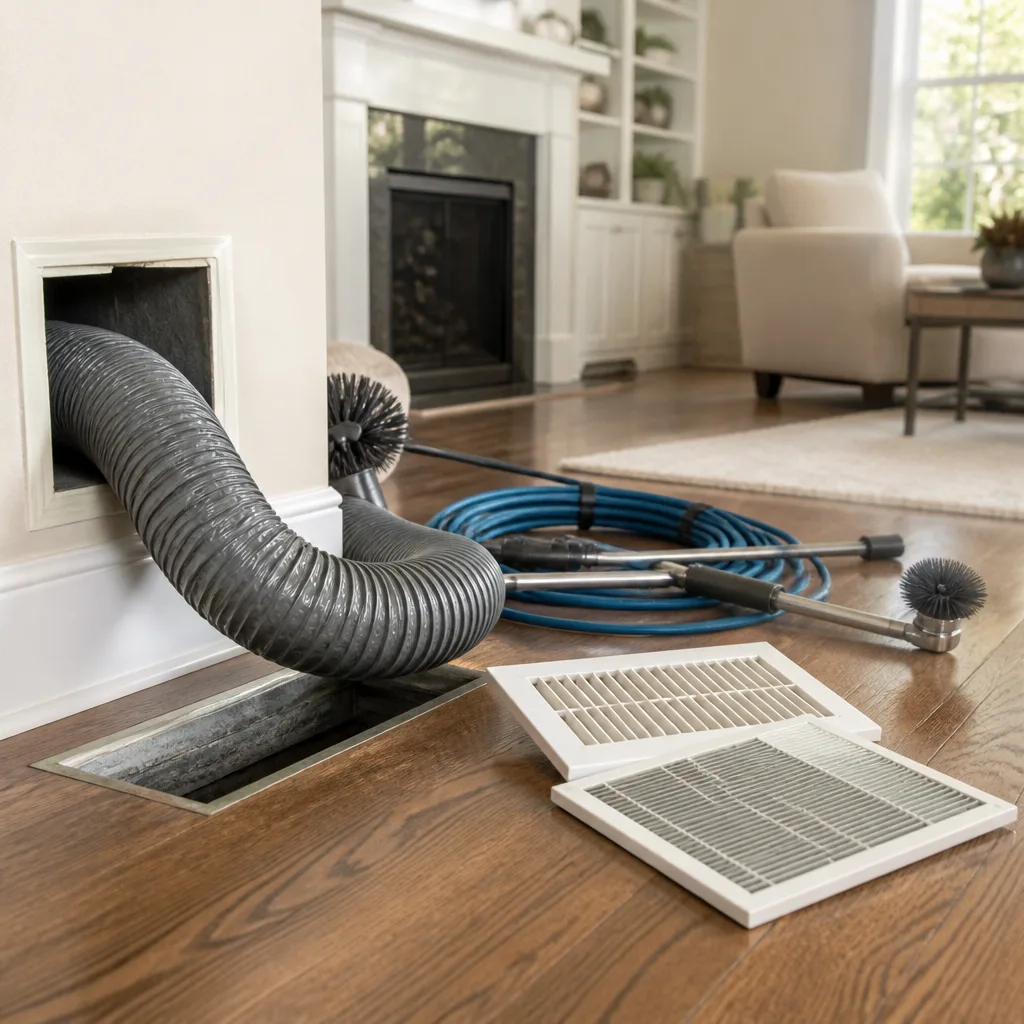 Whole-home duct cleaning
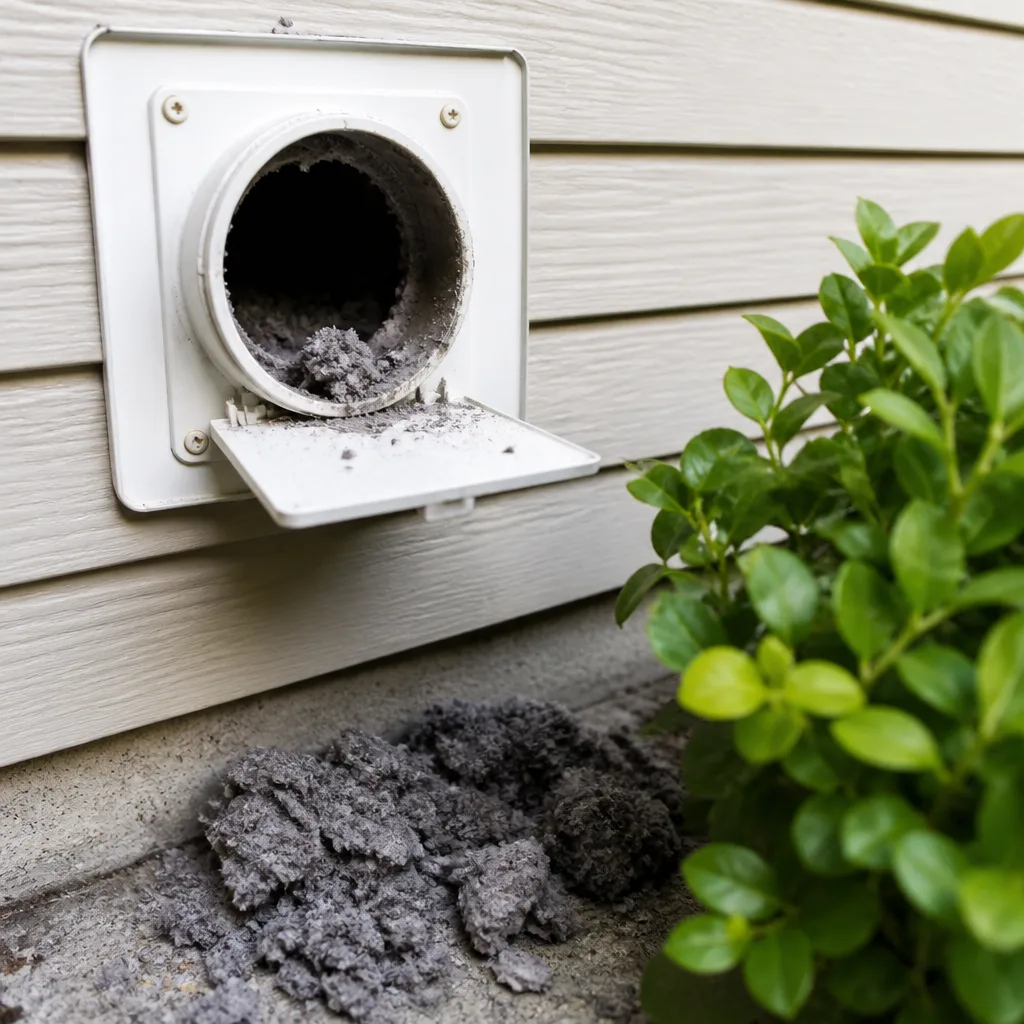 Dryer vent cleaning
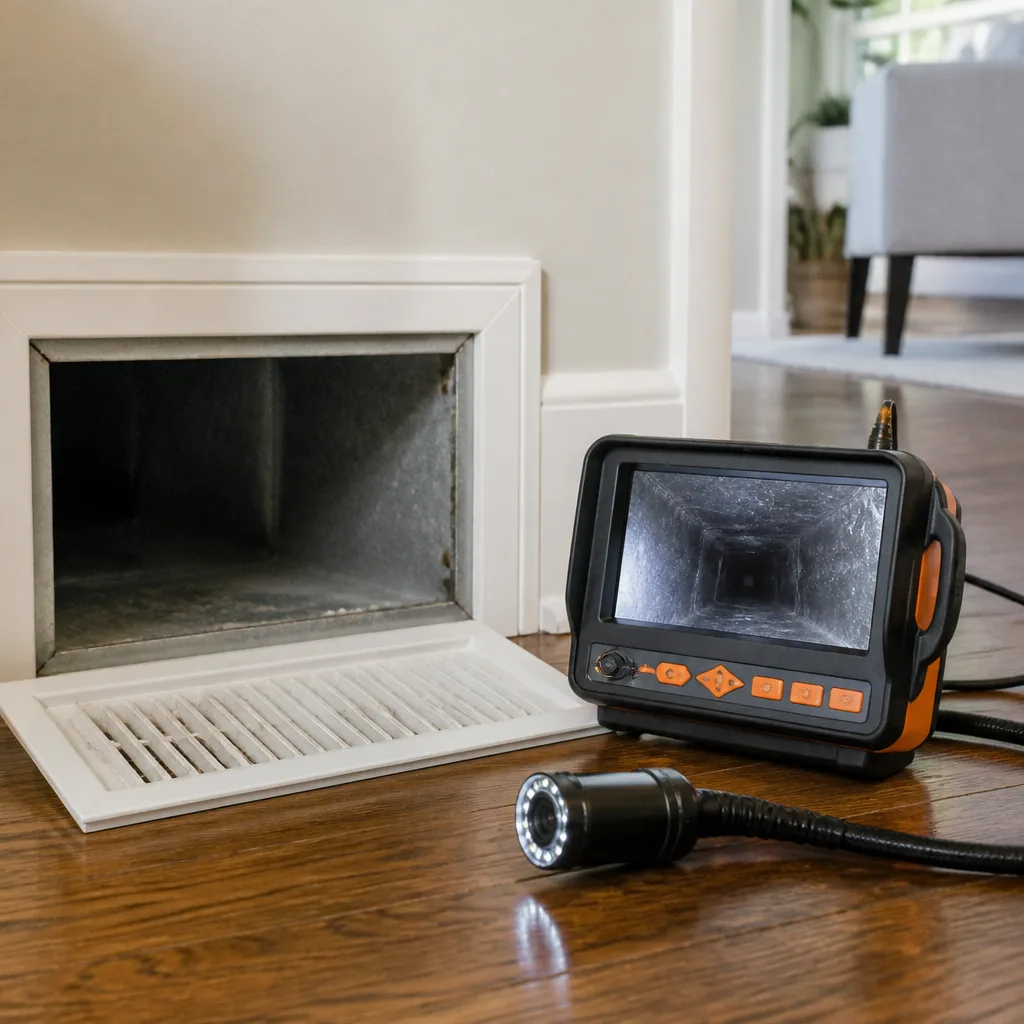 Camera inspection
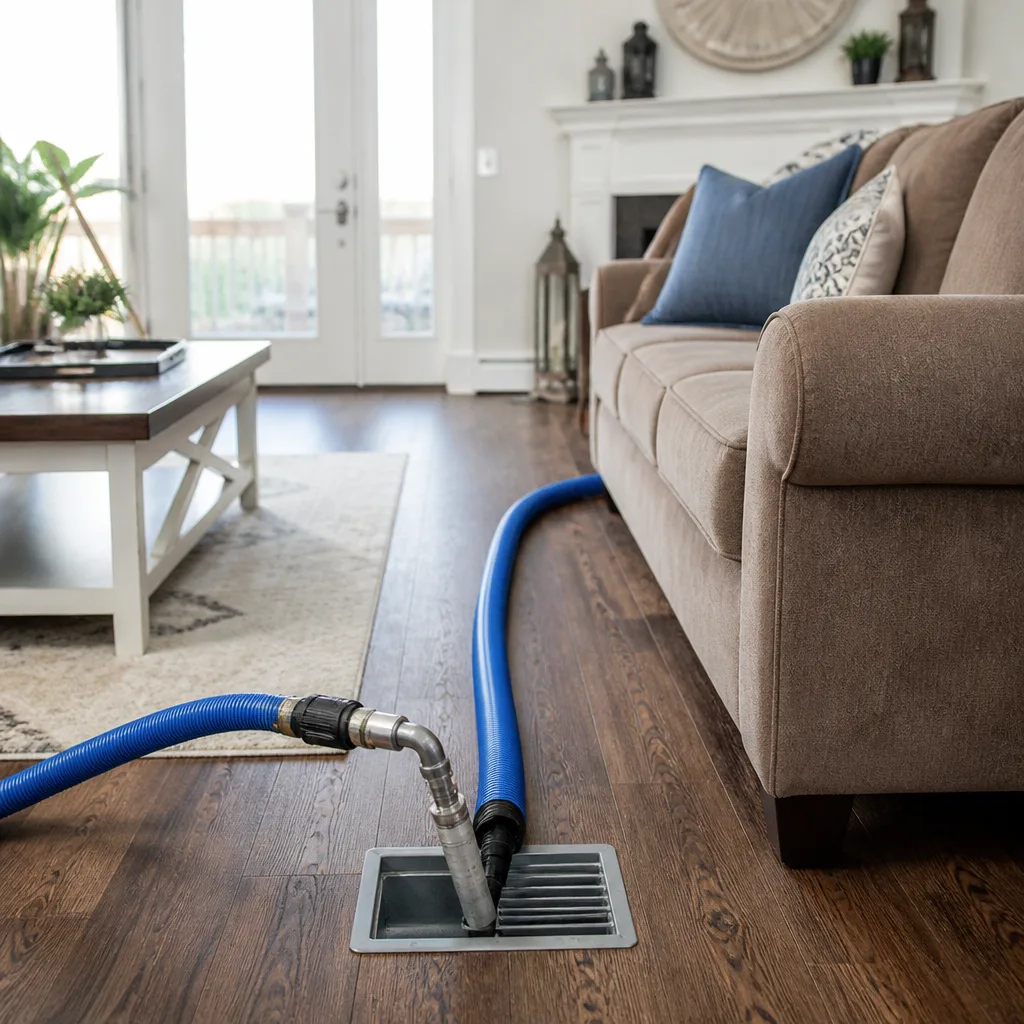 Sanitizing & deodorizing
Whole-system duct and dryer vent check with before-and-after photos - you see exactly what came out of your vents
That "$99 whole-house special" is a bait ad - the real number appears once they are in your hallway, or the "clean" is a shop-vac at the register. We photograph the inside of your ducts before and after instead.
Seasonal Air Duct Cleaning Care for Memorial: Year-Round Homeowner’s Guide
Most seasonal duct care advice was written for a place with four equal seasons. Memorial doesn’t have those. We have two long, heavy HVAC periods and two short transition windows between them, and the duct system takes the brunt of that rhythm. Homeowners here run the AC about eight months a year, so the ductwork cycles through condensation and drying far more often than in colder climates, and a calendar built for a northern house misses the actual inflection points. This guide maps what’s happening inside a Memorial duct system month by month, what to inspect at each turn, and the one maintenance habit that protects your home more than any cleaning schedule. It comes from a specialist that works on ductwork every day, not a generalist squeezing it in between roofing calls.
Quick Answer
Air duct care in Memorial works best on a two-phase schedule keyed to our climate: a full inspection and cleaning in March or April before cooling season locks in, and a second check in late fall before the first heat cycle. The single highest-value task each year is not cleaning at all, it’s thermal imaging of duct connections to find conditioned-air leaks in the attic before they soak insulation. A system that runs continuously from May through September stays cleaner in some ways and dirtier in others, and this guide explains both.
Styles & brands we work with
- Whole-home duct cleaning
- Dryer vent cleaning
- Camera inspection
- Sanitizing & deodorizing
Table of Contents
- Why Memorial’s Climate Doesn’t Have Four Equal Seasons
- Pre-Cooling Season (March – April): Your Best Inspection Window
- Peak Cooling Season (May – September): What Continuous Operation Does
- Hurricane Season Overlap (June – November): Post-Storm Inspection Protocol
- Heating Season (December – February): The First Heat Cycle
- The Task That Matters More Than Any Cleaning Schedule
- Dryer Vent Care Through the Year
- Common Mistakes to Avoid
Why Memorial’s Climate Doesn’t Have Four Equal Seasons
If you’ve read duct cleaning advice that talks about “spring and fall maintenance” as if they’re equal to summer and winter, that was almost certainly written somewhere else. In Memorial, summer is the dominant season, and it lasts. The AC runs from around April into October, and during that stretch the indoor coil is wet for most of the day. That moisture is the key to understanding everything about your duct system.
Here’s the counterintuitive part. Continuous AC operation actually keeps parts of the duct system cleaner. Air moves constantly, so dust that would settle in a mild climate gets carried to the filter and trapped. But the same constant operation cycles condensation on cold duct surfaces, particularly if any ductwork passes through a hot attic. Every time the compressor cycles off and the metal warms, that condensation evaporates into the airstream. Over a full season, that wet-dry cycling is what drives microbial growth on uncleaned duct walls. It’s not a dust problem primarily. It’s a moisture problem that shows up as one.
Then the seasons flip. From December through February, Memorial gets short, real cold spells that force the gas furnace into a few days of hard use, often with long gaps in between. That pattern is harder on a duct system than continuous winter operation because the system heats up, cools down, and reheats. And the transition windows, roughly March into mid-April and November into early December, are when you can actually get ahead of both problems.
This is why a one-size seasonal calendar doesn’t fit Memorial. The proper rhythm is one serious inspection before cooling, one before heating, and a leak check that runs year-round.
Pre-Cooling Season (March – April): Your Best Inspection Window
March and April are the highest-value window for air duct inspection in Memorial, and it’s not close. Two things happen at once. First, dust that settled in the ductwork during the lighter winter weeks is still sitting there, available to look at and remove before it gets pulled into a summer of constant airflow. Second, and more important, you still have time to fix moisture issues before the system runs nearly continuously and hits every duct surface with condensation cycling.
Consider what’s actually happening inside the system in late spring. The AC is running intermittently, perhaps four to six hours a day. The ducts are cool, then warm again. That intermittent cycling brings condensation to cold duct surfaces in the attic, and if any duct has a small leak at a connection, the condensation happens there. By July, when the system runs twelve hours a day or more, a small moisture problem at a leak becomes a larger one. You want to catch it now, not in peak season.
Here’s what a pre-cooling inspection should cover:
- Visual inspection of all accessible duct runs in the attic and mechanical closet, looking for disconnected joints, crushed sections, and deteriorating tape or mastic at connections.
- Interior cleaning of the duct runs, plenum, blower compartment, and coil face using a system like a Rotobrush that scours and vacuums in one pass. A surface wipe-down with a shop vac doesn’t reach the duct interior you can’t see.
- Negative-pressure extraction with a Nikro system while cleaning the branch lines, so loosened debris leaves the system rather than drifting into the rooms.
- Filter inspection and upgrade review if the existing filter is underperforming. This is where a filter from Aprilaire or Honeywell can extend the value of the cleaning.
A pre-season inspection is also the right moment to think about sanitizing if the interior surfaces show microbial growth, particularly at connections and in the plenum. We handle that with Abatement Technologies equipment, the same class of filtration gear used in remediation settings. If the ducts have never been cleaned or the home has a recent renovation, this is the window.
Peak Cooling Season (May – September): What Continuous Operation Does
From May through September, the AC in most Memorial homes never really stops. The set point is low, the run times are long, and the duct system is under continuous load. That creates a dual effect that’s worth understanding clearly, because most advice focuses on only one half of it.
The good news: continuous airflow keeps dust moving
The constant air movement through the duct system means that dust that would settle in a less-active climate keeps moving until it hits the filter. A well-sealed, well-filtered system that runs all day is, in a real sense, self-cleaning. The dust gets to the filter or the trap, and the filter gets changed. That’s the upside of an eight-month cooling season.
The bad news: condensation cycling on cold duct surfaces
The downside is moisture. When the AC is running, the supply ducts are cold, often cold enough that any humid attic air finding them will condense on the outside. When the system cycles off, the ducts warm up and the condensation evaporates. That cycle repeats dozens of times a day across a season. On the outside of the ducts, that condensation can degrade insulation. On the inside, the dry-wet-dry cycle on duct walls is what feeds the kind of contamination that requires more than a casual cleaning.
Two specific risks inside peak season:
- Filter saturation. A filter that loads up in July and isn’t changed until October lets bypass air distribute dust into the ductwork you paid to clean.
- Coil moisture carryover. A dirty evaporator coil stays wet longer between cycles, feeding more humidity into the supply plenum than a clean coil would.
If your home has allergy sufferers, this is the season where an HVAC cleaning with interior coil and plenum treatment pays off in real symptom reduction. And if you’ve had a spring cleaning and find the dust still persists by August, the likely culprit isn’t the ducts themselves; it’s a leak somewhere in the run.
Hurricane Season Overlap (June – November): Post-Storm Inspection Protocol
Hurricane season is a real fact of life in Memorial, and it overlaps most of cooling season. The storms themselves aren’t the primary concern for your duct system. What happens before, during, and after a storm is. A home that loses power for a day or three, or takes attic or roof penetration, can end up with a real contamination event inside its ductwork. Here’s the inspection protocol, in order.
- Before restarting the system after an outage, check the air handler and return air plenum. If the home was without power for more than a few hours in high humidity, the coil and interior may have stayed wet. Running the system immediately pushes any microbial growth into every room.
- Look for attic penetration. Any missing shingles, roof deck breaches, or visible moisture staining along duct runs in the attic mean the ducts should be inspected before use. A storm can drive moisture through openings you didn’t notice from below.
- Inspect all accessible duct connections. Wind-driven vibration can loosen taped or mastic joints, and a joint that moved during the storm is a leak. Thermal imaging is the fastest way to find one.
- If moisture was introduced, call for a sanitizing treatment once the system is confirmed dry. We deploy Abatement Technologies filtration equipment for that class of work, not a consumer air purifier and not an aerosol can.
- Clean the ductwork if debris from the attic was introduced. Insulation fibers, dust, and debris blown in through a penetration need a proper extraction, not a wipe-down.
A post-storm inspection is a real service and mirrors what you’d ask of any specialist. If you had a cleaning done in April, a storm in September doesn’t invalidate it. But a proper inspection of the affected sections will tell you whether anything changed.
Heating Season (December – February): The First Heat Cycle
Memorial’s heating season is short, but it’s not trivial. Between December and February, the gas furnace runs more than you’d expect during the two or three cold snaps each winter, and the way it operates has a specific effect on the ducts.
Here’s what happens. During the cooling season, the ducts pick up dust that settles on the inside surfaces during the brief low-usage weeks of late fall. When the furnace fires up for the first time in late November or December, the hot air heats up those dust deposits. The familiar burnt-dust smell from the first heat cycle of the year is exactly that. Fresh dust on hot metal, burning off. It happens in essentially every home, but the cleaner the duct interior, the less there is to burn off, and the shorter the smell lasts.
That’s why the ideal order of operations is:
- Clean the ducts and the blower in late fall, before the furnace sees real use.
- Have the heat exchanger and all accessible duct connections inspected at the same time the ducts are cleaned.
- Change the filter as part of that visit, so nothing new gets pulled into the heat cycle.
The winter gas furnace also introduces a safety point worth stating clearly. If you smell gas or notice soot or scorching near the furnace, stop using the system and call a qualified HVAC technician or your gas utility. Air duct cleaning doesn’t address gas leaks or combustion problems, and any technician who says it will is overselling. The same safety caveat applies to electrical connections at the blower and control board; a trained professional should handle them, not a homeowner following a video.
The heating season is also when homes in Memorial spend more time sealed up, so indoor air quality matters more. If allergy or asthma is a concern, that’s when the value of a clean system is most obvious.
See the difference
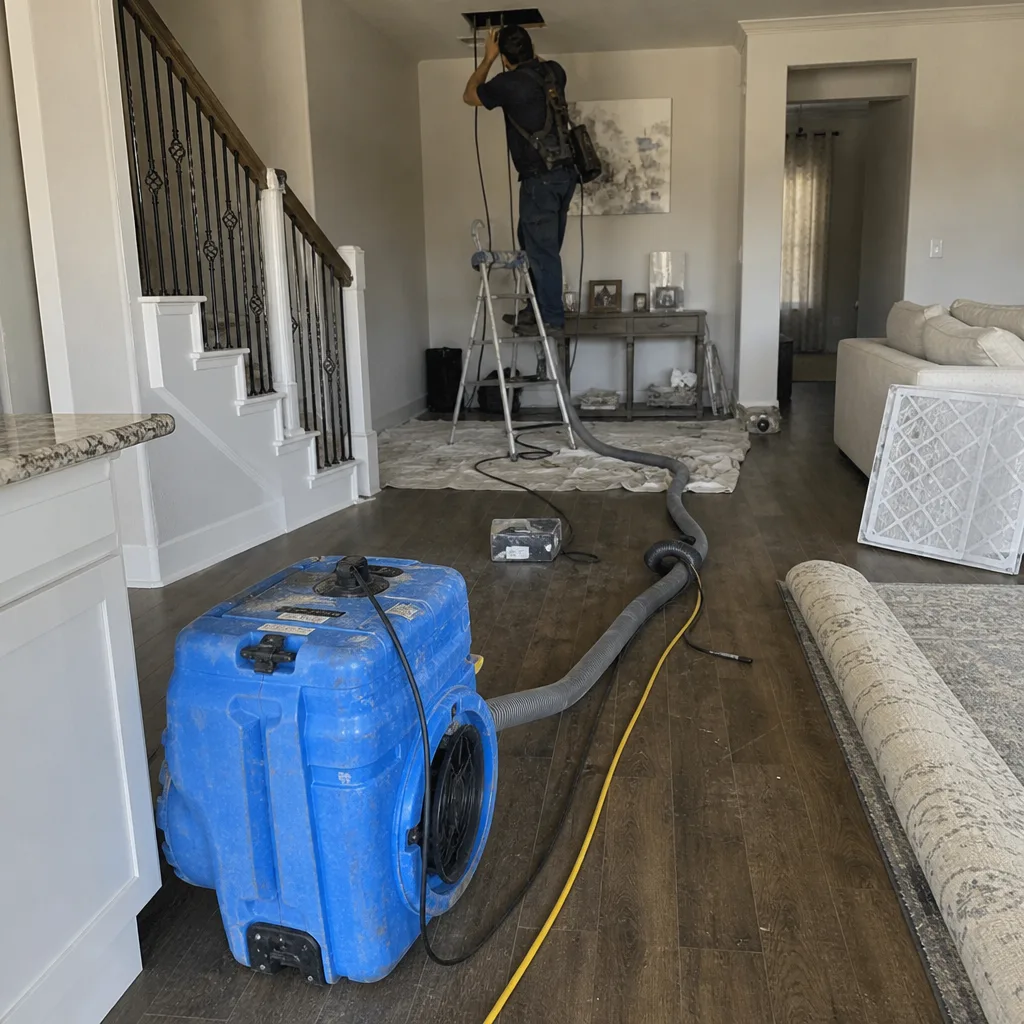 Before
 After
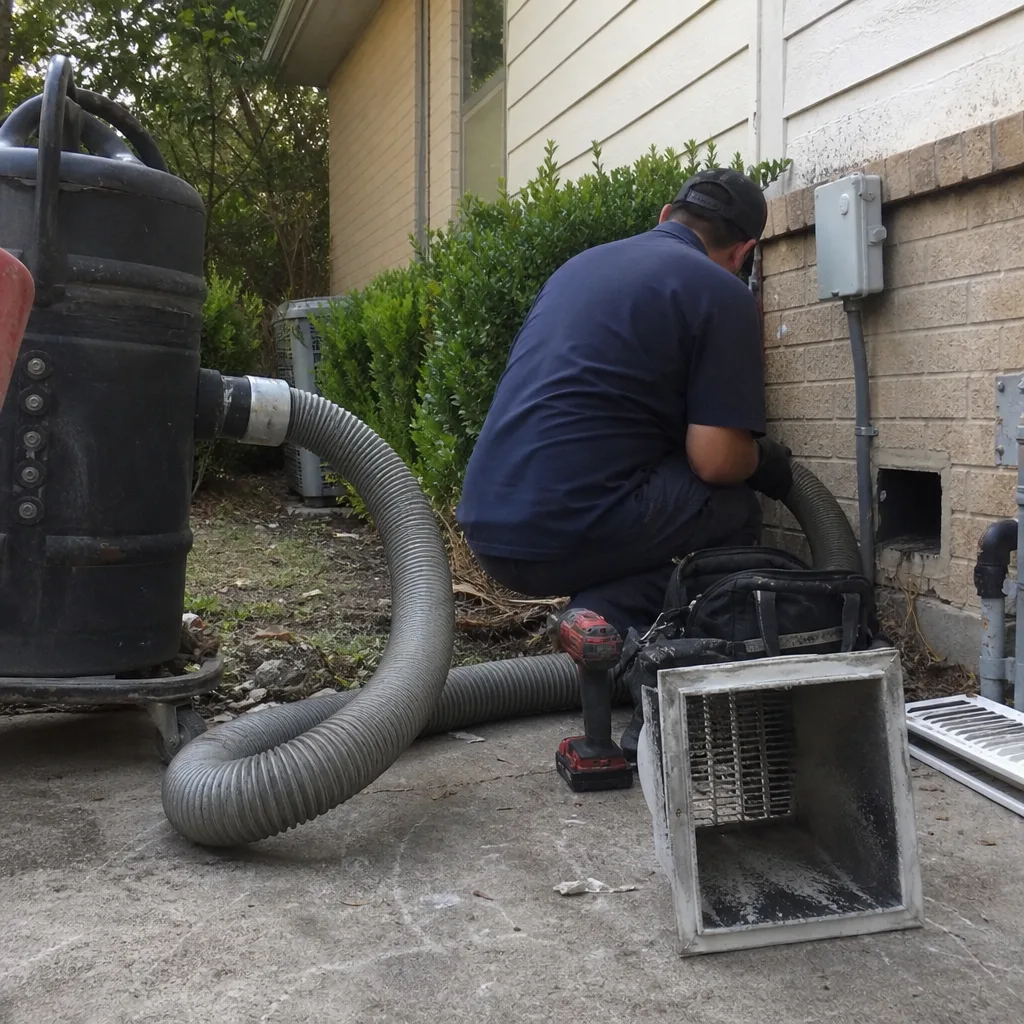 Before
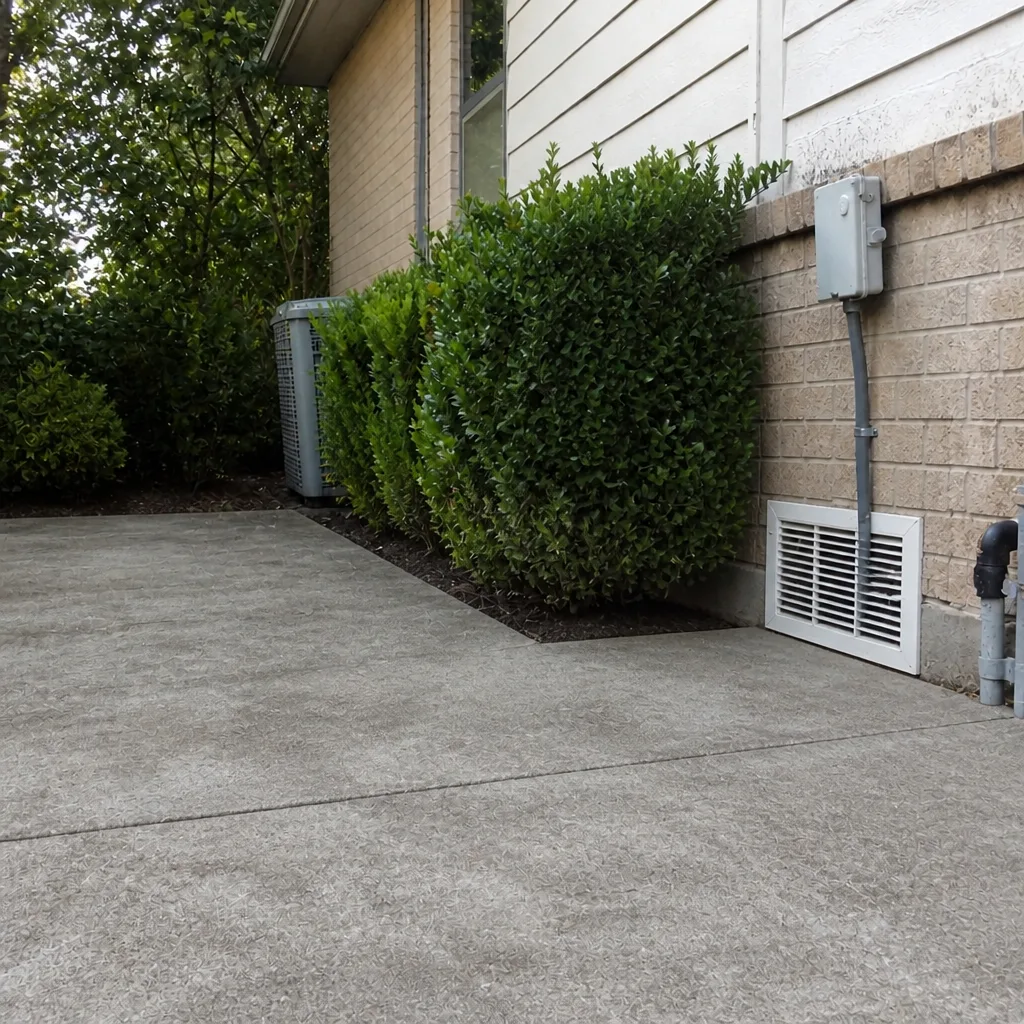 After
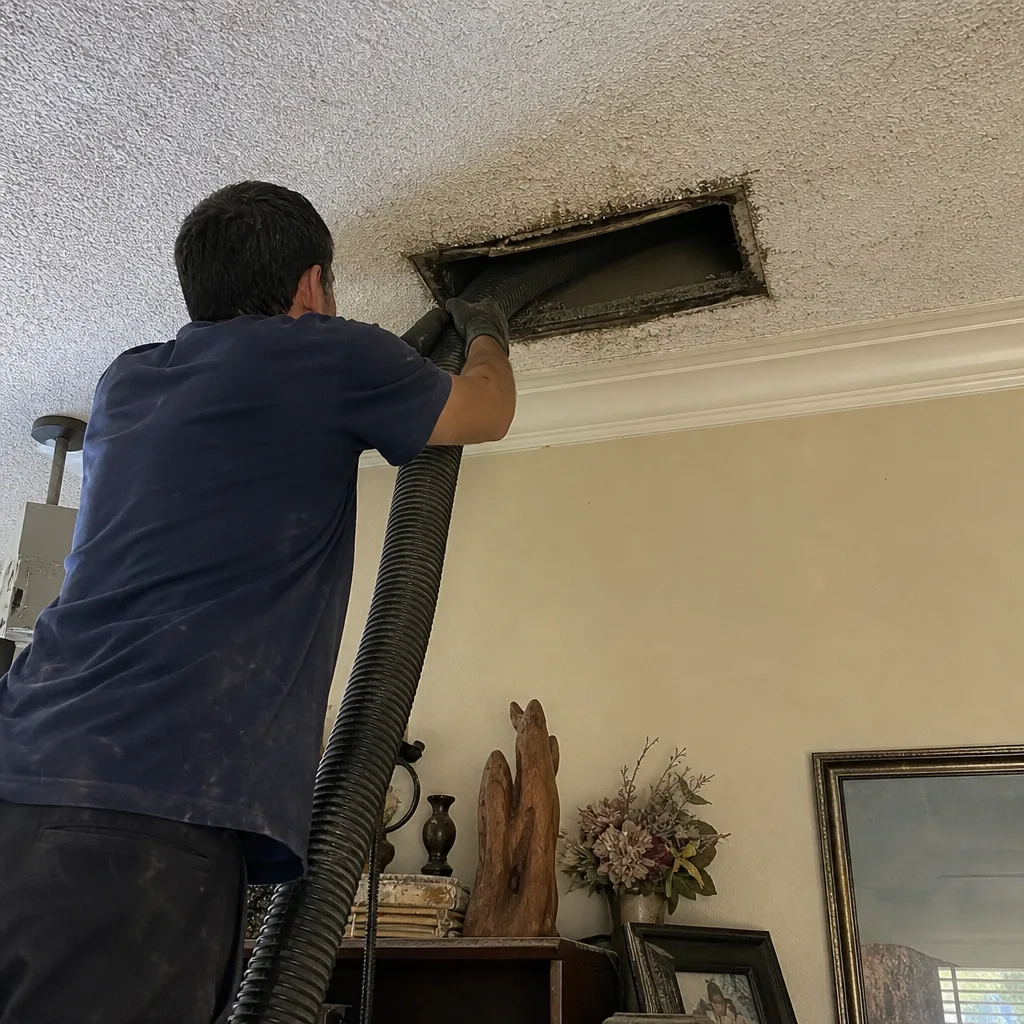 Before
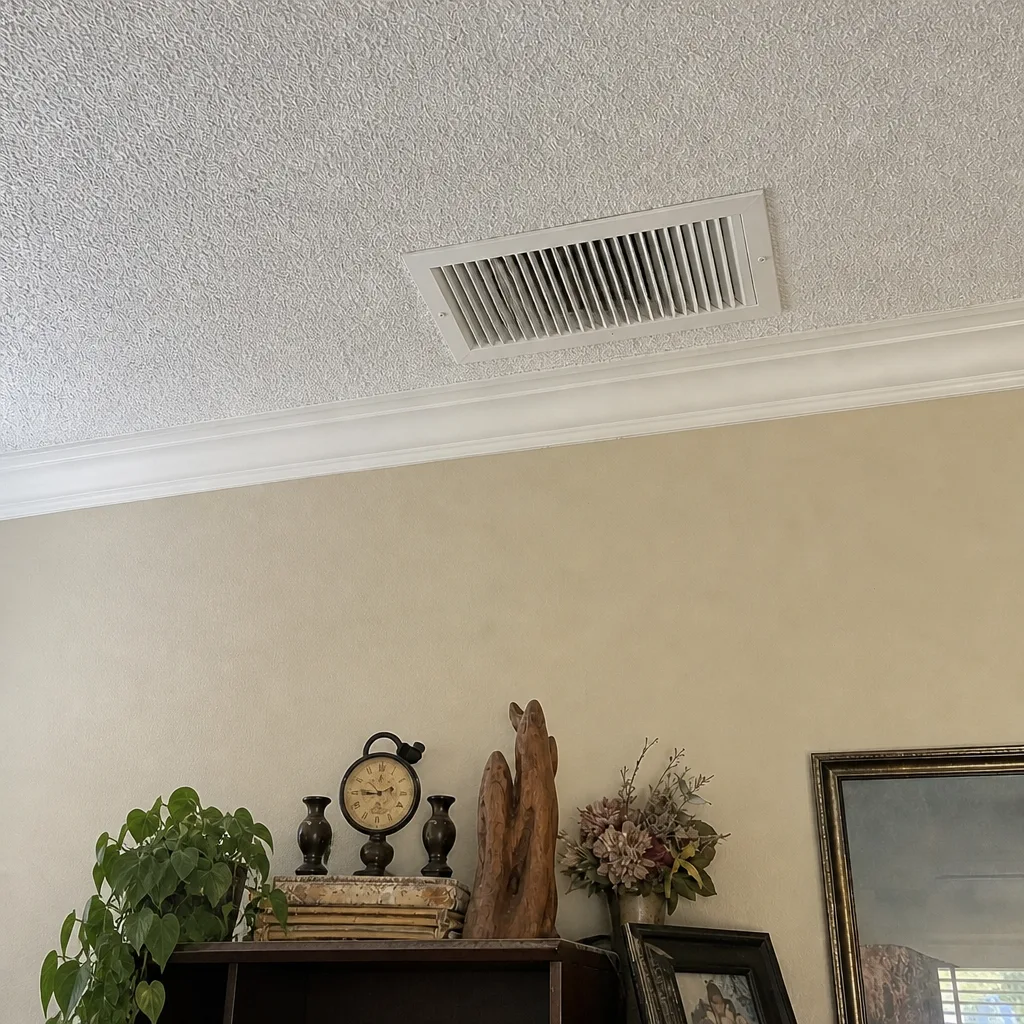 After
The Task That Matters More Than Any Cleaning Schedule
Here’s our honest opinion, and it’s not what you’d expect from a duct cleaning specialist: the single most valuable annual maintenance task on a Memorial duct system is not cleaning. It’s thermal imaging of the duct connections to find leaks in the conditioned-air path before they become insulation damage.
The reasoning is straightforward once you see it. A duct system with clean interior surfaces but a leaking supply joint in the attic is still wasting conditioned air and pulling humid outdoor air into the system. The leak also becomes a condensation point, and in Memorial’s hot attic environment, that leaking joint is the first place insulation will saturate and degrade. By the time you notice soft insulation or a musty smell in a bedroom below the attic, the leak has been running for a season or more.
Thermal imaging finds these leaks fast. The technician runs the system under load, then scans the accessible duct runs with an infrared camera. Cold spots on the supply side or warm spots on the return side show where conditioned air is escaping. The same scan picks up areas where insulation has absorbed moisture. It’s the fastest, most reliable diagnostic step in the whole process.
And it doesn’t stop at detection. Once a leak is found, the fix is repair and sealing, and doing that on the same visit as the cleaning is a real advantage. You’re not calling a second contractor and hoping the two conversations line up. This is why we treat cleaning, sanitizing, repair, and sealing as a single service. Clean ducts are the start; we also repair and seal what’s leaking your conditioned air.
If you’re going to schedule one thing this year, make it this scan. The cleaning can follow.
Dryer Vent Care Through the Year
Duct cleaning and dryer vent cleaning share a reputation problem: both are often pushed through as an add-on and done poorly. On a Memorial home, the dryer vent deserves the same specialist attention as the HVAC ducts, because it’s a safety system as much as an efficiency one.
Lint accumulation in the dryer vent is a fire risk, and it’s a risk that doesn’t rotate on a season. A vent that was clear in spring can load up by late summer in a busy household. The best rhythm here is a check driven by how much laundry the home actually does, not by the calendar. If drying times lengthen noticeably, that’s your cue. If it takes two cycles to dry a load that used to take one, the vent is restricting airflow.
Given the amount of time Memorial homes run their AC and the size of the typical attic, dryer vents routed through hot spaces also get exposed to temperature extremes, and that can accelerate lint drying and static buildup. It’s worth a professional inspection at least once, particularly in a home you haven’t owned from new. If the vent hasn’t been checked since you moved in, that’s the starting point.
Common Mistakes to Avoid
- Following a generic four-season calendar. Advice written for a northern climate treats spring and fall as the big service windows and summer as mild. In Memorial, cooling season is the big load period, and the pre-cooling window in March and April is the one that actually matters. A calendar that doesn’t match the climate produces a schedule that doesn’t match the ducts.
- Trusting a shop vac as a duct cleaning tool. A shop vac can suck surface dust out of a return grille, but it can’t reach the interior of a branch run or dislodge the debris stuck to the duct wall. On a Memorial system running eight months a year, that debris has had time to build up. Consumer-grade equipment just makes the ducts look clean.
- Skipping the leak inspection because the ducts look clean. The interior of your ducts has no relationship to whether your attic duct connections are sealed. A clean duct system can be leaking conditioned air from every joint. Thermal imaging is the only way to know.
- Restarting after a storm without an inspection. If the home lost power or took any attic moisture, running the system before checking the coil and plenum can push growth into every room in the house. A ten-minute inspection before restart is the right order.
- Ignoring the first-heat-cycle smell year after year. A faint dust smell on the first cool morning is normal. A smell that persists for days after the furnace has been running steadily means the deposits are significant, and it’s a cue to have the system cleaned rather than masked.
- Treating dryer vent cleaning as optional. Lint in a dryer vent is a fire risk, and it’s often the last thing on the maintenance list. For a Memorial home with heavy laundry use, an annual check is cheap insurance.
- Assuming a cleaning is enough without addressing moisture. A duct cleaning removes the contamination that’s already there. It doesn’t stop condensation cycling on the cold supply surfaces or fix the leak that’s driving it. If the cleaning is done without the thermal scan, the same condition returns next season.
When to Call a Professional
There are clear signs that a duct system needs a professional inspection rather than a DIY approach. Persistent dust on surfaces after a recent cleaning, dust streaks on ceilings and carpet edges near supply grilles, and visible condensation on exterior duct surfaces in the attic are the obvious ones. A new or worse allergy response after moving into a home, particularly in summer, points to the same thing. And any of the following is a call-now scenario: a roof or attic penetration from a storm, a first-heat-cycle smell that doesn’t fade, a dryer that’s losing efficiency, or a system that’s never been cleaned in a home you just bought. We use equipment like the Rotobrush system and Nikro extraction for interior cleaning, and we treat sanitizing as a separate service driven by what we actually find. Air Duct Cleaning Memorial offers free estimates in Memorial. Call (833) 468-3620. We answer 24/7. Fast dispatch from 7am to 7pm, Sunday through Friday.
Frequently Asked Questions
Once every two to four years is a reasonable baseline for a Memorial home that runs the AC eight months a year, but the schedule depends on the home. A house with allergy sufferers, a recent renovation, or a pet-heavy household benefits from a pre-cooling cleaning every year. A well-sealed home with a good filter can go longer. The right answer is determined by the conditions, not by a fixed calendar, and an inspection in March or April will tell you which category your home is in. Call (833) 468-3620 for an exact quote; estimates are free.
Have the ducts inspected for leaks and cleaned in March or April before the AC runs continuously. The two priorities are removing the dust that settled during winter and finding any moisture problem at a duct connection while you still have time to seal it. A thermal imaging scan of the accessible duct runs is the fastest way to check for leaks. Pre-cooling is the highest-value window of the year for this work.
Check the air handler and return plenum for moisture, look for attic penetration, inspect all accessible duct joints, and call for a sanitizing treatment if the system has been exposed to moisture. If the home lost power for more than a few hours in high humidity, the coil may have stayed wet, and running the system before checking pushes any growth into every room. A post-storm inspection is worth the cost of finding out.
It’s dust on the heat exchanger and interior duct surfaces burning off on the first heat cycle of the season. Every home develops some of this during the fall. The smell is stronger and lasts longer when the deposits are heavier. A cleaning before the heating season, ideally in late November, reduces the deposit and shortens the smell. If the smell persists for days, that’s a cue to have the system cleaned and inspected rather than ignored.
The honest answer is that it varies with the number of runs, how accessible the system is, and whether repair or sanitizing is needed. The right pricing model is one flat price per system, agreed before work starts, not a per-vent number. Avoid quotes that sound low on the phone; those usually come with add-ons once the technician is on site. Call (833) 468-3620 and ask for a written estimate; the price set on that estimate is what the job costs.
Cleaning removes the physical debris from the duct interior. Sanitizing treats microbial contamination with a filtration-grade process after cleaning. They’re separate services for a reason. A system with heavy contamination needs the cleaning first, and a sanitizing treatment after. A system with clean interior surfaces but microbial growth at a connection or plenum needs the sanitizing treatment specifically. The inspection determines which one a Memorial home actually needs.
The Bottom Line
Memorial’s climate runs the AC for most of the year, and its duct systems reflect that. The right schedule is two phases, not four: a pre-cooling inspection and cleaning in March or April, and a pre-heating check in late fall before the furnace sees real use. Between those two windows, the year-round task that matters most is a thermal imaging scan of the accessible duct connections, because a leak in the conditioned-air path is the condition that feeds moisture damage and drives most of what you’d otherwise blame on dust. Cleaning, sealing, and sanitizing are best handled as one service. If you’re ready to start with the inspection, call us.
Call (833) 468-3620 for a free estimate. We answer 24/7. Fast dispatch from 7am to 7pm, Sunday through Friday.
For a deeper look at the parent service, our guide to air duct cleaning covers equipment and process in more detail. If your dryer vent is overdue, dryer vent cleaning is the safety service to prioritize. When the cleaning visit should also include the blower, coil, and plenum, HVAC cleaning explains what’s included. And to see how we approach every phase of the year, start at Air Duct Cleaning Memorial.
Written by the team at Air Duct Cleaning Memorial.