
Last updated November 25, 2026
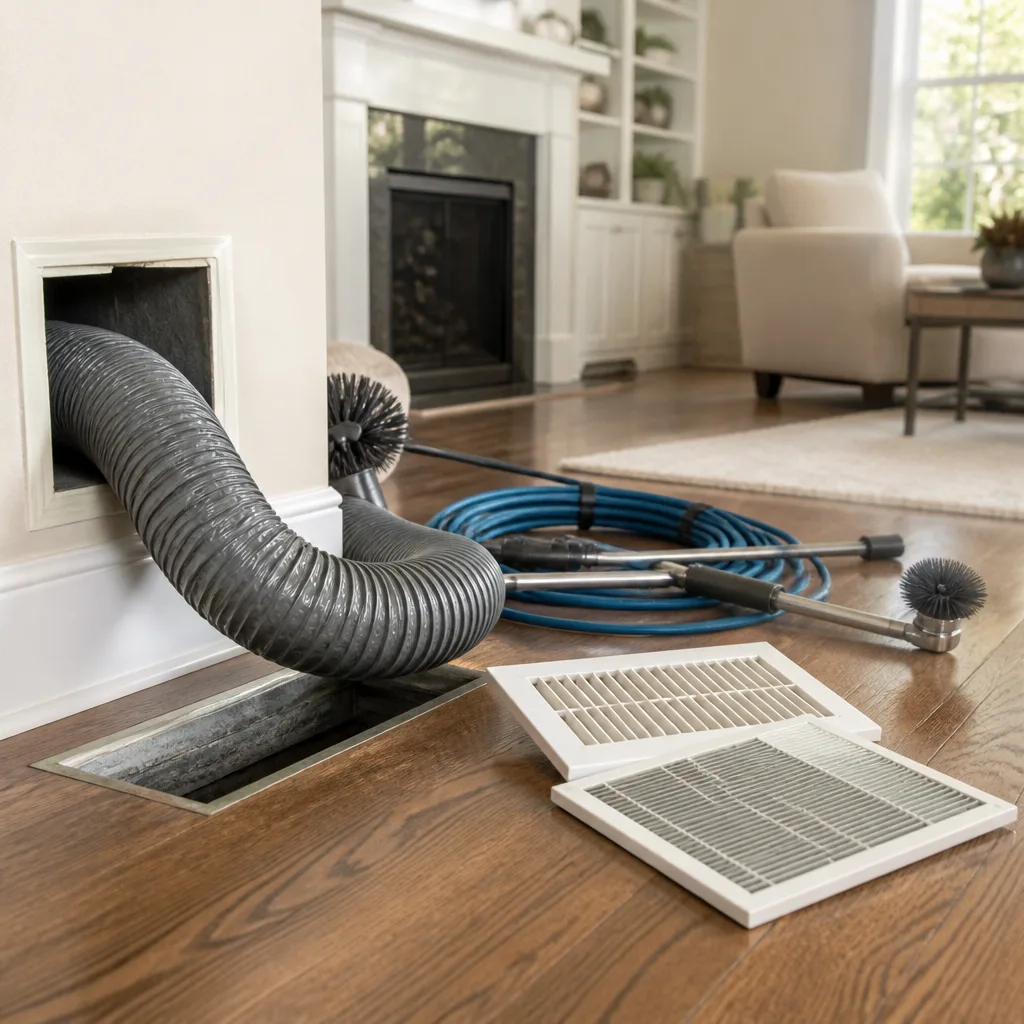 Whole-home duct cleaning
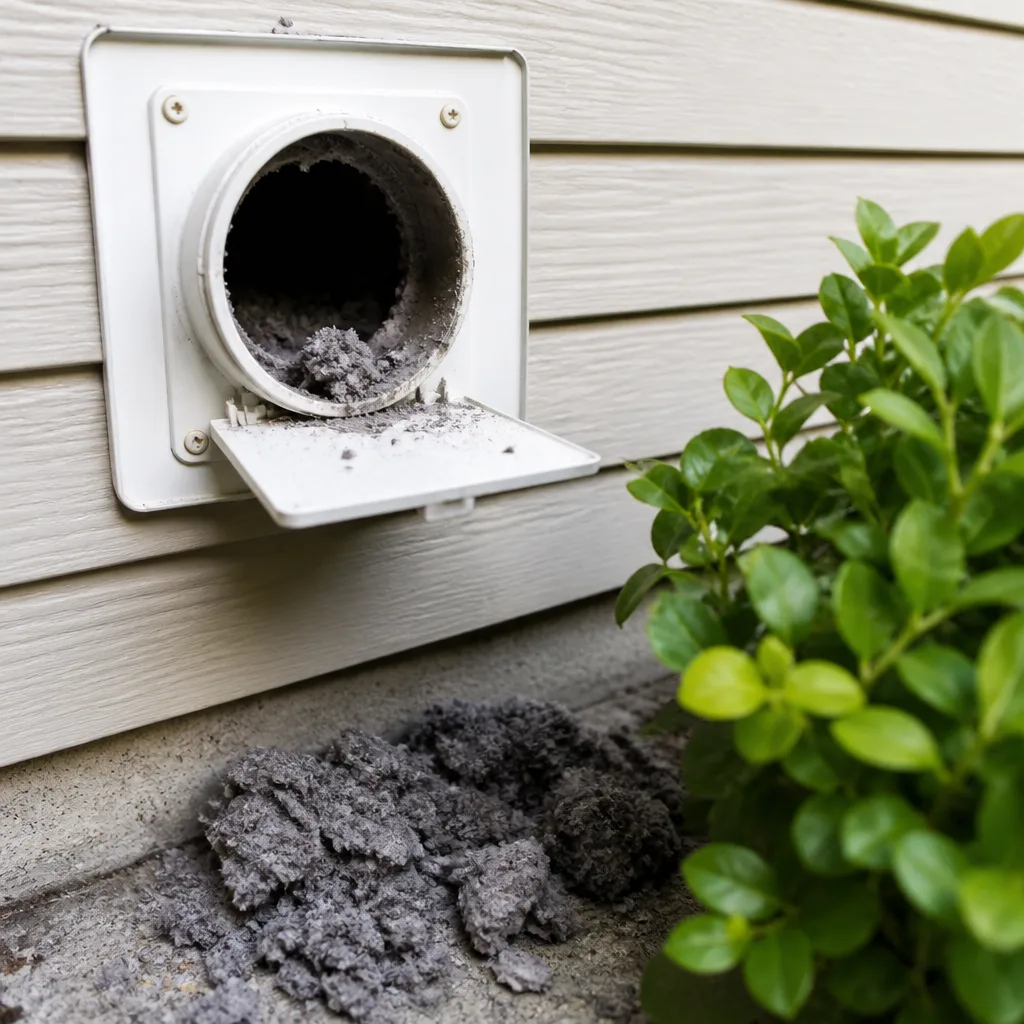 Dryer vent cleaning
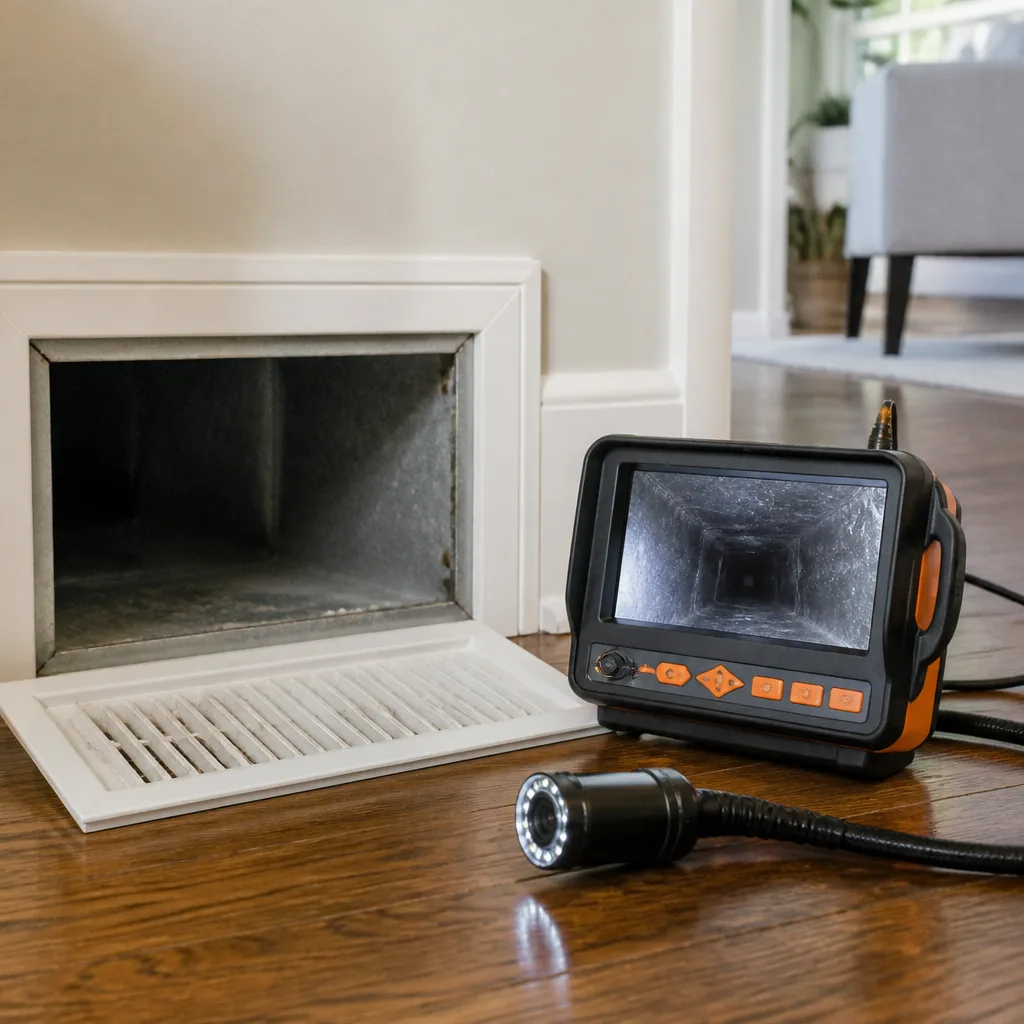 Camera inspection
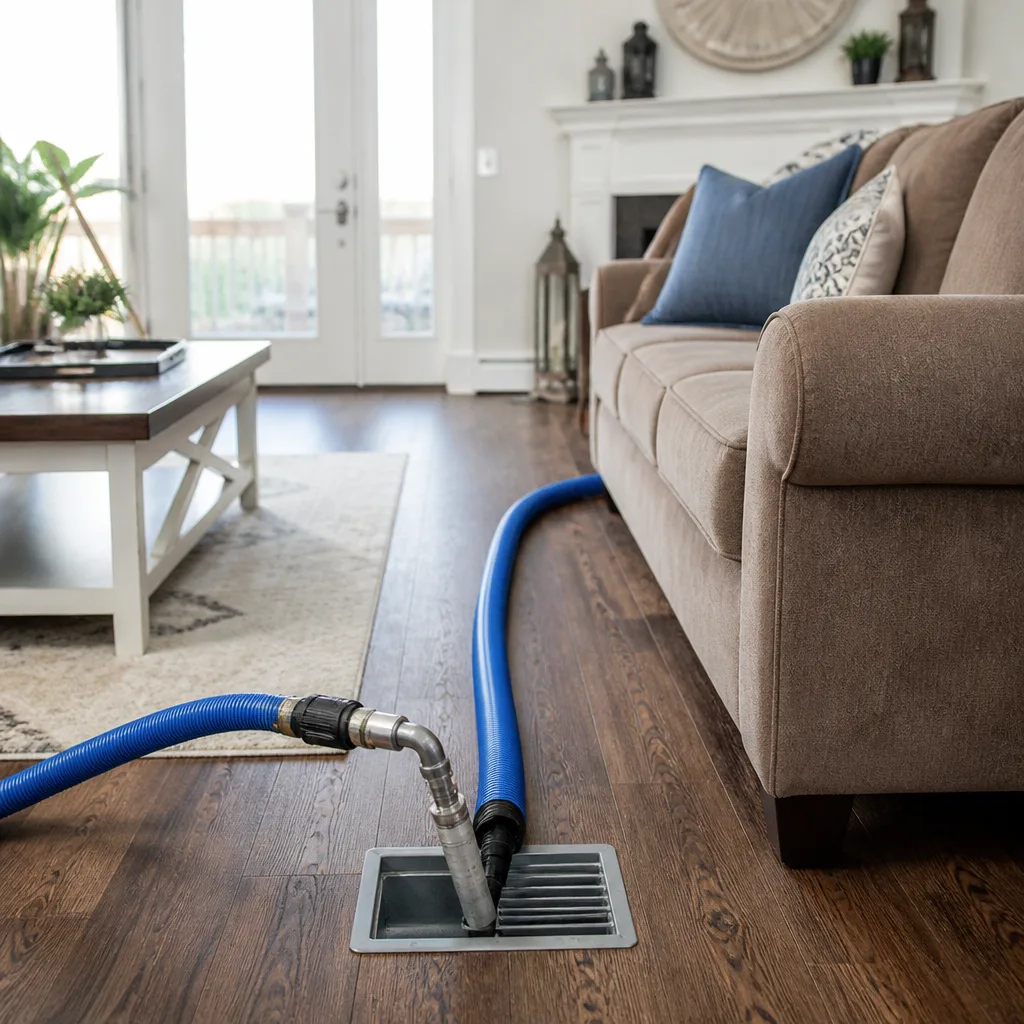 Sanitizing & deodorizing
Whole-system duct and dryer vent check with before-and-after photos - you see exactly what came out of your vents
That "$99 whole-house special" is a bait ad - the real number appears once they are in your hallway, or the "clean" is a shop-vac at the register. We photograph the inside of your ducts before and after instead.
DIY vs Professional Air Duct Cleaning: The Memorial Homeowner’s Decision Guide
Most homeowners assume the duct cleaning question comes down to skill or cost. It doesn’t. It comes down to physics. A shop vac generates roughly 1-2 inches of water column suction, while a professional source-removal unit like a Nikro runs at negative pressure exceeding 4,000 CFM. The contamination sitting inside your ductwork doesn’t respond to the first number. It hangs on, redistributes, and settles back where it started.
That gap is what this guide is built around. We’ll define exactly what DIY can accomplish in a Memorial home, what it can’t, and how to make an informed decision rather than a hopeful one. You’ll learn the equipment realities, the cleaning scenarios that leave no room for DIY, and how to get real value from a hybrid approach.
Quick Answer
DIY duct cleaning can meaningfully handle register cleaning, grille washing, accessible boot vacuuming, and filter upgrades, but it cannot achieve source removal inside the duct runs themselves. Professional cleaning is non-negotiable after renovation debris, with visible mold or musty odors at supply vents, after vermin intrusion, or in homes with occupants who have respiratory conditions. The two approaches work best together, not in opposition.
Styles & brands we work with
- Whole-home duct cleaning
- Dryer vent cleaning
- Camera inspection
- Sanitizing & deodorizing
Table of Contents
- The Physics of Source-Removal Cleaning: Why CFM Beats Suction
- What DIY Legitimately Accomplishes in a Memorial Home
- The Rental Equipment Reality Check
- When Professional Cleaning Is Non-Negotiable
- The Hybrid Decision Framework: Maximize Your Value
- How to Evaluate a Professional Quote in Memorial
- What Ongoing DIY Maintenance Is Actually Worth
- Common Mistakes to Avoid
The Physics of Source-Removal Cleaning: Why CFM Beats Suction
Duct cleaning isn’t about pulling hard. It’s about moving enough air volume through the entire duct run to entrain debris and carry it out. That distinction is the whole game, and it’s where most DIY attempts fall apart.
Suction strength, measured in inches of water column, describes how much vacuum pressure a machine can pull. Airflow volume, measured in cubic feet per minute (CFM), describes how much air it can move. A shop vac might pull strong suction at the hose end, but the moment you connect it to a 6-inch duct run, that suction collapses. The machine can’t move enough air to keep debris suspended in the airstream. Instead, the debris loosens, drifts, and settles somewhere downstream of where you were working.
Source removal means physically agitating contamination off duct walls while simultaneously moving enough air to carry it to a collection point. Professional units like the Nikro extraction systems we use pair high-volume negative pressure with rotary agitation tools, typically the Rotobrush platform, that scrub the duct interior as air moves through. The combination is what accomplishes the job. Neither piece works alone.
In Memorial homes, duct runs are often long and include multiple transitions, offsets, and flex sections behind plaster and drywall. Every one of those transitions is a place where airflow volume drops and debris accumulates. A tool that can’t sustain pressure across the whole run leaves those pockets untouched. This is the single most important thing to understand before you pick up a vacuum.
- Suction (water column): how hard a machine pulls at the connection point.
- Airflow (CFM): how much air moves through the whole duct during cleaning.
- Source removal: agitation plus sustained airflow that carries contamination to a HEPA-filtered collection unit.
- Redistribution: what happens when agitation occurs without enough airflow to carry debris out.
What DIY Legitimately Accomplishes in a Memorial Home
DIY duct work isn’t worthless. It’s just narrower than most people think. Knowing its actual boundaries lets you use it well instead of expecting it to do something it can’t.
What a homeowner can realistically accomplish:
- Register and grille cleaning. Removing supply and return grilles and washing them removes visible dust, pet hair, and pollen that collects on the face of the grille. This is real cleaning and it makes a visible difference.
- Accessible boot vacuuming. The boot is the short section between the grille and the main duct. A brush attachment on a household vacuum can remove loose debris from the first few inches of the boot on the supply side.
- Filter upgrades. Replacing a low-MERV filter with a properly sized higher-MERV filter is one of the highest-value things a homeowner can do for indoor air quality. We work with Honeywell and Aprilaire filtration products regularly, and the upgrade path matters more than most homeowners realize.
- Return grille vacuuming. The return side usually catches more visible debris than the supply side. Vacuuming the return grille face and cleaning the filter slot area keeps debris from being pulled back into the system.
What DIY cannot accomplish: cleaning the interior of the duct runs. The main trunk lines, the long branch runs that serve bedrooms and hallways, and the interior surfaces of flex duct that sit above the ceiling in Memorial’s older homes are all beyond what a household vacuum can reach or move air through. That interior contamination is exactly what professional source-removal cleaning targets.
The honest framing is this: DIY handles the surfaces you can see and reach. Professional cleaning handles the contamination you can’t. Both matter, and neither replaces the other.
The Rental Equipment Reality Check
Homeowners searching for a middle path often land on truck-mount vacuum rentals. The idea makes sense on paper: rent the big equipment, save the labor cost, get the same result. In practice, that path is harder than it looks, and the specs tell the story.
Truck-mount units available through rental channels in the Houston area typically run in the 2,000 to 4,000 CFM range depending on the model, which sounds close to professional equipment. But the number on the spec sheet isn’t the whole story. Here’s what actually happens on a rental job:
- Access and setup. A truck-mount unit needs to park close enough to run hoses into the home. In many Memorial properties, that means positioning in a driveway, running hose through a window or door, and staging the entire operation around the truck’s location. Attic access adds another layer of physical work.
- Two people minimum. One person operates the vacuum and monitors the collection unit. The other manages the agitation tool inside the duct. Both need to communicate clearly and coordinate timing so debris doesn’t settle when agitation stops.
- Negative pressure integrity. The system only works when the whole duct network is under negative pressure. That means sealing off supply registers, creating a single collection point, and managing return-side airflow. Every gap in that setup is a leak that kills the pressure differential.
- Attic work in Memorial heat. Attics in this part of Texas get extremely hot for much of the year. Working in one for the hours a full cleaning takes is a physical job with real safety considerations, including heat exposure and confined-space movement around ductwork.
- Debris disposal. The collection unit captures what comes out. Disposing of it properly, and cleaning the equipment afterward, is part of the job and often overlooked in rental planning.
This isn’t a warning against renting. It’s a reality check. A rental job done carefully by two capable people can achieve real cleaning. But the labor, coordination, and physical access requirements mean most homeowners end up with a project far larger than they planned. That, in turn, is why many Memorial homeowners decide the time and physical work are worth paying to have handled with proper equipment on a single visit.
When Professional Cleaning Is Non-Negotiable
Some situations leave no real choice. The contamination involved is either too dangerous to disturb without containment or too deeply embedded to address with consumer tools. In these cases, the question isn’t whether to hire a professional. It’s when.
Post-renovation debris. Drywall dust, sawdust, insulation fibers, and construction grit settle throughout the duct system during any significant renovation. That dust is fine enough to bypass standard filters and abrasive enough to lodge in duct interiors. It also travels to every room the system serves. Professional cleaning after renovation is the only reliable way to remove it from the duct runs. If your Memorial home just went through a remodel, this is not a DIY situation.
Visible mold or musty odor at supply vents. If you can see discoloration around a supply vent or smell a musty odor when the system runs, microbial growth is a real possibility. Disturbing mold without proper containment and HEPA filtration can spread spores into living spaces. Professional cleaning combined with sanitizing equipment, such as the Abatement Technologies filtration units we deploy on sanitizing jobs, addresses the source with containment. This is one of the clearest cases where calling a specialist is the right move, and one call to a duct-focused company handles it.
Vermin intrusion evidence. Droppings, nesting material, or a musty animal odor inside ductwork is a health concern and often a sign that the duct system has openings to the exterior. Cleaning without sealing those openings just leaves the door open for the next intrusion. That’s why duct repair and sealing capability matters. A company that can clean and seal in the same visit solves both problems; a company that only cleans leaves the second problem for someone else.
Occupants with respiratory conditions. If someone in the household has asthma, allergies, or another respiratory condition, the margin for error in duct cleaning shrinks. Professional source removal, with proper equipment and containment, produces a measurably cleaner system. That matters more than saving labor cost on a job that may not achieve the same result.
If any of these apply in your Memorial home, treat professional cleaning as the baseline, not the upgrade.
The Hybrid Decision Framework: Maximize Your Value
Most homeowners don’t need to treat this as an either-or decision. A hybrid approach gets real results. The key is knowing which tasks to do yourself, when to bring in professional equipment, and how to sequence the work so each step sets up the next.
Before professional cleaning, do these things:
- Replace the filter. A clean filter means the system isn’t reintroducing captured debris during cleaning. It also makes the post-cleaning comparison more meaningful.
- Note problem areas. Walk through the home and note which vents have visible dust, which rooms smell musty, and whether any grilles show signs of staining or pest activity. This information helps the technician focus the work.
- Clear access. Move furniture away from supply and return registers so the technician doesn’t lose time on setup.
- Confirm the scope. Ask what’s covered, which equipment is used, and whether the quote includes repair and sealing if leaks are found. The best time to clarify scope is before work starts.
- Document the before state. Take photos of register faces and visible duct openings. Photos are useful for comparing after the cleaning and for your own records.
After professional cleaning, these ongoing tasks are worth doing:
- Replace filters on a regular schedule that matches your household’s dust load and filter rating.
- Vacuum register and return grille faces every few months.
- Keep the return-side filter slot clean so debris doesn’t accumulate and get pulled back into the system.
- Watch for new signs of dust streaks around supply vents, which can indicate a leaking duct joint.
- Schedule the next professional cleaning based on your home’s conditions, not a fixed calendar.
This framework is what we walk Memorial homeowners through when they call. Duct cleaning is a finite job, and the ongoing work between cleanings is what protects the result.
How to Evaluate a Professional Quote in Memorial
Duct cleaning has a reputation problem. Industry bait-and-switch tactics have made homeowners rightly cautious about low advertised prices that expand once the technician is on site. Knowing what to look for in a quote protects you from that pattern.
Ask what equipment will be used. A professional quote should name the equipment category or brand. Rotobrush-powered cleaning and Nikro extraction systems are standard platforms for source-removal work. A company that can’t tell you what equipment will be in your home isn’t a specialist.
Ask whether the price is per system or per vent. Per-vent pricing encourages a low teaser number that grows with every duct counted. A whole-system quote is the honest way to price the work. Ask for that.
Ask whether repair and sealing are included or available. Cleaning without addressing leaks leaves you paying for a result that won’t hold. Companies that handle cleaning, sanitizing, repair, and sealing in one visit solve more of the problem. That matters in Memorial’s older properties where duct joints and flex connections have had years to loosen.
Ask for before-and-after photos. Photos of your own ducts, not stock images, show what was actually done. A company that can’t provide them isn’t documenting the work.
Ask what’s included in the scope. Sanitizing, filter recommendations, and dryer vent cleaning are all things a duct specialist can quote separately or as part of a package. Read the quote carefully and ask questions before work begins.
What Ongoing DIY Maintenance Is Actually Worth
Between professional cleanings, there’s real maintenance work a homeowner can do that protects the investment. It doesn’t replace the professional cleaning, but it lengthens the time between visits and keeps the system running efficiently.
What’s worth doing:
- Filter replacement: the highest-value ongoing task. Match the filter to your system’s airflow capacity and check it monthly during heavy-use seasons.
- Grille washing: removing and washing supply and return grilles twice a year removes visible accumulation before it works into the duct.
- Return-side cleaning: vacuum the return grille and the area around the filter slot to keep loose debris from being pulled into the system.
- Duct joint inspection: visually check accessible duct joints in the attic or utility areas for gaps, tape failures, or disconnected flex sections. Note anything you find for your next service visit.
- Dryer vent lint removal: clear the lint trap and check the exterior vent flap for airflow. A clogged dryer vent is a fire hazard and a task worth handling consistently. This is a separate service from duct cleaning, but it belongs in the same annual rhythm.
What’s not worth doing: trying to clean duct interiors with a household vacuum, spraying consumer “duct sanitizing” products into the system, or using a leaf blower as a DIY source-removal tool (more common than you’d think, and it just redistributes debris while potentially damaging flex duct).
The rhythm that works for most Memorial homes is a professional cleaning on a schedule that reflects the specific home’s conditions, and steady filter and grille maintenance between visits. The air duct cleaning page covers the professional scope; ongoing DIY work is what keeps that result intact.
Common Mistakes to Avoid
- Assuming suction equals cleaning power. A strong shop vac at the register face doesn’t mean the duct run is clean. Airflow volume through the full run is what moves debris out. Most DIY setups can’t sustain that volume.
- Cleaning only the supply side. The return side is often where the heaviest contamination sits in Memorial homes. A full cleaning covers both, and a DIY pass that ignores returns leaves half the problem in place.
- Skipping the filter before you start. Running the system during or immediately after cleaning with a dirty filter reintroduces captured debris. Replace the filter first.
- Spraying consumer sanitizers blindly. Fogging a retail “duct sanitizer” into a system without containment and proper equipment doesn’t reach the duct walls, and it can leave residue on components. Sanitizing is a professional procedure that uses equipment like the Abatement Technologies units we deploy, with containment.
- Ignoring visible mold or pest signs. A homeowner who sees mold at a supply vent and tries to wipe it away without addressing the source leaves the growth in place. This is a call-a-professional situation, not a project to attempt.
- Accepting a per-vent quote with no scope. A low per-vent number is a moving target. Ask for whole-system pricing and a written scope before you commit.
- Forgetting the dryer vent. Dryer vent lint buildup is a fire-safety issue separate from air quality, and many duct-only companies skip it or outsource it. Have dryer vent cleaning done on the same visit as duct work when possible.
See the difference
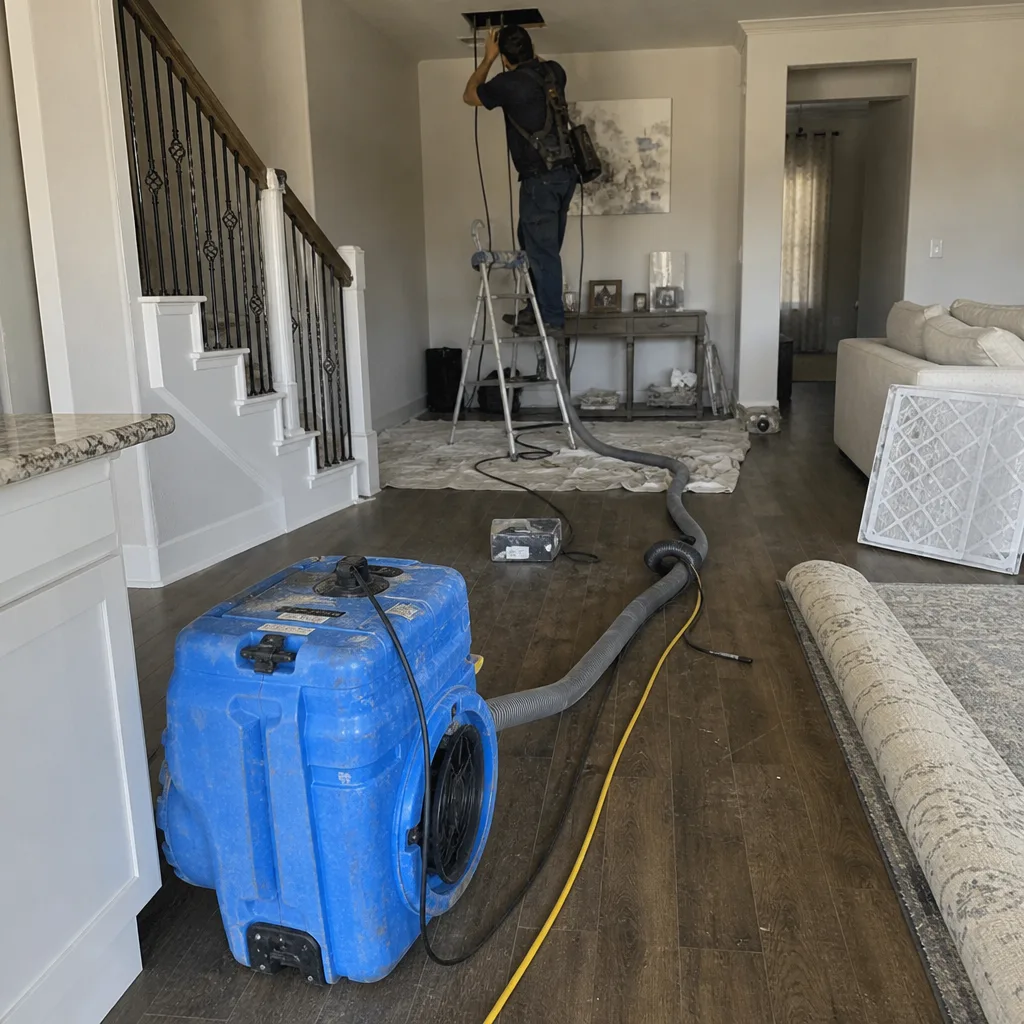 Before
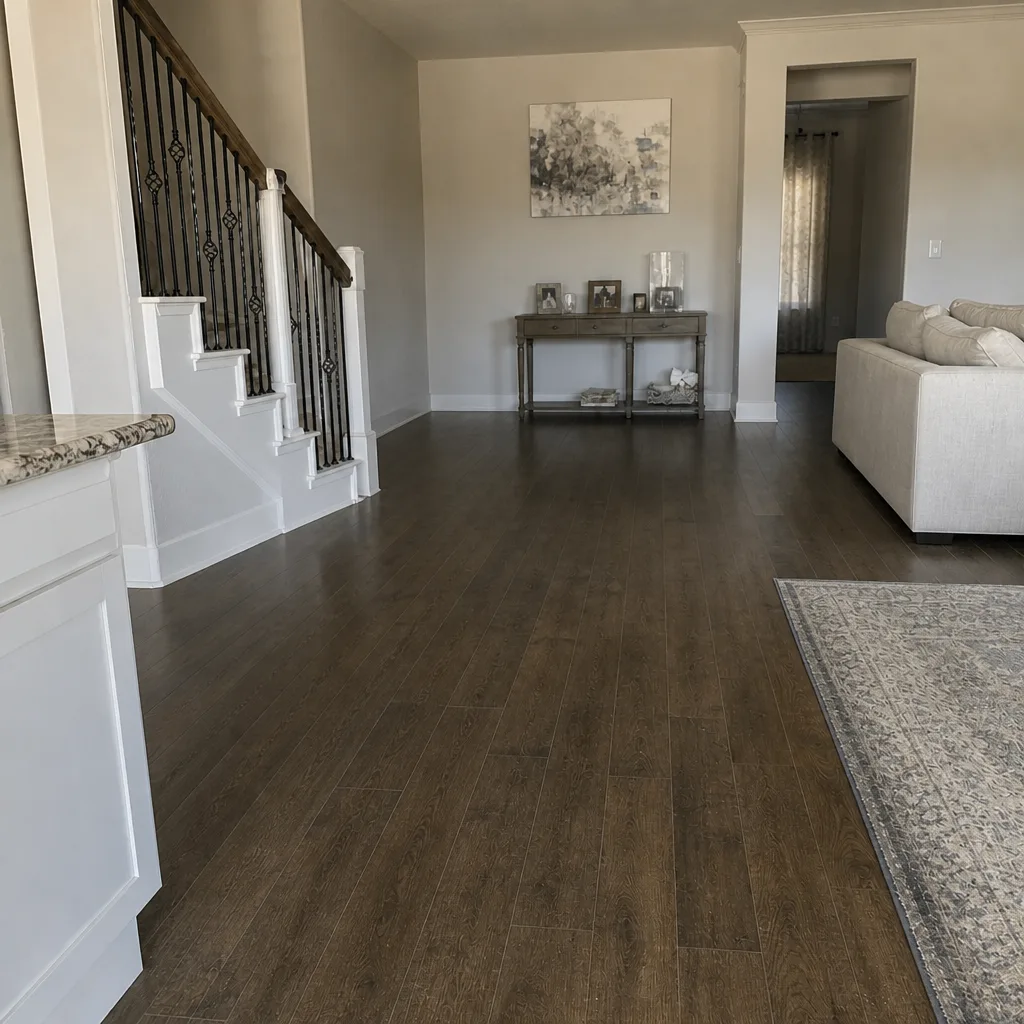 After
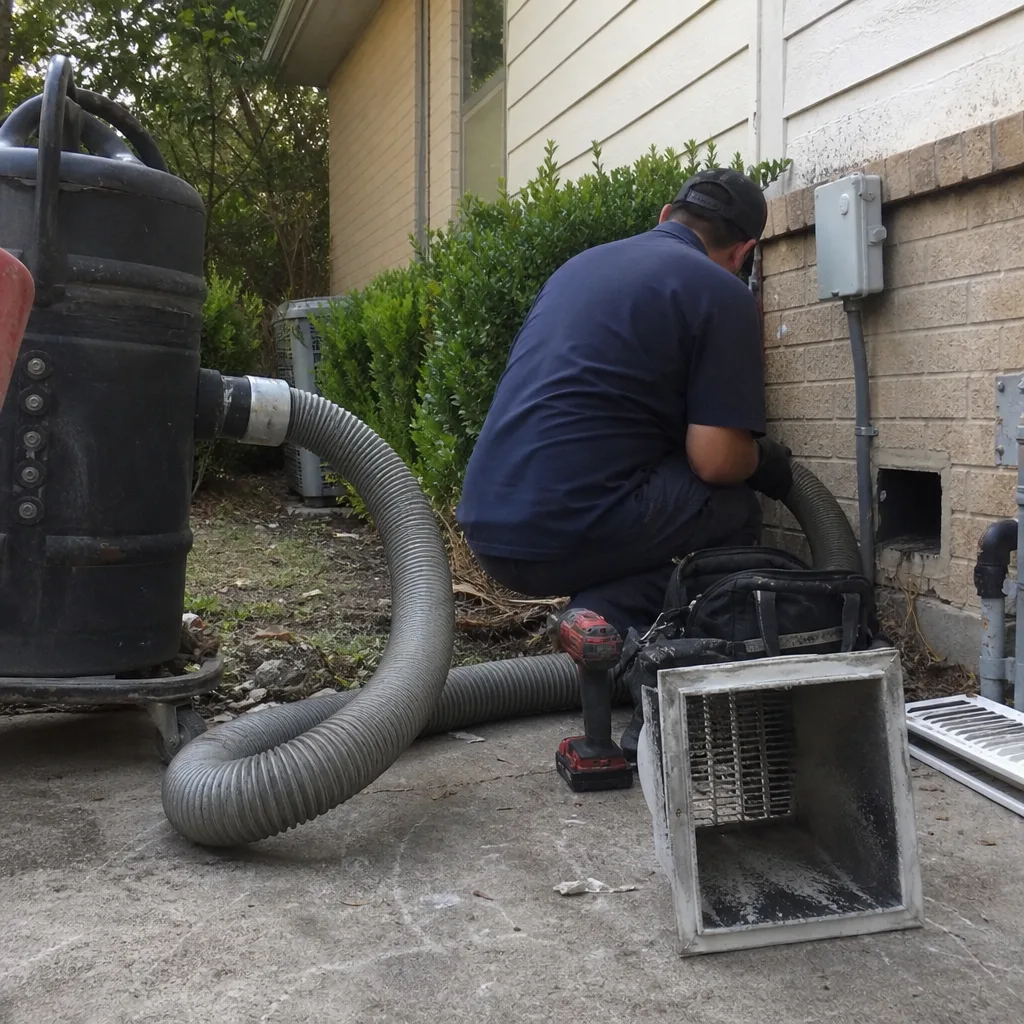 Before
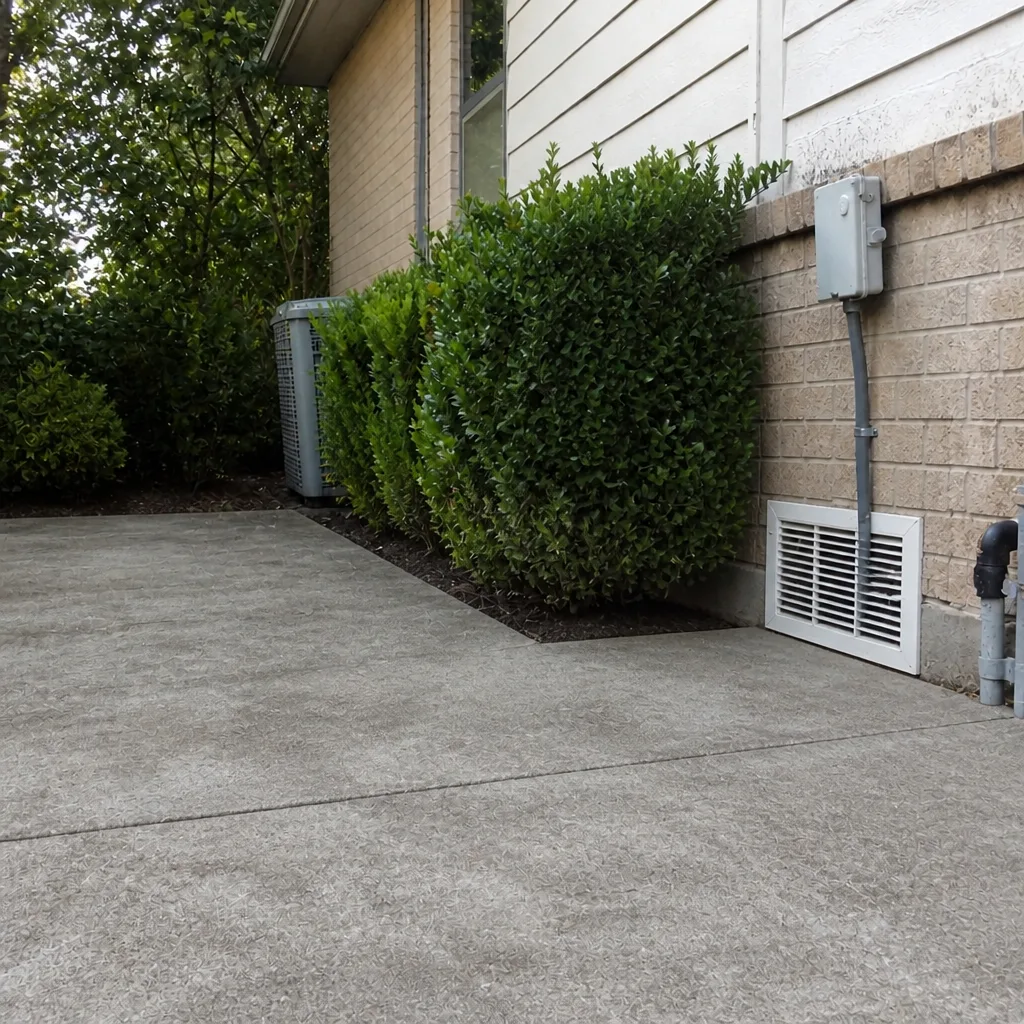 After
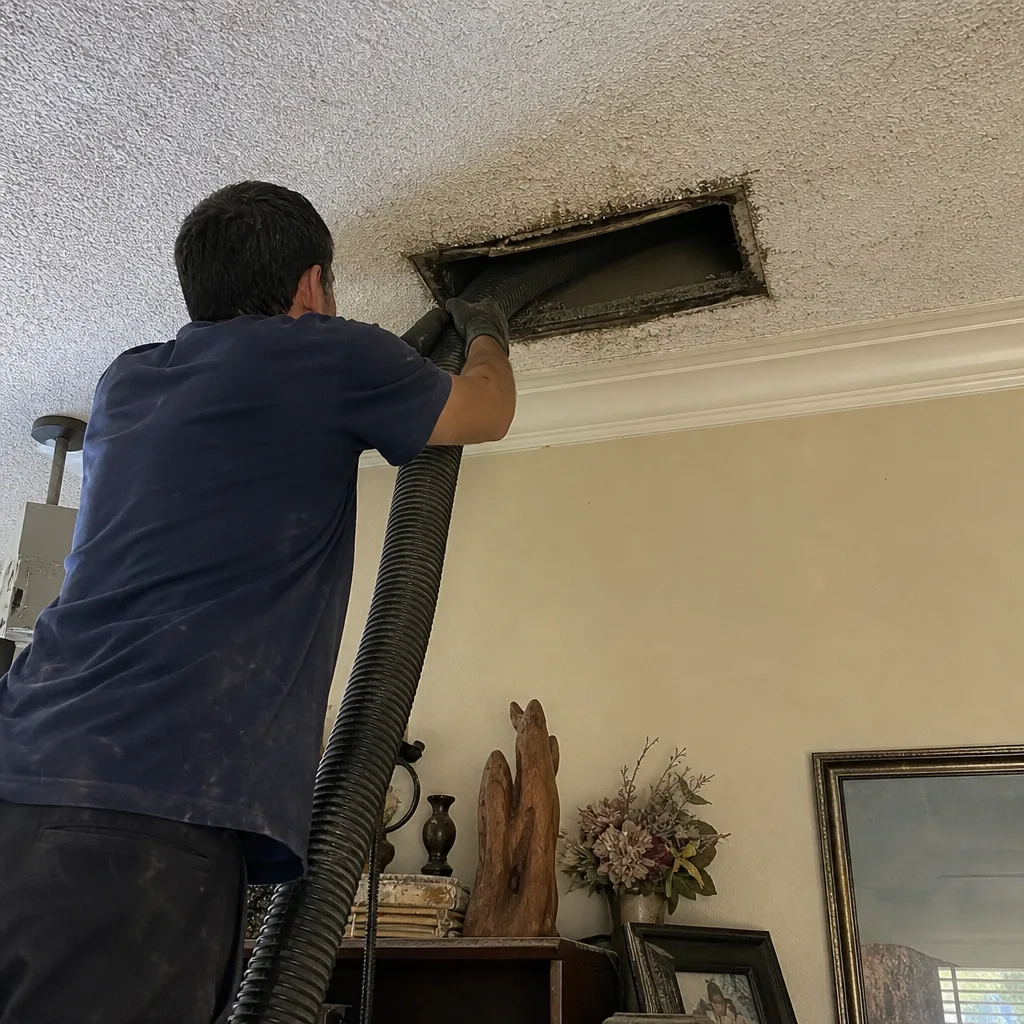 Before
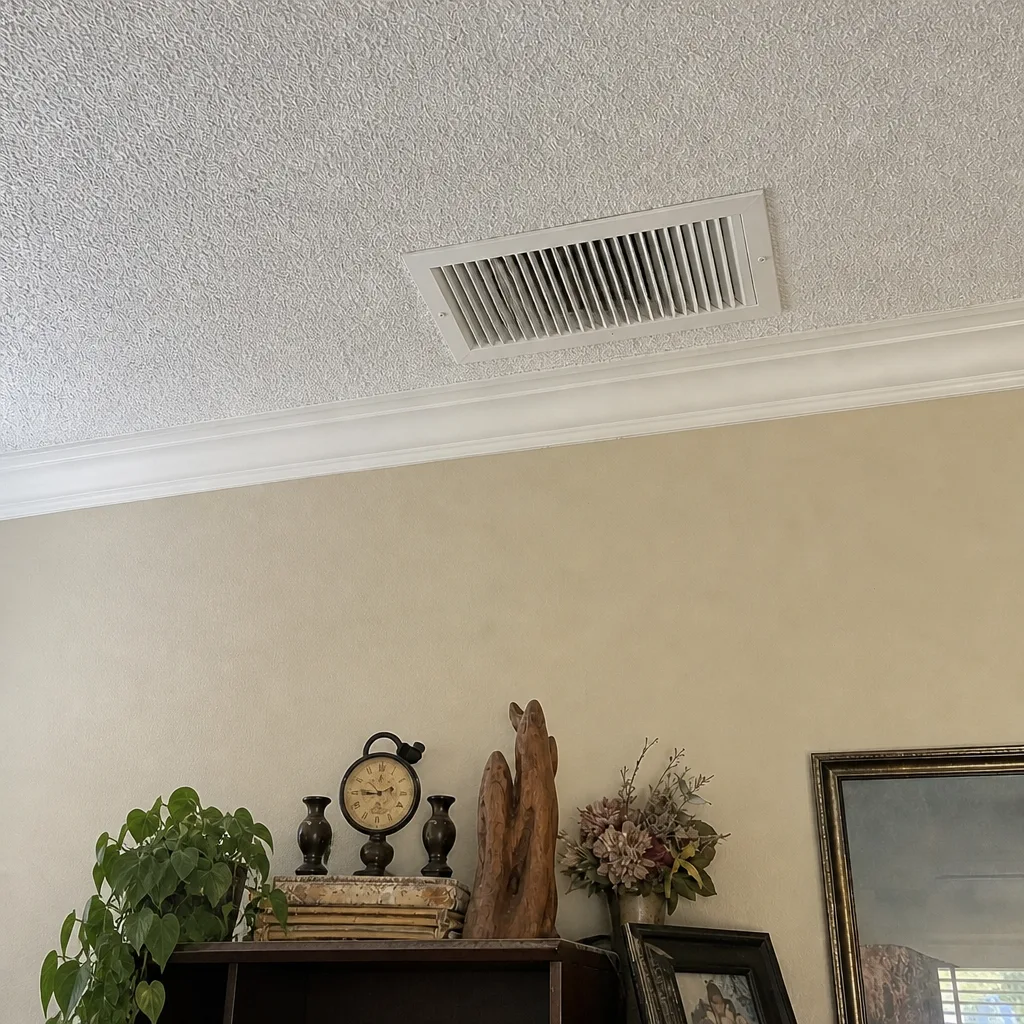 After
When to Call a Professional
Call a professional duct cleaning company in Memorial if any of these apply to your home: recent renovation or remodeling that left visible dust in the duct network, visible mold growth or a musty odor at supply vents, evidence of rodents or insects in the duct system, an occupant with asthma or allergies, a duct system that hasn’t been cleaned in years, or visible dust streaks around registers that suggest duct leaks. Also call if you’ve attempted DIY cleaning and the problem returned within weeks; that usually means the interior contamination is more stubborn than the surfaces showed.
Air Duct Cleaning Memorial offers free estimates in Memorial. Call (833) 468-3620. We answer 24/7. Fast dispatch from 7am to 7pm, Sunday through Friday.
We handle HVAC cleaning as part of the same visit when the system needs it, and cleaning, sanitizing, repair, and sealing are all under one scope. Our technicians have up to 13 years of experience, and our equipment stack includes Rotobrush and Nikro systems, Abatement Technologies unit-based sanitizing, Guardsman products for post-cleaning finishing, and Honeywell and Aprilaire filtration recommendations for upgrades that extend the value of the visit.
Frequently Asked Questions
Typical cleaning in Memorial runs from $350 to $700 for a whole system, with sanitizing and repair work adding to the total based on what’s found. The written estimate sets the final price, and estimates are free. Call (833) 468-3620 for an exact quote.
Low advertised prices usually come from per-vent pricing that grows as the job goes on, or from work done with consumer-grade equipment that doesn’t achieve source removal. A whole-system quote with named equipment and a clear scope reflects what the job actually involves. Call (833) 468-3620 to compare an honest quote.
Ask for before-and-after photos of your own ducts, not stock images. Ask what equipment was used and what was covered in the scope. A specialist company documents the work and names the equipment platforms used. Call (833) 468-3620 for a free estimate and a clear picture of what’s involved.
Most homes benefit from a professional cleaning every few years, but the right interval depends on dust load, pets, renovations, filter habits, and local climate. Memorial homes that run air conditioning heavily for most of the year often benefit from more frequent attention than the general estimate suggests. Call (833) 468-3620 to talk through your home’s specific conditions.
DIY cleaning that damages ductwork, flex connections, or internal components can create problems that manufacturer or installer warranties won’t cover. Professional cleaning with proper equipment reduces that risk. Call (833) 468-3620 for a free estimate if you’re unsure what’s safe to attempt yourself.
Yes. Duct repair and sealing are part of the same scope as cleaning, sanitizing, and dryer vent work, so leaks found during cleaning can be addressed on the same visit rather than referred elsewhere. Call (833) 468-3620 to schedule a free estimate.
The Bottom Line
DIY duct cleaning has a real place: register and grille cleaning, accessible boot vacuuming, and filter upgrades all contribute to indoor air quality. What DIY cannot do is source removal inside the duct runs, because consumer equipment can’t generate the airflow volume required to carry contamination out. In homes with renovation debris, visible mold, vermin intrusion, or occupants with respiratory conditions, professional cleaning isn’t optional. In other homes, a hybrid approach works: DIY for the surfaces you can reach, professional cleaning for what’s inside the ducts. Our team at Air Duct Cleaning Memorial is built around this single trade, and we’re glad to walk you through which approach fits your Memorial home.
Call (833) 468-3620 for a free estimate. We answer 24/7. Fast dispatch from 7am to 7pm, Sunday through Friday.
Written by the team at Air Duct Cleaning Memorial.