
Air Duct Cleaning: Repair or Replace? How Memorial Homeowners Decide
Most Memorial homeowners ask us the same question before we ever quote a job: clean, repair, or replace? Here’s the direct answer. Cleaning alone fits a duct system that’s structurally sound and just has debris buildup. Repair fits localized damage like a disconnected joint or a single crushed run. Replacement only makes sense when the flex duct itself has failed system-wide. The decision isn’t really about age. It’s about whether your ducts can survive a cleaning without getting worse.
That distinction matters in Memorial because so much of the housing stock runs flex duct through attics that hit 130°F in summer. Heat like that degrades the duct itself, and cleaning a system that’s already coming apart doesn’t clean it. It accelerates the failure. If you’d rather have someone look at it than guess, call (833) 468-3620.
What does the heat in a Memorial attic actually do to flex duct?
Sustained attic temperatures above 120°F accelerate inner liner separation on flex duct, and that’s the failure mode most Memorial homeowners never see because it happens inside the tube. Standard flex duct is a plastic inner liner wrapped in fiberglass insulation and an outer jacket. Over years of heat cycling, the liner that carries the air can peel away from the insulation around it. Once it starts, the material sheds and collapses.
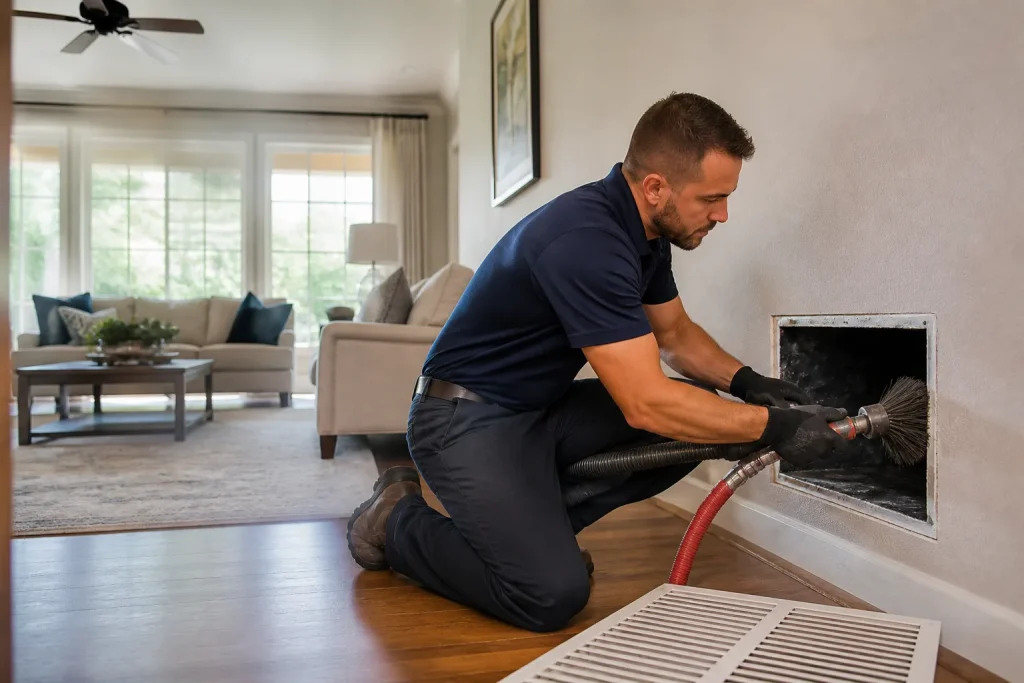
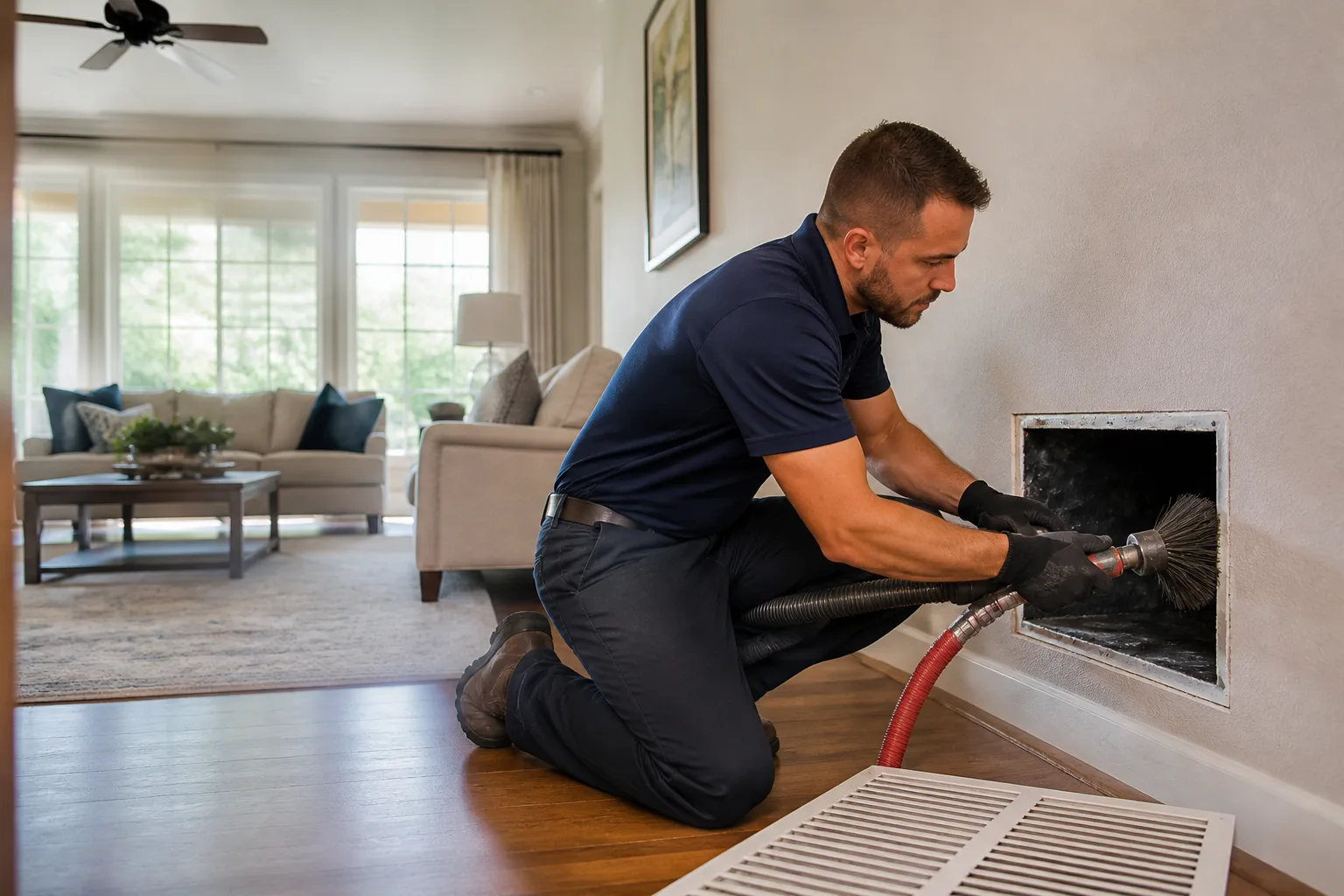
That’s why the order of operations matters. If a technician runs a rotary brush through delaminated liner without checking first, the brush contacts loose material and can tear more of it free. What was a marginal duct becomes a duct blowing insulation fibers into your living room. The right sequence starts with a camera inspection, not a cleaning booking.
What we look for on camera:
- Liner separation. The inner wall pulling away from the insulation, usually first visible near joints and at the plenum connection where heat is highest.
- Rodent pathways. Chewed outer jackets and gaps that let hot attic air get pulled directly into the supply stream.
- Sagging runs. Flex duct drooping between supports, which reduces airflow and collects debris at the low point.
- Crushed sections. Duct pinched behind a joist or under stored boxes, which chokes one room’s airflow entirely.
Camera inspection is the whole game here. A company recommending replacement without putting a camera inside the runs is guessing.
How do you decide between cleaning, cleaning plus repair, and replacement?
The decision comes down to structural integrity first, debris second. Here’s the framework we walk Memorial homeowners through.
Clean only. The flex duct is intact, the liner is bonded, joints are connected, and the accumulation is just dust and debris from renovation, a new HVAC install, or a long stretch without service. Cleaning restores airflow and removes what’s circulating. No repair needed.
Clean plus repair and seal. You’ve got localized problems: a disconnected joint at a takeoff, one crushed run behind a joist, a few small leaks at the plenum. The system as a whole will hold up, but the damage needs fixing or the cleaning is wasted effort. Sealing those leaks also stops conditioned air from bleeding into the attic. This sequence is where a single visit earns its keep, since we handle air duct cleaning in Memorial and the sealing work under one company.
Replace. Widespread liner delamination across multiple runs, rodent damage through the outer jackets, or flex duct so aged and sagging that it can’t be cleaned without falling apart. At that point you’re not maintaining a duct system. You’re paying to clean something that will keep failing.
How does duct leakage turn this into a math problem?
Leakage rate is the number that decides whether replacement pays back faster than cleaning. A meaningful leakage rate – roughly 15% of total system airflow or higher – usually tips the calculation toward repair or replacement, because you’re losing enough conditioned air into the attic that no amount of cleaning fixes the energy waste. Below that, cleaning and targeted sealing tend to deliver the better return.
Two tests produce that figure:
- Duct pressurization. A calibrated fan pressurizes the duct system and measures how much air escapes at a set pressure. That gives you total leakage.
- Blower door. Measures whole-house leakage and, combined with duct testing, separates duct loss from envelope loss so you know which problem you actually have.
Memorial homes built in the last couple of decades often have ducts in unconditioned attic space, which is why leakage here costs more than it would in a basement or crawlspace system. Every cubic foot of cooled air leaking into a 130°F attic is money. If the test shows your system is bleeding badly, cleaning alone is polishing a leaky bucket. Beyond cleaning and sealing, filter and air-quality upgrades from brands like Honeywell or Aprilaire help hold the improvement once the ducts are sound. We also handle HVAC cleaning when the air handler and coil need attention in the same visit.
How does a reputable specialist scope this decision?
A proper assessment looks at three things, and none of them is “how old is the house.”
- Camera inspection of full duct runs. Not a peek at one register. Full runs from plenum to termination, so delamination and rodent damage show up where they actually are.
- Static pressure differential. Measures how hard the system is working to push air through. High static pressure with normal airflow points to restriction; low airflow with high leakage points to duct loss.
- Visual assessment of the outer jacket. Cracks, tape failures, sagging, and rodent wear at every accessible section.
What you should be wary of is a recommendation based on age alone. A 20-year-old flex system that was installed well and remains bonded can clean up fine. A 6-year-old system with rodent damage through the jacket may need replacement. Age tells you almost nothing. The condition of the liner tells you everything.
When a specialist does the scoping, ask what they saw on camera and where. Anyone worth hiring can show you. We use Rotobrush and Nikro systems for the cleaning side, and Abatement Technologies equipment when a job needs sanitizing after rodent or microbial contamination. Industrial-grade equipment, residential scope – that combination is what separates a real assessment from a sales pitch.
What if the company recommending replacement also sells replacement?
Nothing, on its face. A generalist HVAC contractor can absolutely give you an honest recommendation. But there’s a structural incentive to understand. A company that installs ductwork makes money on replacement. A dedicated indoor-air company that doesn’t do full duct replacement makes money on cleaning, sanitizing, repair, and sealing. Neither is automatically right – but the incentive shapes what gets recommended.
Questions worth asking any generalist recommending full replacement:
- Can you show me the camera footage of every run you’re recommending for replacement?
- What’s the measured leakage rate, and did you test before recommending?
- What’s the static pressure, and what does it tell you about the actual problem?
- Could repair and seal fix the failures you’re pointing to, and if not, why not?
If the answers are “the system is old” and nothing more, get a second opinion. Air Duct Cleaning Memorial does not do full duct replacement, which means our recommendation on cleaning versus replacement isn’t tied to installing new ductwork. That’s not a virtue claim – it’s just worth knowing whose bread is buttered by which answer.
When should you call a pro instead of investigating yourself?
Call when you notice any of these: rooms that never cool properly even after the AC runs for hours, visible dust patterns at the registers hours after cleaning, a musty smell when the air kicks on, or a recent renovation, new HVAC install, or rodent sighting. Flex duct in Memorial attics is not a good DIY project – the attic itself is dangerous in summer heat, and the camera inspection that actually answers your question requires equipment most homeowners don’t have.
Our technicians have up to 13 years of experience with duct systems, and our scope stays narrow on purpose. We only do this. Duct air duct cleaning is the start; if the inspection finds leaks, we can repair and seal them in the same visit. We also handle dryer vent cleaning, which is a fire-safety service most duct-only companies skip or farm out – and worth doing while a technician is in the attic anyway.
The Bottom Line
Clean if the ductwork is sound and the problem is debris. Clean and repair if the damage is localized. Replace only when the liner has failed across multiple runs and cleaning would make things worse. Age is the wrong question. Structural integrity and measured leakage are the right ones. And if the company recommending replacement is the same company that installs ductwork, get a second look.
If you’re in Memorial and need help, Air Duct Cleaning Memorial offers free estimates. Call (833) 468-3620. We answer 24/7. Fast dispatch from 7am to 7pm, Sunday through Friday. The written estimate sets your price, and you’ll see before-and-after photos of your own ducts so you know what was actually done.
Frequently Asked Questions
Usually no, and here’s why: cleaning a system with a disconnected joint or a crushed run removes debris but doesn’t fix the airflow problem that caused the buildup. Worse, cleaning can blow debris into the attic through the gap instead of out of the closed system. Fix the leak, then clean. Call (833) 468-3620 and we’ll tell you which sequence your system needs.
Roughly 15% total system leakage or higher, measured with duct pressurization testing, tends to favor repair or replacement over cleaning alone. Below that, cleaning plus sealing often delivers the better return. The number matters more than any general rule, which is why we test before recommending. A free estimate gets you started – call (833) 468-3620.
Yes. Attic temperatures above 120°F accelerate liner separation, and in Memorial attics that heat is sustained through most of the summer. Flex duct that would hold up for decades in a temperate climate can start delaminating noticeably sooner here. That’s why our inspection starts with the liner, not the installation date. Call (833) 468-3620 if you want your ducts scoped.
Because we don’t do full duct replacement, so our assessment of cleaning versus replacement isn’t tied to selling you new ductwork. That removes one conflict from the decision. Get a second opinion from any company recommending replacement, regardless of who it is – including us. Call (833) 468-3620 for an estimate and we’ll show you what we find on camera.
Written by the team at Air Duct Cleaning Memorial.
Need Air Duct Cleaning Help?
Call Air Duct Cleaning Memorial - the local pro we connect you with is licensed and insured, here with fast help in Memorial.
(833) 468-3620