
Rotobrush Air Duct Cleaning in Memorial: A Homeowner’s Guide
Most homeowners who request “Rotobrush cleaning” have no idea what the machine is actually doing inside the duct. Which means they also can’t tell when a technician is using it properly versus dragging it through at half speed to finish faster. Rotobrush is a contact-cleaning system: a rotating brush head knocks debris loose while vacuum suction pulls it out in real time. Understanding that process is the difference between a cleaned system and a wiped-down one. If you’d rather not sort that out yourself, call (833) 468-3620 for a free estimate.
What is Rotobrush air duct cleaning, and how does it actually work?
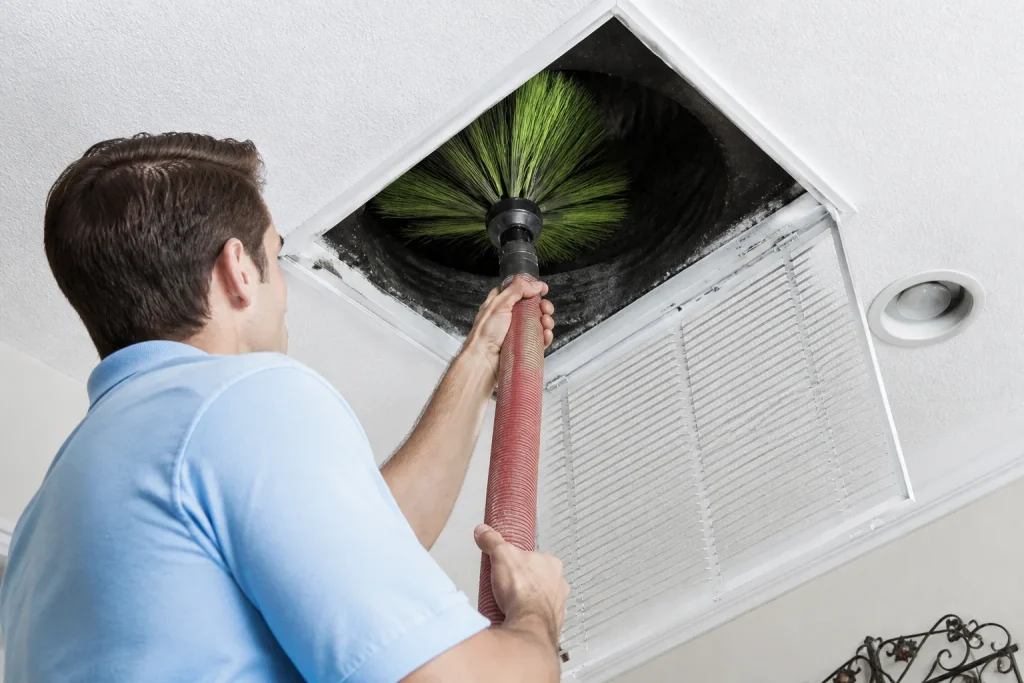
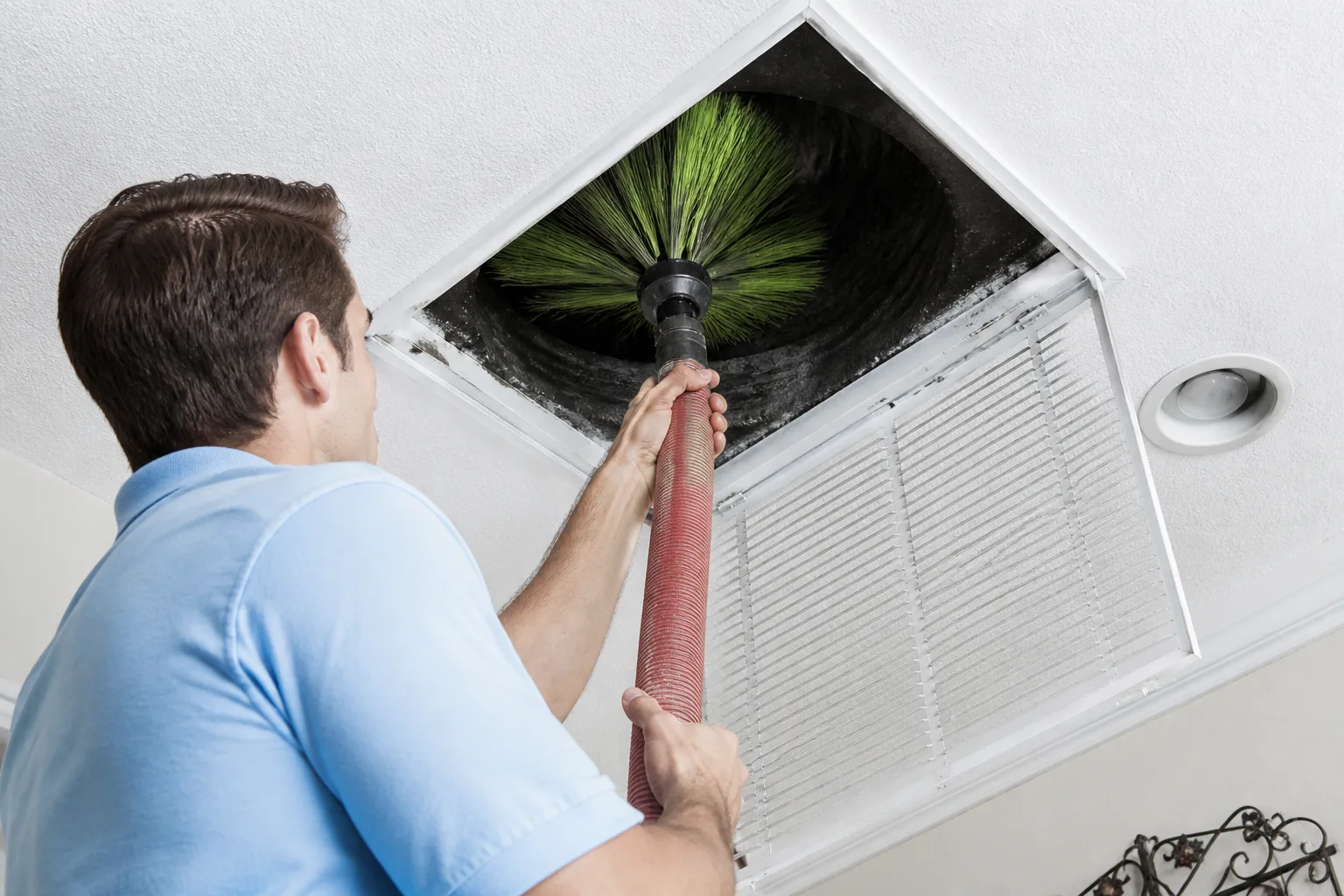
Rotobrush air duct cleaning is a mechanical contact method: a flexible rotating brush travels through the duct while a high-powered vacuum captures the loosened debris at the same moment. The brush physically scrubs the interior surface. The vacuum never stops pulling. That pairing is what separates Rotobrush from agitation-and-extract approaches, where a tool stirs up dust and the extraction step lags behind, letting particles settle back onto surfaces that were just cleaned.
Here’s what’s happening while the machine runs:
- The brush head rotates at high speed, contacting the duct wall and dislodging stuck-on dust, hair, lint and construction debris.
- The vacuum captures material as it lifts, so loosened debris doesn’t resettle downstream.
- The flexible whip navigates turns and offsets, reaching sections a straight rigid tool can’t follow.
- Negative pressure holds the system, keeping the working area contained so dust doesn’t drift into living space.
Because the cleaning is contact-based, the result is measurable. Surfaces come back to bare metal or clean flex liner rather than “less dusty than before.” In Memorial, where homes often run the AC most of the year, that distinction matters – the system is moving air constantly, and anything left behind gets recirculated fast. Clean ducts are the start; we also repair and seal what’s leaking your conditioned air.
What Rotobrush is designed for – and where it reaches its limits
Rotobrush systems are built for the residential duct configurations you’ll find throughout Memorial: standard sheet metal trunks and branches, and the flexible insulated duct common in attic runs. The rotating brush handles both well. It’s a residential-scale platform, and a good technician knows exactly where its reach ends.
Where it needs help:
- Very large commercial trunk lines. Rotobrush systems are sized for residential runs; oversized trunks on a commercial scale may need supplemental equipment to maintain airflow and pressure.
- Heavily damaged ductwork. Collapsed sections, torn liner, or disconnected joints can’t be safely brushed until they’re repaired. Cleaning a damaged duct can make a small problem worse.
- Deep microbial contamination. Where the issue has moved past debris into contamination, sanitizing with Abatement Technologies air filtration equipment is a separate step – the same class of equipment used in remediation settings.
- Systems needing sustained negative pressure. Large or complex layouts sometimes call for a Nikro negative-pressure setup to keep containment strong while the work runs.
This is why a professional assessment comes first. The right equipment depends on what’s actually in the ducts, not on a default setting.
What a proper Rotobrush job looks like from your side of the house
A properly run Rotobrush job has a visible sequence, and you can watch for it. Access points get cut at strategic spots – typically at the main trunk and near branch takeoffs – and sealed afterward. Each vent run takes time. The technician works the return air plenum carefully, because that’s where the largest debris load collects and where a rushed job shows. Then comes the step most homeowners never see: post-cleaning camera inspection, confirming the duct interior actually came clean.
- Assessment and setup. The technician maps the system, identifies access points, and connects the vacuum and containment.
- Return plenum first. The heaviest debris collects here; it’s cleaned before the branches.
- Branch-by-branch brushing. Each run gets the rotating brush head with the vacuum running continuously.
- Camera inspection. A borescope confirms interior surfaces are clean before access points are closed.
- Sealing and walkthrough. Access points are sealed, and the technician explains what came out and what to watch for.
Run time per vent is a legitimate quality indicator. A technician moving too fast through a run is skipping contact time – and contact time is the whole point of the method. In our experience, a homeowner who knows the sequence can tell the difference between careful work and a speed run.
Memorial-specific conditions that affect your ductwork
Memorial’s summers push attic temperatures high enough to stress flexible duct over time. Flex duct liner degrades faster in that heat, and aged liner becomes fragile. A brush rotating at full speed through brittle liner can tear it, which is worse than leaving the dust alone. Experienced technicians adjust brush rotation speed and technique on older flex runs for exactly this reason.
What that means for a Memorial homeowner:
- Attic flex runs deserve a closer look first. Age and heat exposure determine how the brush should be run, not just where it goes.
- Long cooling seasons mean more airborne debris cycling through the system, so duct condition tends to matter more here than in climates with short cooling seasons.
- Post-cleaning inspection catches liner damage before it turns into an airflow problem.
If the inspection turns up tears or disconnected joints, duct repair and sealing handled in the same visit saves a second call. We only do this – every tool and process is built around duct and air-quality work, which is why the repair step doesn’t get handed off.
How to verify the work was actually done correctly
You don’t have to take anyone’s word for it. A legitimate Rotobrush cleaning leaves evidence you can check yourself. Start with the removed debris: it should look like a real accumulation – dust, lint, hair, pet fur, sometimes small construction fragments – not a token puff. If the technician shows you a nearly empty containment bag on a system that hadn’t been cleaned in years, ask why.
Then check the airflow. Before-and-after readings at the registers are a real quality measure, not a marketing prop. A cleaned system moves air more freely, and a technician who takes readings at the start and finish is one who expects the numbers to change. Ask for the camera footage too; post-cleaning inspection should be routine, not an upgrade.
What follow-up should look like from a company that stands behind the work: a walkthrough of what was found, plain answers about any liner damage or leak found during inspection, and honest recommendations if a filtration upgrade makes sense. Professional-grade filtration from Honeywell or Aprilaire can extend the value of a cleaning visit, but only if your system actually needs it.
When to call a pro
If your vents show visible dust buildup after a recent cleaning, if you notice musty odors when the system starts, if a recent renovation filled the returns with construction dust, or if the ducts have never been cleaned and you’re dealing with allergies, it’s time to stop guessing. Rotobrush equipment run correctly is a different result than a shop vac and good intentions. Call (833) 468-3620. We answer 24/7. Fast dispatch from 7am to 7pm, Sunday through Friday. Estimates are free.
Related services in Memorial: Air Duct Cleaning Memorial for the full scope of what we handle, dryer vent cleaning for the fire-safety service many duct-only competitors skip, and HVAC cleaning if the system itself needs attention alongside the ducts. For standard air duct cleaning questions, our team can walk you through what your system needs.
The Bottom Line
Rotobrush is a specific method, not a badge: rotating brush plus continuous vacuum plus camera verification. Knowing how it works lets you ask the right questions – about brush speed on aged flex, about the return plenum, about before-and-after airflow readings. If a quote comes in suspiciously low, ask what equipment is being used and whether inspection is included. A specialist who only does duct work will answer without hesitation.
If you’re in Memorial and need help, Air Duct Cleaning Memorial offers free estimates – call (833) 468-3620. Our technicians have up to 13 years of experience with professional-grade equipment, and the estimate is free with the price set per job in writing before work starts.
Frequently Asked Questions
Rotobrush duct cleaning is priced per system, not per vent, and the written estimate sets the final price. Whole-system pricing depends on the number of runs, system layout, and whether sanitizing or repair is added. A free estimate gives you a firm number before work begins. Call (833) 468-3620 – estimates are free.
It can if brush rotation speed isn’t adjusted for aged or heat-stressed liner. Flexible duct in Memorial attics degrades from prolonged heat exposure, and a careful technician slows the brush on brittle runs and inspects afterward. If liner damage already exists, repair comes before cleaning. Ask any provider how they handle older flex before they start.
Check three things: the removed debris (should show real accumulation), before-and-after airflow readings at the registers, and post-cleaning camera footage. A company confident in its work offers all three without being asked. If any of them are missing, ask why.
Most Memorial homes do well with cleaning every few years, or sooner after renovation, a new HVAC installation, or if allergy symptoms flare. Long cooling seasons move a lot of air through the system, so condition matters more than a fixed calendar. A free assessment tells you what your specific system needs. Call (833) 468-3620 for an exact quote – estimates are free.
Written by the team at Air Duct Cleaning Memorial.
Need Air Duct Cleaning Help?
Call Air Duct Cleaning Memorial - the local pro we connect you with is licensed and insured, here with fast help in Memorial.
(833) 468-3620