
Last updated November 25, 2026
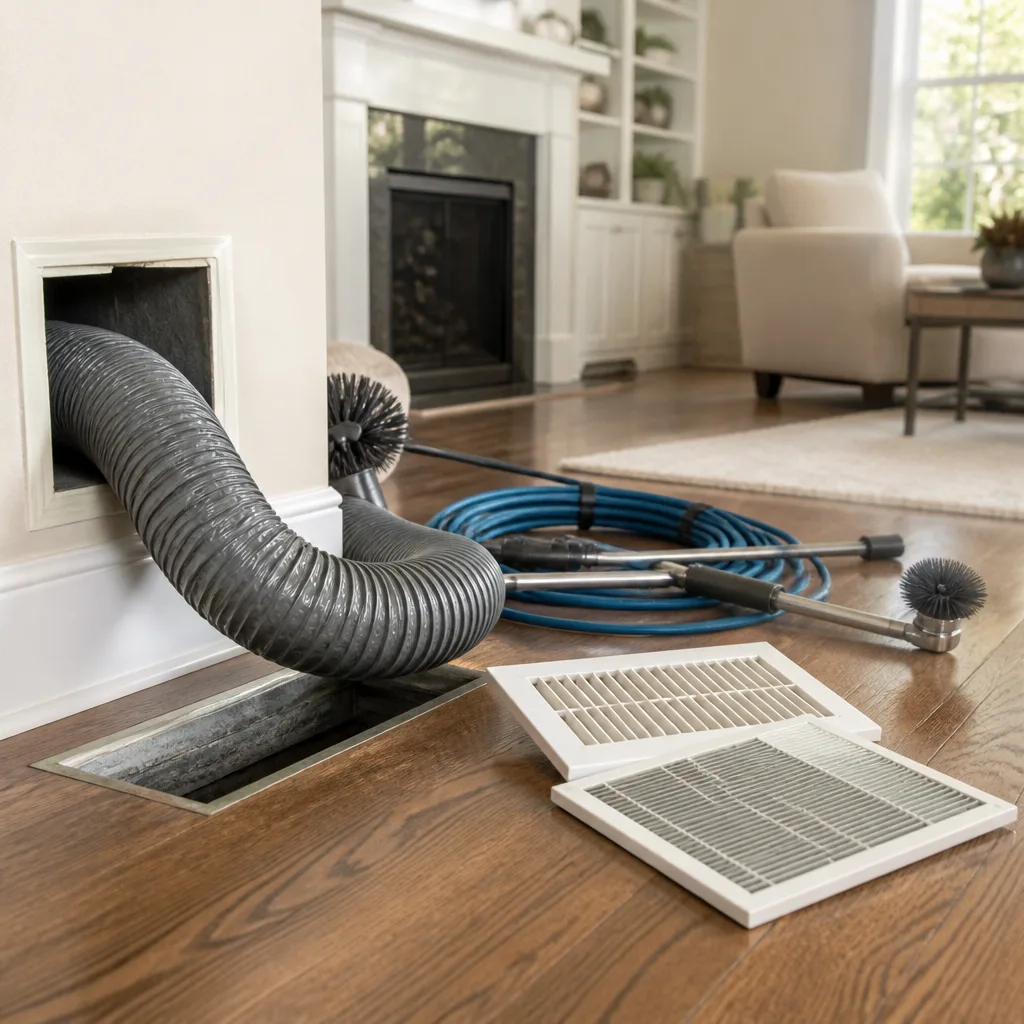 Whole-home duct cleaning
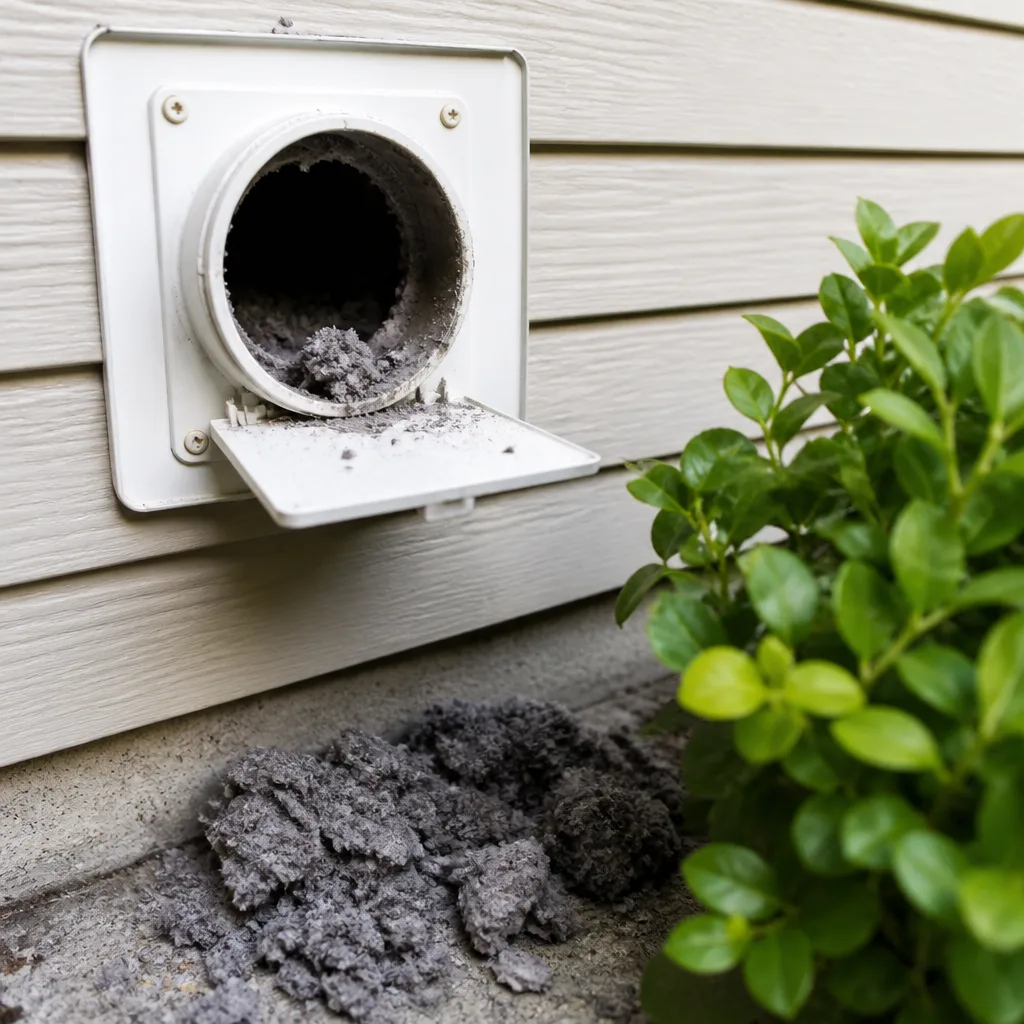 Dryer vent cleaning
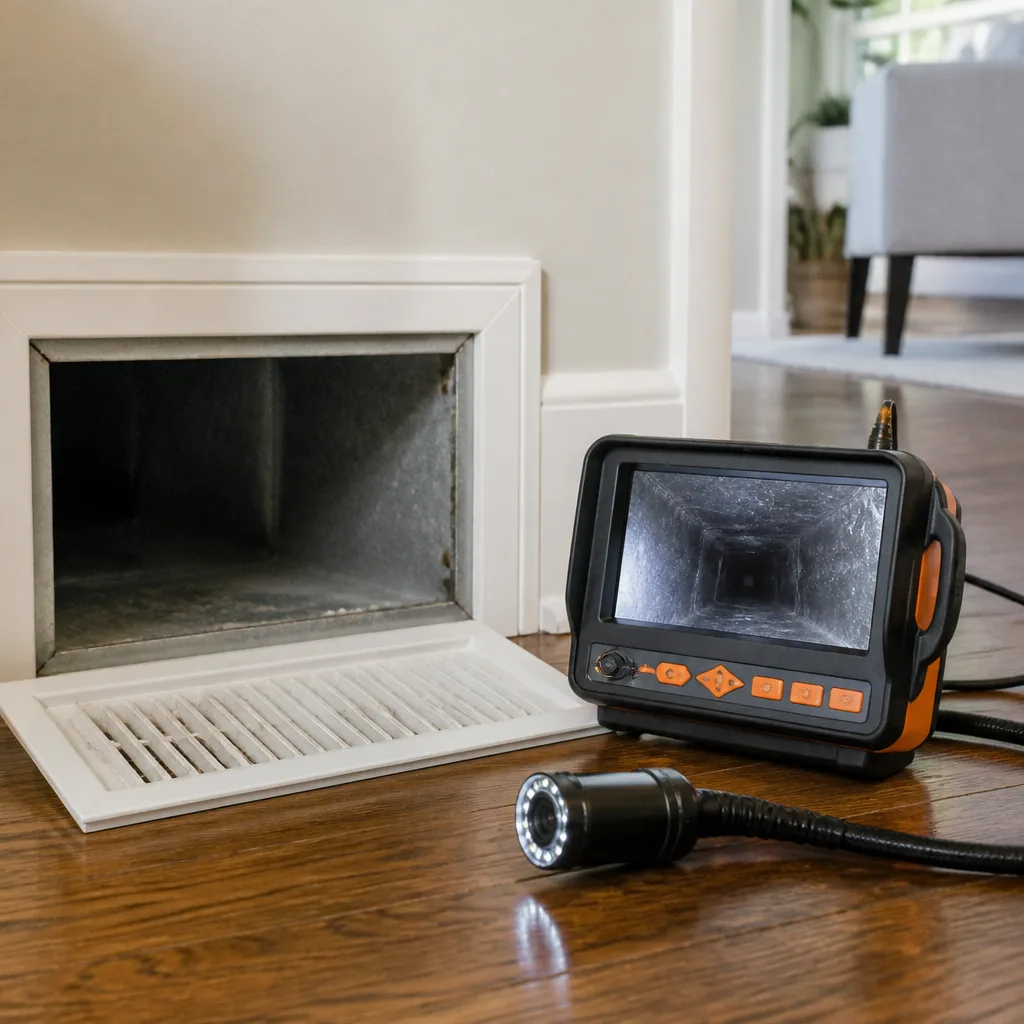 Camera inspection
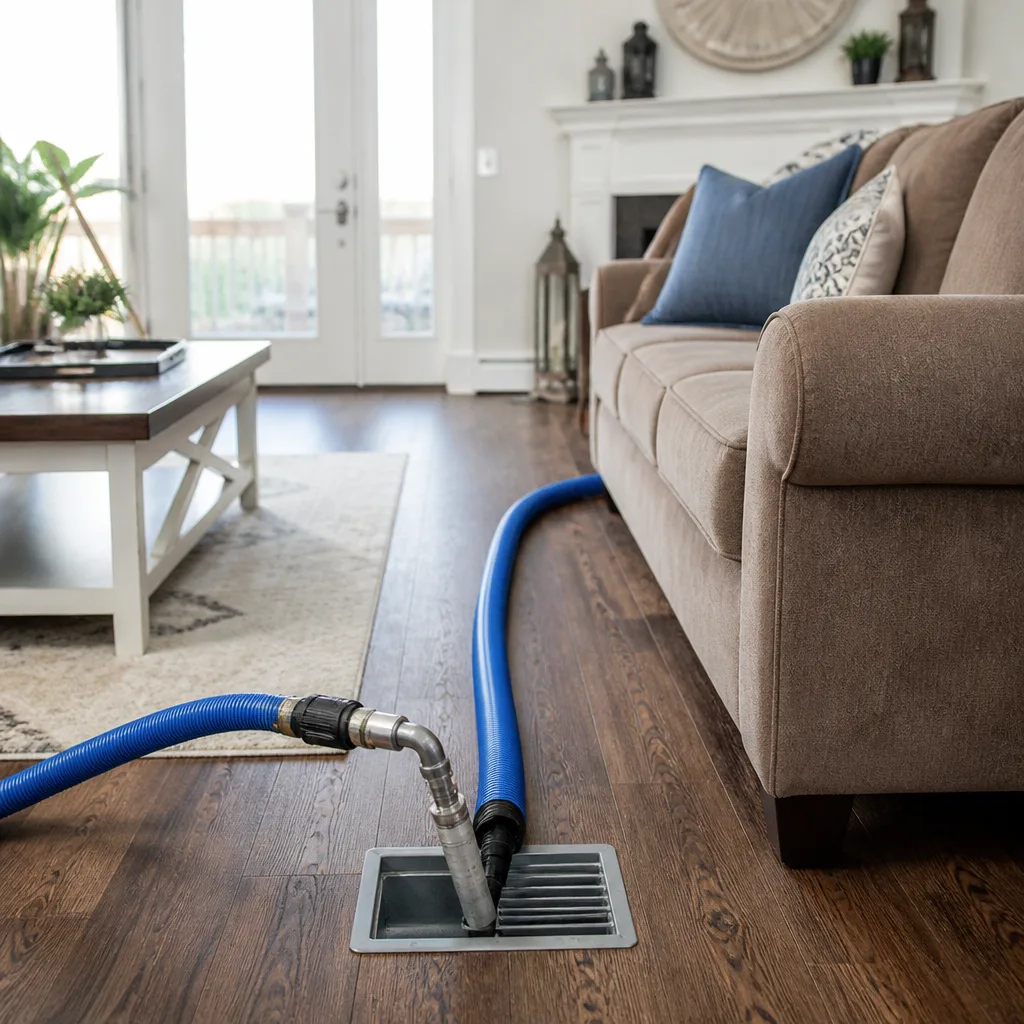 Sanitizing & deodorizing
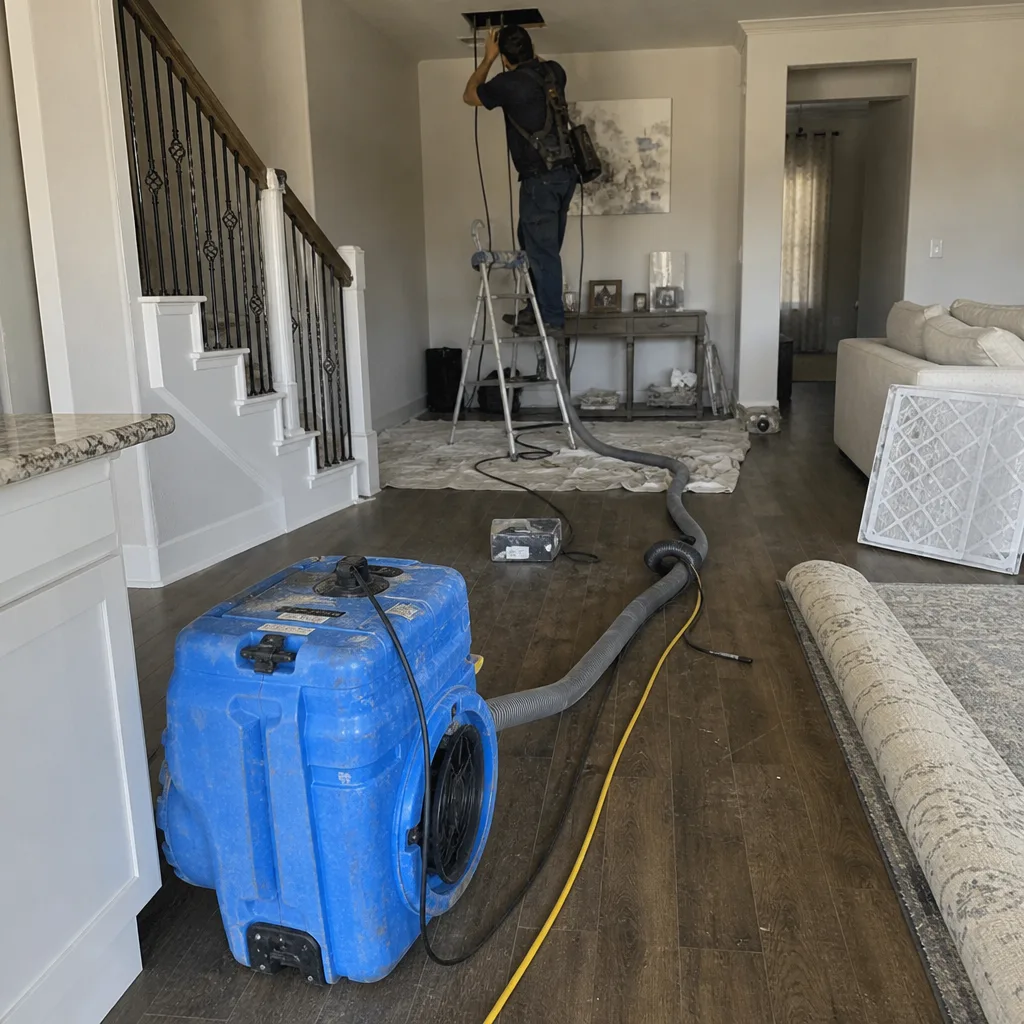
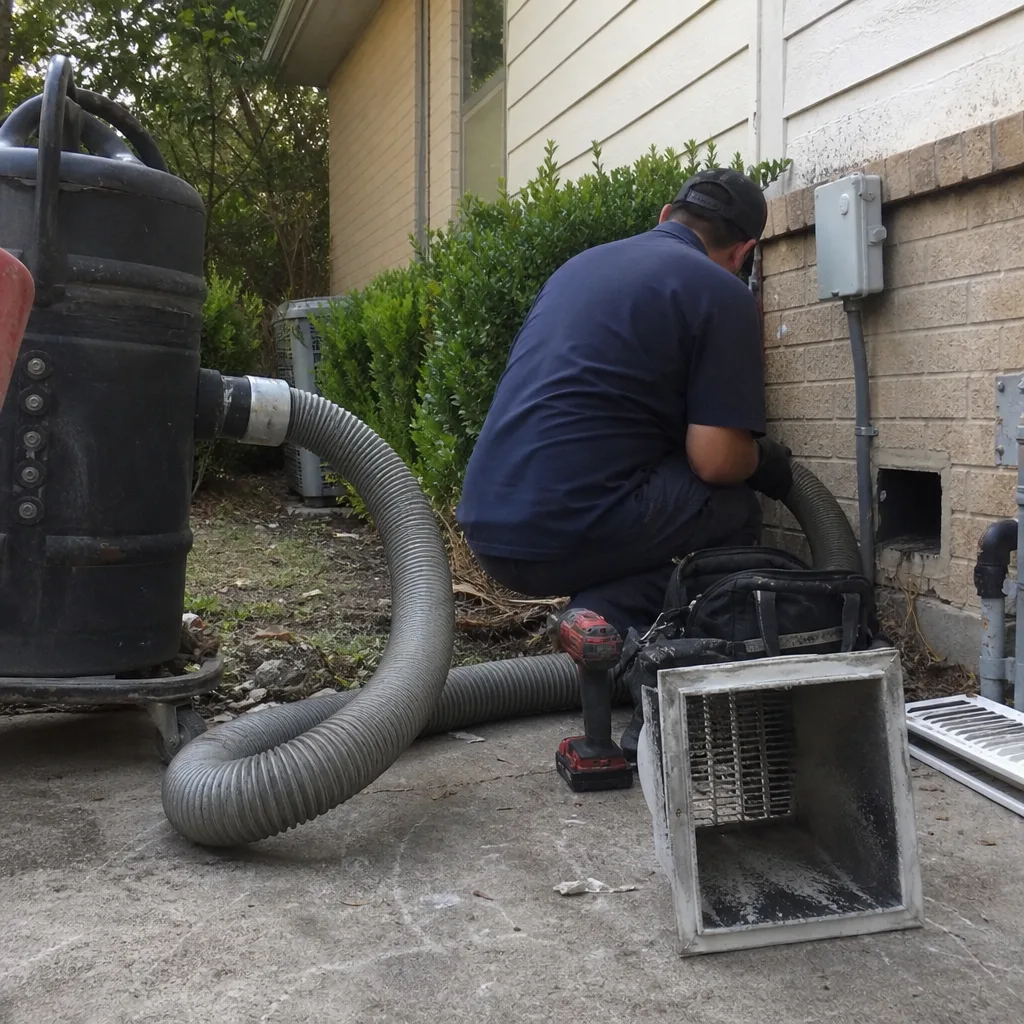
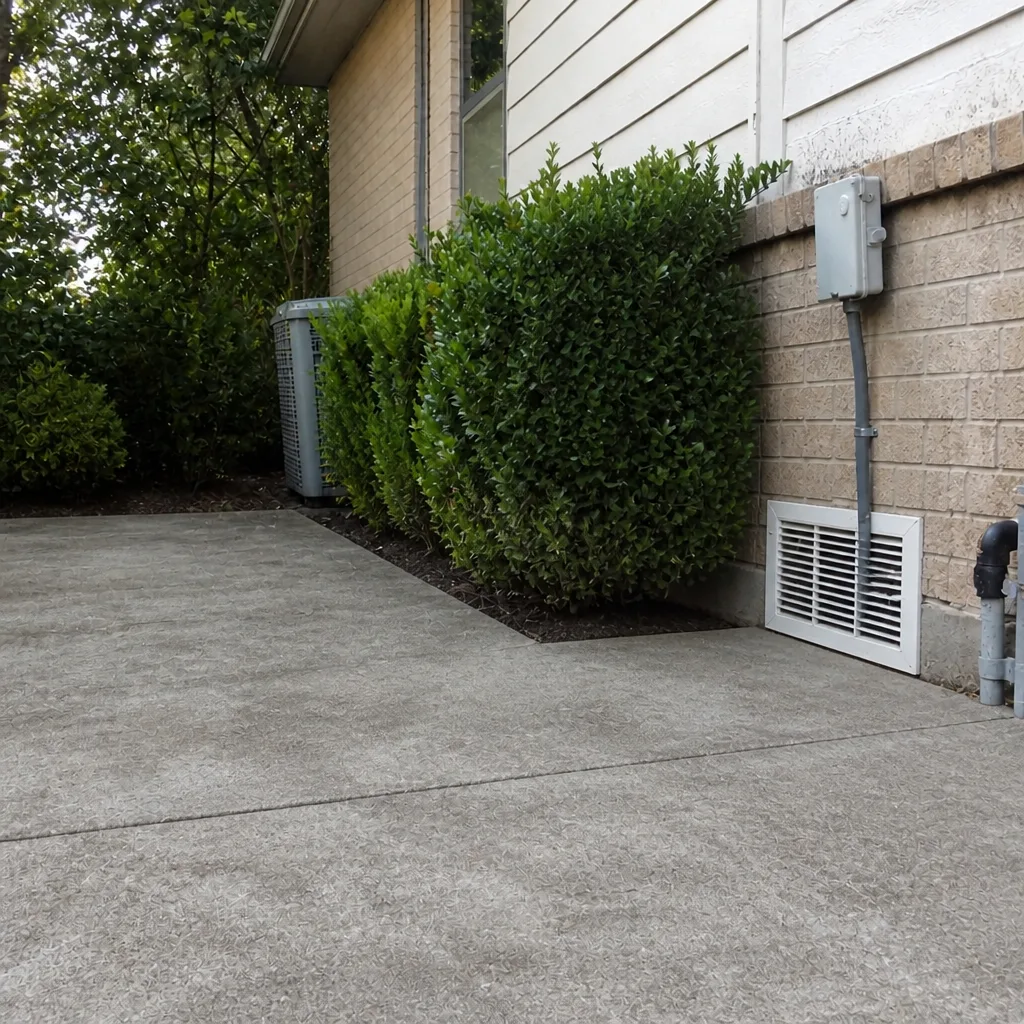
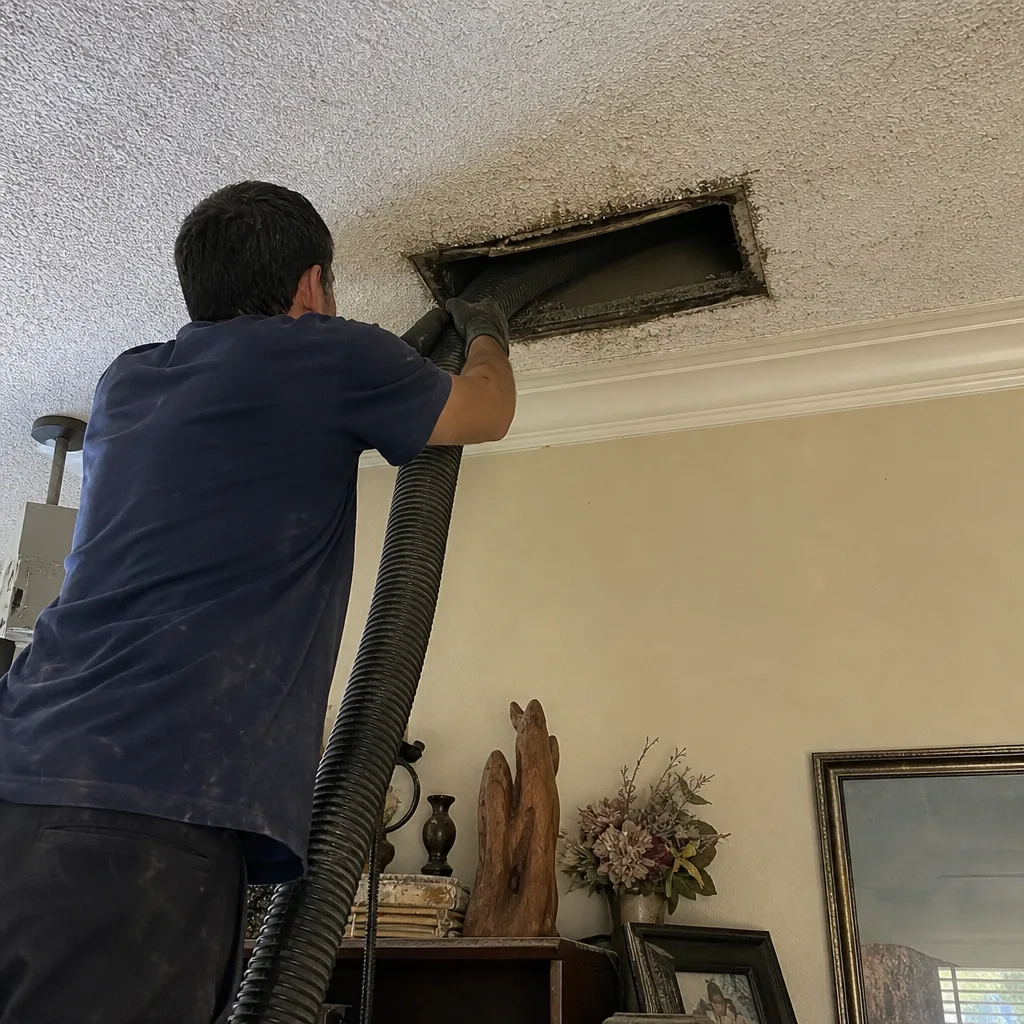
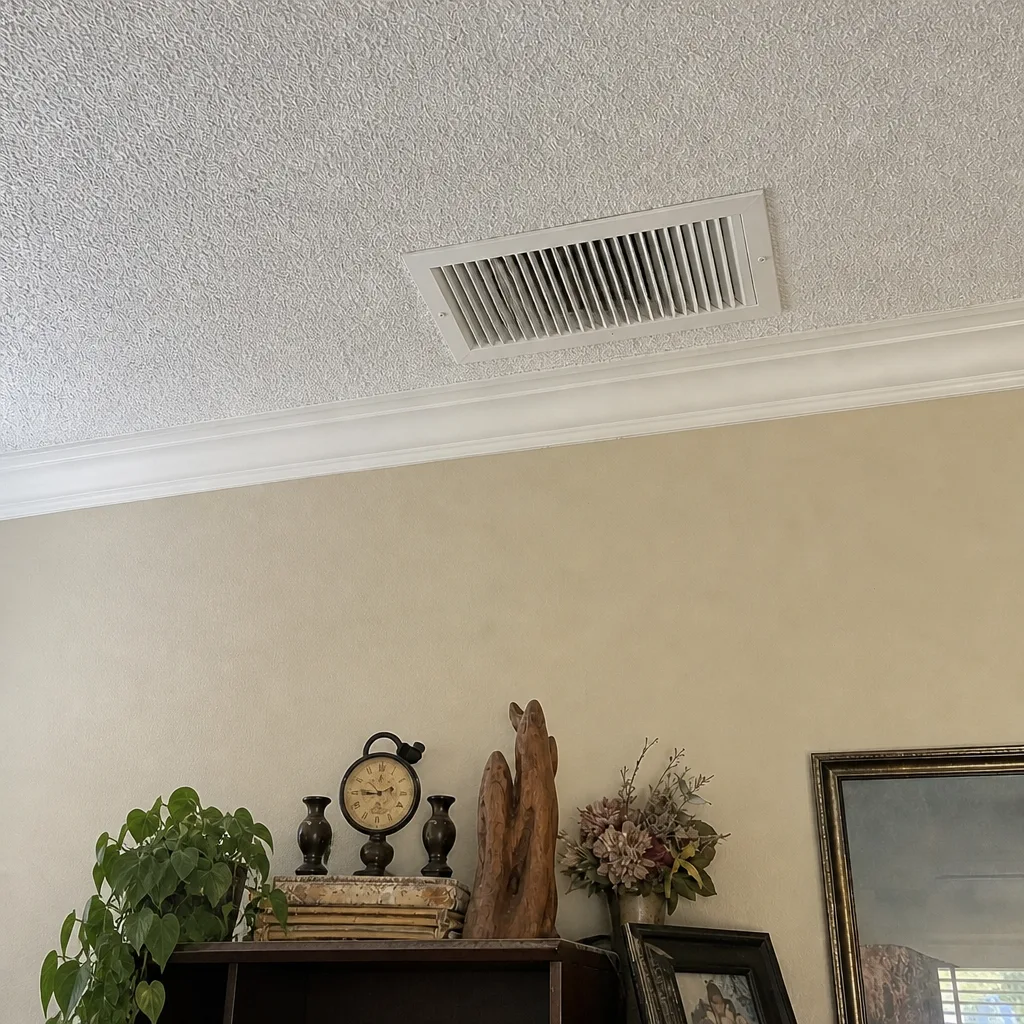
Whole-system duct and dryer vent check with before-and-after photos - you see exactly what came out of your vents
That "$99 whole-house special" is a bait ad - the real number appears once they are in your hallway, or the "clean" is a shop-vac at the register. We photograph the inside of your ducts before and after instead.
Air Duct Cleaning Warning Signs: A Memorial Homeowner’s Reference Guide
Most duct cleaning warning signs lists get this wrong on the first item: visible dust on your supply registers. That dust often means your filter is doing its job, catching particulate before it settles inside the duct interior, not that your ducts are contaminated. It’s the difference between a dirty system and a broken one, and the two need completely different spending decisions. This guide separates filter-side signals from duct-interior signals, flags the warning signs that mean cleaning won’t help, and gives Memorial homeowners a practical framework for deciding whether they need cleaning, repair, or a call about something else entirely.
Quick Answer
Reliable air duct cleaning warning signs are duct-interior and airflow-based, not surface-level: odor on first airflow after the system starts, uneven room temperatures that weren’t there before, visible debris or liner fibers at the supply boot, and constant filter loading fast enough that replacements don’t last. Register dust and irregular cleaning alone aren’t reliable indicators. In Memorial, the most common genuine trigger we see is post-renovation debris inside ductwork, followed by long-deferred maintenance in older homes that have changed HVAC systems without ever having the supply and return runs addressed.
Styles & brands we work with
- Whole-home duct cleaning
- Dryer vent cleaning
- Camera inspection
- Sanitizing & deodorizing
Table of Contents
- Filter-Side vs. Duct-Interior Contamination: Why the Distinction Matters
- What Musty Odor Is Actually Telling You
- When Cleaning Won’t Fix the Problem
- Post-Renovation Signals in Memorial’s Active Remodeling Market
- What Allergy Patterns Can and Cannot Tell You About Your Ducts
- What an Air Quality Test Measures (and What It Doesn’t)
- What You Can Check Yourself vs. What Needs Equipment
- The Dryer Vent Signal Homeowners Overlook
Filter-Side vs. Duct-Interior Contamination: Why the Distinction Matters
Dust on the register grille surface comes from two places: particulate that escaped the filter and settled on the visible grille, or a small amount of air movement stirring the grille itself as the blower cycles. Neither tells you what’s inside the rectangular duct behind that grille, and that distinction matters for one practical reason: a duct cleaning that cleans the visible register and leaves the duct interior untouched isn’t the job you paid for, and a cleaning called for the wrong reason won’t solve the problem anyway.
Here’s how we sort symptoms on a first call.
- Filter-side signal: Dust accumulates on the return grille, faces of the supply registers, or the filter itself, and stays concentrated near the intake side. The filter is loading fast, but the duct interior stays relatively clean on inspection.
- Duct-interior signal: Debris settles in the supply boot (the transition fitting where the flexible or rigid duct meets the register boot). Odor arrives on the first airflow after the system starts, then fades. Filters load at an abnormal rate and stay caked after replacement.
- Airflow signal: Room temperatures diverge in ways that don’t match the thermostat schedule, or air velocity at one register feels noticeably softer than another on the same run.
- Debris signal: Visible fibers, insulation particles, or light-colored dust of a consistency that doesn’t match ordinary household dust appears at the supply boot.
Filter-side signals usually mean it’s time for a filter change and a conversation about filtration grade, not a full cleaning. Duct-interior signals are the ones that justify an inspection. In our experience across Memorial homes, a fair share of cleaning calls booked elsewhere turn out to be filter-side issues that could’ve been solved with a Honeywell or Aprilaire filtration upgrade instead of a full duct cleaning. We’d rather tell a homeowner that up front than sell the wrong service.
What Musty Odor Is Actually Telling You
Odor on first airflow is one of the most reliable duct-interior signals, but it’s also the most misread. A musty smell coming from your vents can originate from three distinct places, and each requires a completely different intervention. Getting the diagnosis wrong means paying for the wrong service.
- Duct biofilm: If the odor intensifies as airflow starts and fades within the first two or three minutes of the system running, it’s often microbial growth on the interior of the duct liner or on the cooling coil surface where condensation lingers. This is the case where sanitizing with Abatement Technologies equipment makes sense. Cleaning alone removes debris; sanitizing treats what’s living on the surface.
- Drain pan mold: If the smell is strongest near the air handler closet and drifts through the return side, the pan under the evaporator coil may have standing water or biological growth. That’s an HVAC component issue, and cleaning the ducts without addressing it means the odor returns. We flag this for a licensed HVAC tech rather than pretend duct cleaning solves it.
- Attic infiltration: If the odor tracks with humid or warm outside air and appears only on the return side of the system, outside air is likely leaking in through an unsealed attic duct connection. This is a sealing problem, not a contamination problem, and the fix is duct repair and mastic work at the penetration point.
Distinguishing these three isn’t guesswork, but it’s not something you can determine from the register surface. It takes looking at the air handler, the plenum, and the return boots together. In Memorial’s climate, where the cooling season runs long and condensation inside ductwork is common, we see all three regularly, and they rarely coexist in the same home.
When Cleaning Won’t Fix the Problem
Some warning signs you’d expect on a duct cleaning list actually indicate that cleaning is the wrong service entirely. Recognizing these saves you from spending money on a cleaning that leaves the symptom in place.
- Whistling at registers: A high-pitched whistle is almost always a duct leak at a joint, boot, or connection, or an undersized return pulling air through a small gap. Cleaning doesn’t close a leak. Duct repair and sealing does. In Memorial homes with older flex duct runs in the attic, we find disconnected or crushed sections more often than homeowners expect.
- One room perpetually warmer than the rest: This is either a design issue (the run is too long, or the room has more glazing and heat gain than the rest), a damper setting, or a physical blockage. A blocked or crushed duct segment behaves like a closed damper. Cleaning the run clears loose debris but not a crushed flex segment or a fallen liner.
- Visible insulation fibers at supply vents: If you see light-colored fibrous material at the register or in the boot, the interior liner of the duct may be degrading. Once the liner is compromised, cleaning can actually disturb more of it. The right answer is usually replacement of the affected run, not cleaning.
- Mold visible on the exterior of ductwork or at seams: Surface mold on the outside of a duct suggests a moisture source nearby, often a roof leak or an unsealed attic penetration. Fixing the moisture source comes first; cleaning the interior before that is treating the symptom.
- A recently installed system that’s underperforming: A new HVAC install that’s venting poorly is usually a commissioning or sizing issue. Cleaning won’t resolve it, and the installing contractor should be the first call.
If you’re hearing one of these signals, a diagnostic visit to determine whether the issue is cleaning, sealing, or something else entirely makes more sense than a cleaning appointment. Our technicians have up to 13 years of experience tracking these signals to the correct service, and it’s often the case that the fix isn’t the one the homeowner called about.
Post-Renovation Signals in Memorial’s Active Remodeling Market
Memorial sees a steady pace of home improvement and remodel activity, and every remodel that opens walls, cuts into ductwork, or runs during a system-on period loads the duct interior with construction debris. Drywall dust is the worst offender, because its fine particles stay suspended long enough to spread through every branch line, and they settle where airflow slows down: on top of horizontal runs, inside boot transitions, and along the return trunk.
The signals to watch for after a renovation don’t look the same as ordinary dust accumulation:
- White, chalky buildup inside registers: Drywall dust has a distinctly white, powdery appearance when it settles. If your registers show this a week or two after drywall work finished, the dust has already entered the duct system, not just settled on the floor.
- Debris in the supply boot only, not the room: If you pop the register grille and the boot behind it holds debris that never reached the living space, that tells you the duct is capturing and holding construction material that will release over time as airflow cycles.
- Return side loaded heavier than supply: Construction dust tends to enter through returns because that’s where bulk air movement originates. A heavier dust load on the return grilles than the supply grilles is a strong signal that the interior needs attention.
- Filter loading within days of replacement: If a new filter is visibly gray or darkened within a week or two of installation, the duct interior is introducing particulate faster than the filter can clear it.
- Odor that starts after trim paint or cabinetry work: Volatile compounds from finishes can settle in duct liner and release slowly. This is a case where sanitizing equipment makes a real difference.
We schedule post-renovation duct cleaning often in Memorial, and the timing matters: it’s worth waiting until the last major dust-generating phase of the remodel is complete, then scheduling before the system runs consistently again. Cleaning while the remodel is active just re-loads what you cleaned.
What Allergy Patterns Can and Cannot Tell You About Your Ducts
Allergy symptoms get blamed on ducts more than almost anything else in the indoor-air conversation, and the honest answer is that the connection is real but narrower than most people assume. Duct contamination can contribute to symptoms, but only if the contaminant leaving the ducts is a known allergen for that person, and only if the duct is actually releasing it into the living space rather than holding it in place.
Here’s what we can and can’t attribute to duct contamination:
- Can be attributed: Symptoms that begin or worsen specifically when the HVAC system starts running after a period of disuse, in a room whose supply run is contaminated, or in a home where a known dust reservoir (post-renovation debris, rodent activity, visible liner degradation) is present.
- Can be attributed: A clear improvement in symptoms when the homeowner runs the system with a higher-MERV filter installed, which suggests the particulate is airborne and filterable rather than just settled somewhere.
- Cannot be reliably attributed: Generalized year-round symptoms with no seasonal or airflow pattern, especially if they persist with all HVAC off. That pattern points to other sources: bedding, carpet, pets, or outdoor exposure.
- Cannot be reliably attributed: Symptoms that appear only in one room in a home whose ductwork shows no sign of contamination at that room’s supply boot. A duct issue that produces symptoms in one room usually shows up as visible debris in that specific run.
What we’d tell a Memorial homeowner worried about allergy symptoms: cleaning can only help if the ducts are genuinely putting particulate or biological contamination into the air supply. A specialist inspection answers that question. Cleaning a system that isn’t releasing contaminants is a job that doesn’t change the symptom, and if that’s what the inspection shows, we say so. That’s part of why we only do this one trade: our diagnostic isn’t filtered through a desire to sell a broader service menu.
What an Air Quality Test Measures (and What It Doesn’t)
Air quality tests measure what’s in the sampled air at a point in time. They don’t measure the state of your ductwork, and that distinction matters before you spend money on one.
What a typical test can tell you:
- Particulate count by size range in the sampled air
- Volatile organic compound readings, useful after finishes or renovations
- Presence of mold spores in the air at the sample point
- Relative humidity at the sample point
What a test cannot tell you:
- Whether the duct interior holds a debris reservoir that isn’t airborne at the moment of sampling
- The condition of the duct liner, whether it’s degrading or intact
- Whether a specific warning sign (whistling, uneven temperatures, odor) is a duct issue or something else
- Whether cleaning will fix a symptom
In our experience, a visual and airflow inspection of the duct system tells a homeowner more about whether cleaning is needed than an air sample does. The sample is a snapshot; the duct inspection shows the reservoir. If a Memorial homeowner has had an air quality test done and the results are concerning, bringing those results to a duct inspection is the right next step. It’s the combination that points toward the right service, not the test alone.
What You Can Check Yourself vs. What Needs Equipment
Some warning signs can be spotted by any homeowner without equipment. Others need professional inspection, and a few are actually unsafe to investigate without the right gear or understanding of the system.
Safe for any homeowner to check:
- Pop a supply register grille and look into the boot for visible debris. You’re looking for chalky dust, insect activity, or fibers. Keep it simple and put the grille back the same way.
- Check the return grille and filter housing for loading rate. If a new filter goes gray fast, note it.
- Listen at each supply register while the system runs. Whistling or hissing indicates a leak.
- Note room temperature differences across a full cycle, not just at one moment.
- Look at the air handler closet for standing water, condensation, or visible mold growth on the cabinet.
Needs a professional with the right equipment:
- Inspecting the interior of horizontal or attic runs, which usually means crawling into attic space, opening the duct, and looking inside with lighting and a lens or camera.
- Assessing the condition of duct liner beyond what’s visible at the boot. Degraded liner at the boot often means degraded liner deeper in the run, and that determination requires access.
- Evaluating the evaporator coil surface for biological growth. Accessing the coil safely is not a homeowner task.
- Deciding between cleaning, sanitizing, and repair on a compromised system. This is the choice where professional equipment matters most. Rotobrush and Nikro platforms are the standard because they capture debris with real extraction instead of pushing dust through the system.
- Inspecting the dryer vent run through walls or to the exterior. This is a fire-safety assessment, and it’s one most duct-only competitors outsource or skip. We do it as part of the same visit.
If you find yourself at the boundary between what you can check and what you can’t, that’s the point where a professional inspection saves time and money. What’s inside your ducts matters more than what your vents look like from the outside, and getting past that surface layer is what equipment is for.
The Dryer Vent Signal Homeowners Overlook
Duct cleaning warning signs lists almost never mention the dryer vent, and that’s a mistake: it’s one of the highest-stakes airflow paths in the house. Unlike supply ducts, a dryer vent has a single job: move hot, lint-laden air outside. When it can’t, the result isn’t discomfort. It’s a fire risk, and it’s the reason we do dryer vent cleaning as part of the same visit as duct work rather than treating it as a separate service line.
Signals worth acting on:
- Clothes taking longer than usual to dry on the same cycle, especially a sudden change
- The dryer or the wall behind it feeling hotter than it used to during a cycle
- Lint visible outside the exterior vent hood, or lint visible at the connection behind the dryer
- A musty or humid smell in the laundry area during or after a cycle
- A dryer that shuts off mid-cycle on its thermal cutout
None of these are duct cleaning signs in the traditional sense, but they’re airflow-blockage signs from the same family of issues. If your dryer vent is due for service at the same time as a duct cleaning, scheduling both in one visit makes sense. It’s the kind of bundled visit where a single-trade specialist has an advantage over a generalist.
Common Mistakes to Avoid
- Calling for a cleaning based on register dust alone. In Memorial, register dust almost always traces back to filter loading rate rather than duct contamination, and a cleaning called for that reason often doesn’t resolve what the homeowner is seeing.
- Assuming a new HVAC system means the ductwork was addressed. New equipment installs don’t automatically include duct cleaning, sealing, or liner inspection, and the old duct runs are usually left as-is. Ask specifically what was done to the ducts.
- Confusing cleaning with sanitizing. Cleaning removes debris; sanitizing treats microbial contamination on the surface. If the symptom is odor on first airflow, sanitizing with proper equipment is the answer, not a second cleaning.
- Ignoring a whistling register. A whistle means a leak, and a leak is a duct sealing job, not a duct cleaning job. Booking a cleaning doesn’t close the gap.
- Skipping the dryer vent because “it wasn’t on the list.” Dryer vent cleaning is a fire-safety service, and it’s the same equipment family as duct work. If it hasn’t been done in a while, it belongs on the schedule.
- Taking an air quality test as a duct inspection. An air sample measures what’s airborne at one moment; it doesn’t tell you what’s in the ducts or whether they’re releasing it into living space.
- Booking a cleaning from a company that also does plumbing, roofing, or general HVAC repair. A generalist’s duct cleaning is often a surface wipe-down, not a full-system job. The air duct cleaning Memorial specialist approach is to bring industrial-grade equipment for one job and do it completely.
See the difference
 Before
 After
 Before
 After
 Before
 After
When to Call a Professional
Call a professional when you’re seeing duct-interior signals rather than filter-side ones: odor on first airflow, uneven room temperatures that have developed over time, visible debris or fiber at the supply boot, or a filter that loads abnormally fast after replacement. Call when you’ve just finished a remodel that opened walls or produced heavy drywall dust. Call when a register whistles or one room runs perpetually warmer than the rest, because those signals often mean the fix is duct repair and sealing, not cleaning. And call when your dryer vent hasn’t been serviced in a long stretch and any of the airflow signals above are present. Regardless of which category you’re in, the first visit is a diagnostic, and the answer should be a specific recommendation for one service, not a bundled upsell. Air Duct Cleaning Memorial offers free estimates in Memorial: call (833) 468-3620. We answer 24/7. Fast dispatch from 7am to 7pm, Sunday through Friday. Our technicians have up to 13 years of experience, and we only do this one trade. When the signal points to cleaning, we clean. When it points to a leak, we use our duct repair and sealing capability to fix it in the same visit, so you’re not calling a second vendor.
Frequently Asked Questions
Duct cleaning in Memorial is priced per system by written estimate, not per vent, because the scope varies with the number of runs, the amount of contamination, and whether sealing or sanitizing is included. The estimate is free and the price is set before work starts. Call (833) 468-3620 to schedule an estimate. Estimates are free, and there’s no per-vent pricing or teaser coupon figure involved.
Cheaper quotes usually reflect a shallower job: less equipment, less time on each run, no sanitizing, no sealing, and often no real inspection. Professional-grade equipment like Rotobrush or Nikro extraction systems cost more to operate than a shop-vac setup, and that shows up in the pricing. A fair estimate reflects the actual work. Call (833) 468-3620 for an honest quote on your specific system.
The most reliable answer is before-and-after photos of your own ducts, taken at the supply boot and at the return trunk opening, from the same angle. Any company worth hiring can provide them. Ask for them at the estimate stage so you know what to expect. Call (833) 468-3620 to schedule an inspection and get a baseline photograph before any work begins.
There’s no fixed interval that applies to every home. Post-renovation cleaning is a one-time need, and long-deferred maintenance in older Memorial homes often justifies a first cleaning followed by a filter improvement. Beyond that, symptoms drive the schedule: when odor, filter loading, or visible debris returns, it’s time for a look. Call (833) 468-3620 to talk through your specific situation.
Not necessarily. Register dust often means your filter is catching particulate before it reaches the duct interior, not that the interior is contaminated. The reliable signs of duct-interior contamination are odor on first airflow, uneven room temperatures, visible debris at the supply boot, and filters that load fast after replacement. Call (833) 468-3620 to schedule a diagnostic if you’re uncertain which category your home falls into.
It can, but only if the ducts are genuinely releasing contaminants that are known allergens for you, and that’s a narrower condition than most people assume. A professional inspection decides which category your home falls into, and the answer should be specific. Call (833) 468-3620 for an inspection estimate. Nothing in that inspection commits you to a cleaning.
Dryer vent cleaning is a separate service with its own safety rationale, though it’s often scheduled alongside duct work because the equipment and crew are compatible. It’s a fire-safety service: a clogged vent traps lint near a heat source. If your dryer is running hot, taking longer, or showing visible lint at the exterior hood, it belongs on the schedule. We handle it as part of air duct cleaning visits and as a standalone. Call (833) 468-3620 to book it.
Cleaning removes debris from the duct interior. Sanitizing treats microbial contamination that’s actually growing on the duct surface using a different class of equipment, such as Abatement Technologies filtration systems. Odor on first airflow is often a sanitizing case more than a cleaning case. A diagnostic visit sorts out which one your home needs, and our HVAC cleaning work sometimes falls into the same visit if the coil surface is involved. Call (833) 468-3620 to schedule an inspection.
The Bottom Line
Separate filter-side symptoms from duct-interior symptoms before deciding anything. Register dust is usually the least reliable signal, and it often means your filter is working, not your ducts are contaminated. Odor on first airflow, uneven room temperatures, visible debris at the supply boot, abnormally fast filter loading, and post-renovation dust patterns are the signals that justify an inspection. Whistling registers, one room running perpetually warm, and visible fibers at supply vents usually mean cleaning won’t solve what you’re experiencing. Those are repair and sealing cases, and they need a specialist who does both under one visit. Air Duct Cleaning Memorial is a single-trade specialist built around industrial-grade equipment, and we’re glad to answer diagnostic questions before you commit to a service.
Call (833) 468-3620 for a free estimate. We answer 24/7. Fast dispatch from 7am to 7pm, Sunday through Friday.
Written by the team at Air Duct Cleaning Memorial.