
Last updated November 25, 2026
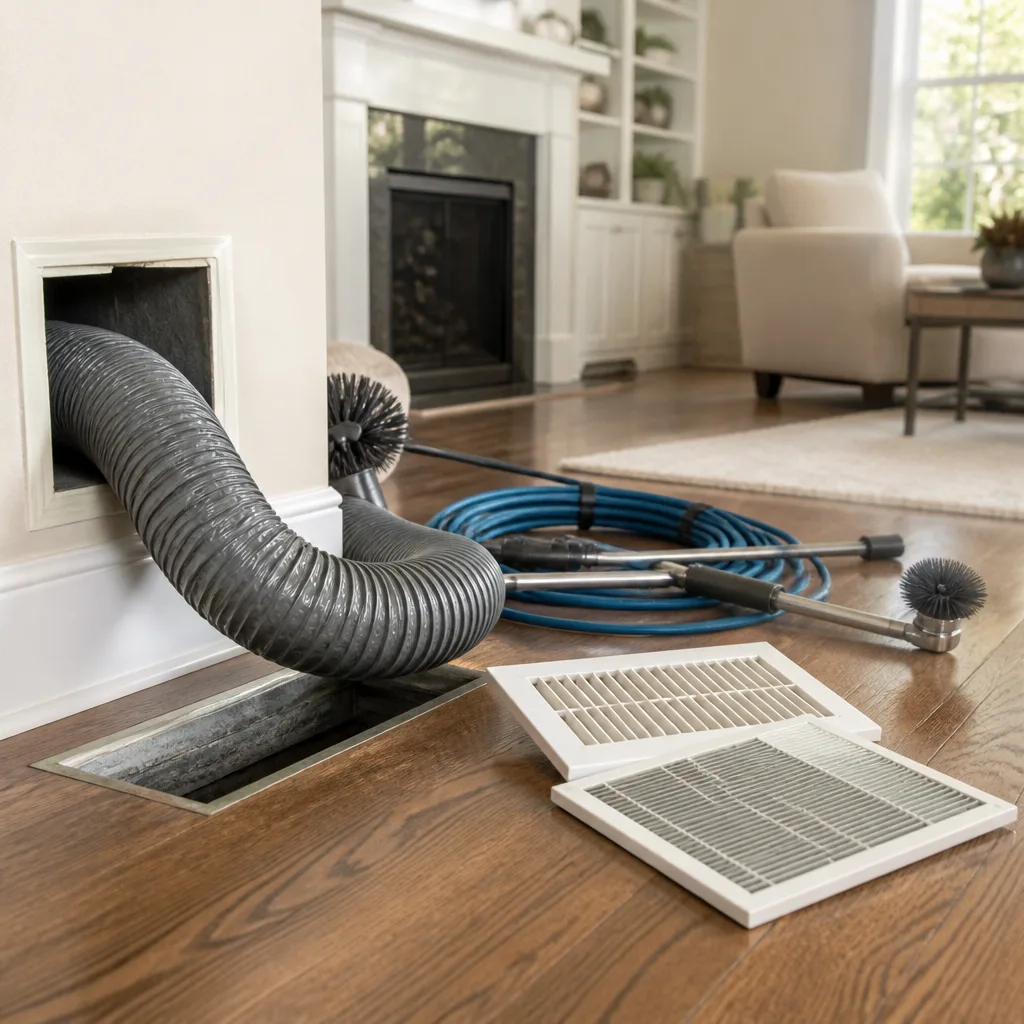 Whole-home duct cleaning
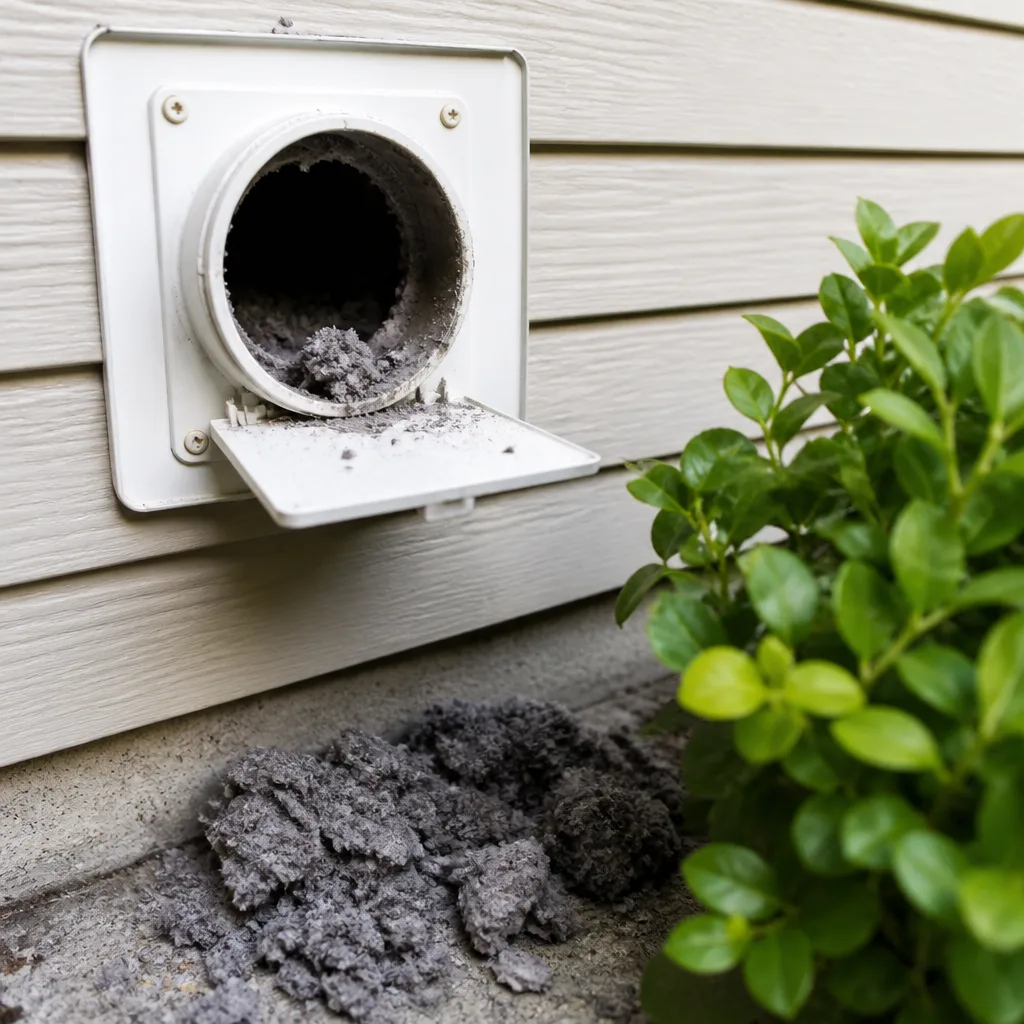 Dryer vent cleaning
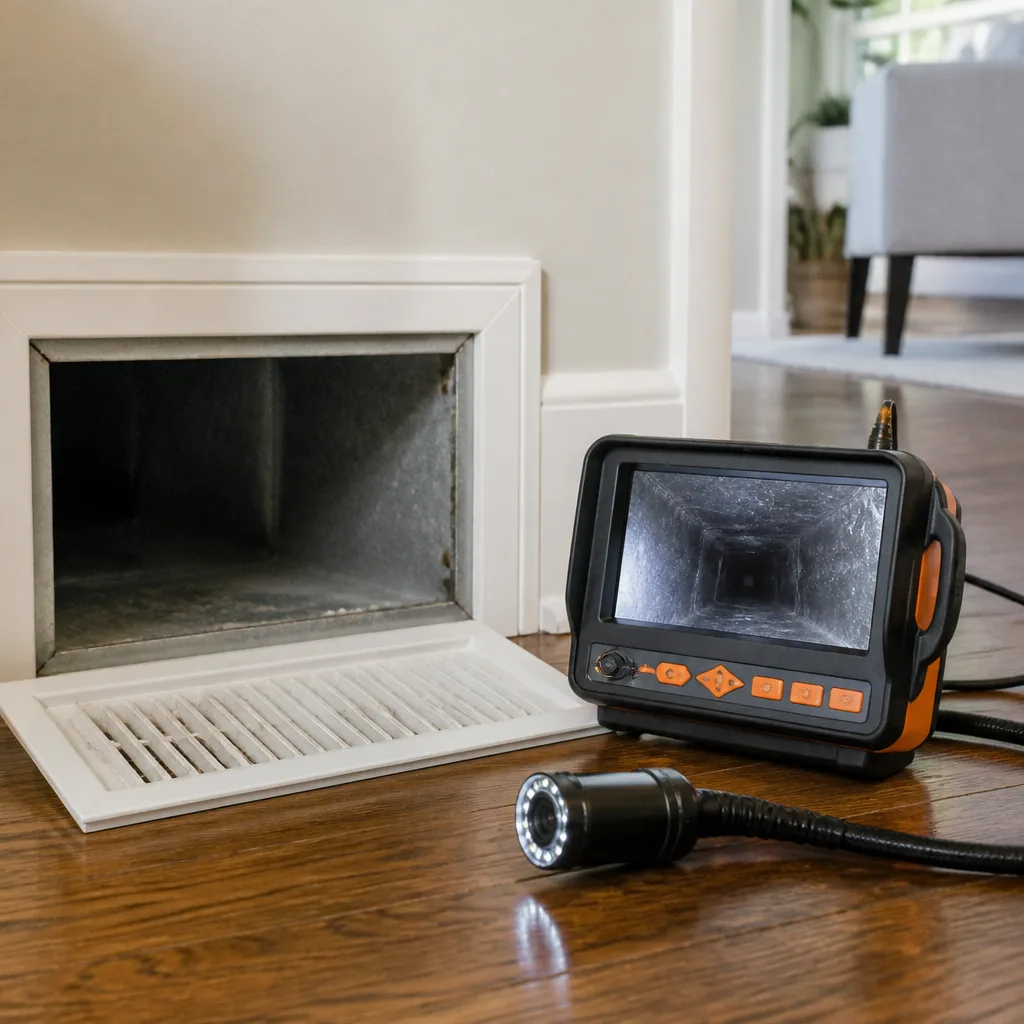 Camera inspection
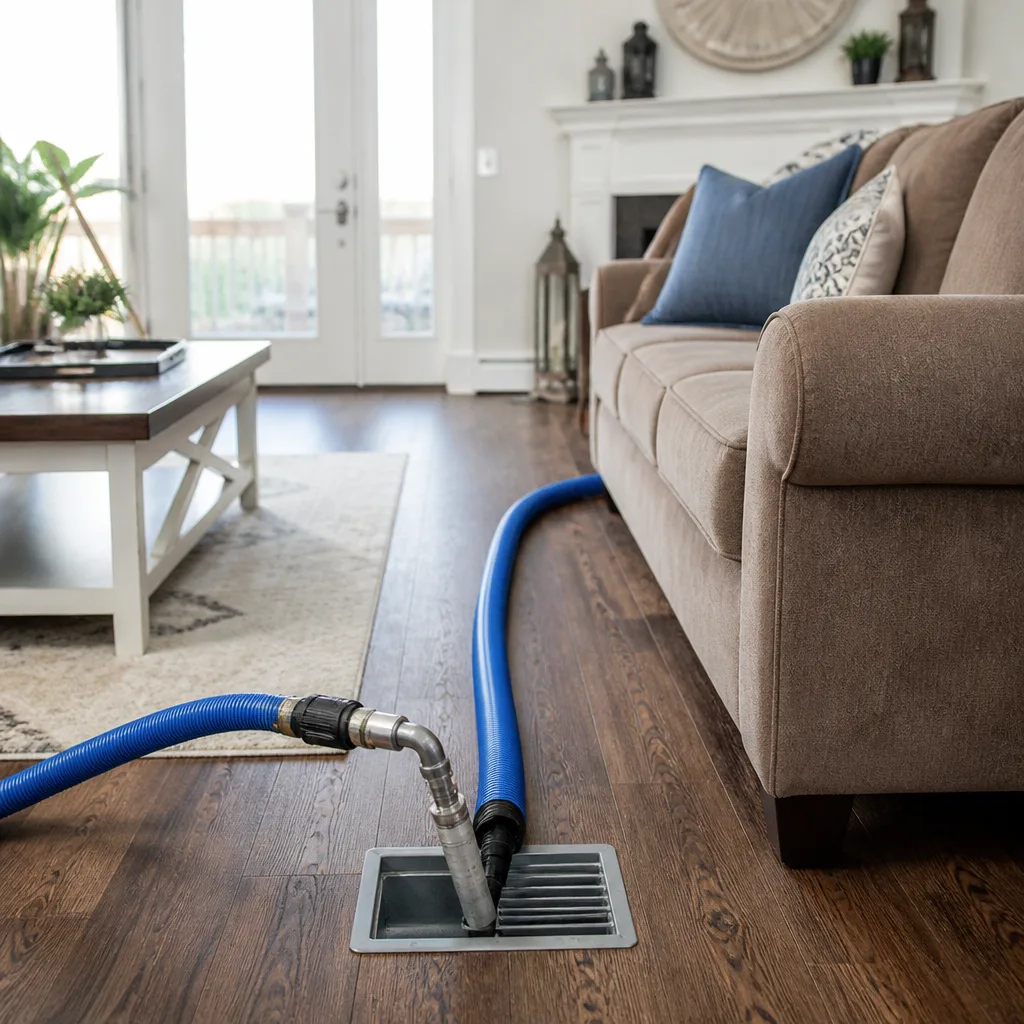 Sanitizing & deodorizing
Whole-system duct and dryer vent check with before-and-after photos - you see exactly what came out of your vents
That "$99 whole-house special" is a bait ad - the real number appears once they are in your hallway, or the "clean" is a shop-vac at the register. We photograph the inside of your ducts before and after instead.
Air Duct Cleaning Permits, Codes & Inspections in Memorial, TX: What You Need to Know
Here’s the part most homeowners miss: cleaning a duct system requires no permit in Texas, but the work that often follows a cleaning can. A contractor opens up a Memorial return chase, finds a collapsed section of flex duct, and splices it back together on the spot without a permit. That single repair can shift the job from routine maintenance into regulated mechanical alteration, and if something fails downstream, the paper trail may not support your insurance claim. This guide walks through where cleaning ends and permitted work begins, how Harris County Public Health treats mold remediation discoveries, what Texas Insurance Code Section 541 gives you when a cleaning job goes wrong, and exactly what to ask for in writing before anyone touches your ductwork.
Quick Answer
No permit is required to clean ductwork in Memorial, TX. Duct cleaning is classified as maintenance, not construction or mechanical alteration. Permits become necessary the moment the work crosses into duct repair that changes system configuration, replacing or adding duct runs, or remediation work that falls under Harris County Public Health’s mold protocol. Sanitizing with an EPA-registered biocide is legal without a permit; applying encapsulation or lining products may require inspection before the work is closed out.
Styles & brands we work with
- Whole-home duct cleaning
- Dryer vent cleaning
- Camera inspection
- Sanitizing & deodorizing
Table of Contents
- When Does Duct Work Require a Permit in Memorial?
- Houston’s Adopted IMC and the Mechanical Alteration Line
- Mold Discoveries and Harris County Public Health’s Remediation Protocol
- Texas Insurance Code Section 541: When Cleaning Causes Damage
- Sanitizing With EPA-Registered Biocides vs. Duct Lining
- What to Request in Writing Before Work Begins
- What a Post-Cleaning Inspection Actually Covers
- Common Mistakes to Avoid
When Does Duct Work Require a Permit in Memorial?
Caretaking ductwork is maintenance. Changing it is construction. The dividing line in Memorial is whether the work alters the configuration of the mechanical system versus restoring it to its original design. Cleaning the interior of ducts, replacing filters, and resealing existing joints all stay on the maintenance side of that line. Adding a new run, replacing a duct section with a different size or routing, or modifying how supply and return air balance across rooms crosses into mechanical alteration.
Here’s how the distinction breaks down in practice:
- No permit typically needed: Duct cleaning, filter changes, register and grille replacement with the same dimensions, mastic sealing of accessible joints, sanitizing with an EPA-registered biocide.
- Permit generally required: Adding or relocating a supply or return, replacing a major run with changed duct dimensions, cutting into a chase to access or reroute ductwork, adding a zone damper system, replacing a section of duct that changes airflow balance.
- Judgment call: Replacing a collapsed flex duct section with identical material and routing. This is where most problems start, because the contractor can plausibly call it “repair” while the inspector may read it as alteration.
In our experience across Memorial jobs, the collapsed-flex-duct situation is the one that catches homeowners off guard. A cleaning crew opens a return chase off a Memorial-area home, finds a crushed run, and the natural instinct is to fix it. If that repair alters the layout, get it permitted. If the homeowner asks whether they need a permit and the contractor says “no, we’ll just handle it,” that’s the moment to slow down. Call (833) 468-3620 if you want to talk through what we’re seeing before anyone opens a chase.
Houston’s Adopted IMC and the Mechanical Alteration Line
Memorial sits in unincorporated Harris County for some properties and within City of Houston limits for others, and which jurisdiction governs your address determines which code version applies to your duct repair. Houston has adopted the International Mechanical Code, and the IMC’s definition of “mechanical alteration” is the operative language. Under the IMC, alteration is any change to a mechanical system that affects the system’s configuration, capacity, or routing. Cleaning is not alteration because it restores the system to design condition; it does not change it.
The practical test is simple:
- Does the proposed work change how air moves through the system (routing, dimensions, supply/return count, damper placement)? If yes, expect a permit.
- Does the work restore an existing duct to its original configuration (patch, splice with identical material, reseal)? That’s typically maintenance.
- Does the work cross into the building envelope (cutting into walls, ceilings, or chases to access duct runs)? That usually needs a permit regardless, because it’s a building alteration.
- Does the work involve a gas appliance flue or combustion air path? Stop. That’s a mechanical permit and a licensed contractor, always.
Memorial’s housing stock runs toward mid-century ranch homes and 1970s-80s two-stories, many with ductwork hidden in soffits, chases, and second-floor plenum spaces. Access is difficult, and contractors sometimes take shortcuts that trigger the permit question without the homeowner realizing it. If a contractor proposes open a wall or drop a ceiling chase to reach a duct run, treat that as construction work and confirm the permit path before sign-off.
For the cleaning side of the job before anything gets opened, our air duct cleaning service is where the inspection typically starts.
Mold Discoveries and Harris County Public Health’s Remediation Protocol
Mold found inside a duct system changes the rules. Harris County Public Health’s indoor air quality and mold remediation guidance distinguishes between a small area of surface contamination that a duct cleaning service can treat and a larger or recurring mold problem that requires a licensed mold remediation contractor under a written protocol. The protocol typically includes containment, negative air pressure during remediation, removal of porous materials, and post-remediation verification testing by an independent party. Cleaning alone does not satisfy it.
The thresholds matter for Memorial homeowners because the housing stock fights humidity. Our summers hold moisture in the air, and any duct system with condensation issues or a plenum sitting above unconditioned attic space is a candidate for microbial growth. When a cleaning crew opens a duct and finds visible growth beyond a small area, the sequence should be:
- Stop the cleaning at that point and document with photographs and moisture readings.
- Determine whether the growth is localized surface contamination or a broader condition tied to a moisture source (a duct leak, a coil issue, an unconditioned chase).
- If it’s broader, engage a licensed mold remediation contractor under a written protocol, with containment and negative pressure.
- Post-remediation verification testing before the system goes back into service.
- Repair the moisture source before cleaning and reassembly.
Sanitizing after remediation is a separate step, and that’s where the equipment choice matters. Abatement Technologies air filtration equipment is the class of equipment used in remediation settings, and it’s what we deploy when a sanitizing job needs negative pressure and HEPA filtration alongside the treatment. For a lighter spot treatment without a broader remediation finding, a Rotobrush or Nikro system with a documented biocide application can be in scope. For whole-system sanitizing on Memorial properties where contamination is found in multiple runs, the remediation path is the correct one.
Texas Insurance Code Section 541: When Cleaning Causes Damage
Section 541 of the Texas Insurance Code governs unfair claim settlement practices by insurers, not contractor liability. But it matters to a Memorial homeowner in a specific way: if a cleaning job damages your duct system and you file a claim, the insurer cannot unreasonably delay or deny it, and Section 541 gives you the hook for bad-faith handling if they do. The catch is documentation. The insurer’s obligation to handle the claim fairly runs on evidence, and evidence is what most homeowners don’t have before a cleaning crew starts.
What you need to have in hand before work begins:
- Before-and-after photographs of your ducts from the contractor’s inspection camera, date-stamped. Not stock photos of clean ducts; your ducts.
- A written scope of work describing exactly what will be cleaned, what will be treated, and what will be repaired. Vague scopes are where disputes start.
- Proof of the contractor’s general liability insurance with a certificate listing your property address. If the contractor won’t provide it, that’s a red flag.
- Confirmation of who is doing the work. The company that quotes the job may subcontract to a different outfit; you want to know whose hands are actually in your ducts and whose insurance covers them.
- A written statement of the sanitizing products used (EPA registration numbers where applicable) and any encapsulation or lining products applied.
Section 541 damage disputes are rarer than the quieter problem: a small unpaid cleanup that never gets filed because there’s no documented scope. Confirming the scope in writing, with before-and-after photos in your own records, is the cheapest insurance you’ll ever buy on the job. Estimates are free; call (833) 468-3620 to talk through what a documented scope looks like for your system.
Sanitizing With EPA-Registered Biocides vs. Duct Lining
Sanitizing and lining are two different services with two different regulatory footprints, and contractors routinely blur them. Sanitizing means applying an EPA-registered biocide to the interior duct surface to reduce microbial populations. It’s a legal service, requires no permit, and is a routine part of a thorough cleaning when contamination is found. Lining means applying an encapsulation product to the interior duct surface to seal it, restore it, or change its permeability. Lining is a mechanical work product, not a maintenance task, and it may be subject to inspection or permit requirements depending on the product, the duct material, and the jurisdiction.
The distinction matters in Memorial because:
- Some encapsulation products change the duct’s fire rating or smoke-developed index, and applying them without a permit or inspection may not meet the adopted code.
- Lining products are often sold as “the permanent fix” for a dirty duct system, which is overreach. Many systems don’t need lining; they need cleaning, sealing, and moisture control.
- A liner that’s applied without documented substrate preparation can trap moisture and microbial growth, which undoes the cleaning.
If a contractor proposes lining your ductwork in Memorial, ask three questions: what product is being applied, what’s the product’s fire rating and smoke-developed index, and will the work be inspected. If none of those answers exist, the answer is no. Sanitizing with a documented EPA-registered biocide and then addressing the moisture source is the correct approach in most cases; lining is a narrower tool for narrow conditions. We use Abatement Technologies and Nikro equipment in our sanitizing work because the extraction and filtration matter as much as the product.
What to Request in Writing Before Work Begins
Getting the paperwork right before the first technician arrives at your Memorial home is the single most reliable way to prevent a gap in your homeowner’s insurance coverage. The list below is what we’d ask for if we were the customer rather than the company doing the work. Everything on it should be in writing, dated, and tied to your specific address and system.
- Written scope of work. Every duct run to be cleaned, every product to be applied (with EPA registration numbers for biocides), every repair to be made, and every area explicitly out of scope.
- Proof of general liability insurance. A certificate showing current coverage, naming your property address. Ask for the certificate directly, not a screenshot.
- Identification of the technician and employer. Name of the company performing the work, and confirmation that they are the ones doing it (not a subcontractor arrangement).
- Before-and-after photo commitment. Confirmation in writing that pre- and post-cleaning photos of your ducts will be delivered to you, not to a gallery of stock images.
- Equipment disclosure. Which cleaning system will be used. Rotobrush and Nikro systems are the professional-grade standard; consumer shop-vac systems are not.
- Sanitizing product disclosure. EPA registration number, application method, and re-entry time for any biocide or encapsulation product.
- Post-cleaning verification. What documentation you’ll receive confirming the work was done, and whether a post-cleaning inspection is part of the scope.
That’s the difference between maintenance and construction on your duct system: it comes down to paperwork and process, and it doesn’t cost anything extra to ask. For a documented, single-trade approach, you can schedule HVAC cleaning alongside your duct work so the coil, plenum, and cabinet meet the same standard.
What a Post-Cleaning Inspection Actually Covers
A post-cleaning inspection is not a municipal code inspection unless the work was permitted and required one. Most duct cleaning jobs in Memorial skip the municipal inspection entirely because no permit was pulled. What a competent post-cleaning inspection covers is the verification that the system is back to design condition: that the ducts are clean, that any repairs made during the visit are sound, and that airflow is restored.
A thorough walkthrough from a single-trade specialist includes:
- Visual verification of supply, return, and main trunk runs via inspection camera where accessible.
- Confirmation that register and grille seals are intact after cleaning.
- Airflow check at registers to confirm the system is balanced after any duct repair.
- Confirmation of the sanitizing application when performed, with product record.
- Delivered before-and-after photographs keyed to the scope of work.
- Written summary noting any conditions found that fall outside the cleaning scope (for example, remediation-worthy microbial growth, duct sections requiring permitted repair, or duct sealing opportunities).
When a duct repair was part of the scope and a permit was pulled, the municipal inspection is a separate step, usually by a City of Houston or Harris County mechanical inspector depending on the address. That inspection confirms the repair meets the IMC; it does not confirm the cleaning was done well. Both matter, and they’re not the same. Duct repair and sealing under one scope is what our duct cleaning and sealing work looks like when a Memorial home needs both.
Common Mistakes to Avoid
- Assuming “no permit needed” covers all repair. Cleaning is maintenance; adding or rerouting duct is mechanical alteration. Confirm the scope in writing and ask the contractor which side of the line they’re on.
- Letting a cleaning crew repair a collapsed flex duct without a paper trail. If the repair changes routing, dimensions, or supply/return count, ask for the permit path before the truck pulls away.
- Accepting stock photos as before-and-after proof. Request photos of your own ductwork, taken at the time of the job, tied to the scope of work.
- Treating a sanitizing spray as remediation. If the growth is broader than small surface contamination, Harris County Public Health’s protocol calls for a licensed remediation contractor, containment, and verification testing. Sanitizing after remediation is a separate step.
- Approving encapsulation or lining products without fire-rating disclosure. Lining is a mechanical work product with code implications. Ask for the product data sheet and the fire rating before you sign.
- Not obtaining proof of insurance before work begins. Your homeowner’s policy responds to damage the contractor causes only if the contractor’s liability covers it. Ask for the certificate, not a verbal assurance.
- Ignoring moisture sources in Memorial homes. Cleaning a duct that sits in unconditioned attic space without addressing duct leakage or condensation issues means the growth returns. Fix the source before the cleaning is finished.
See the difference
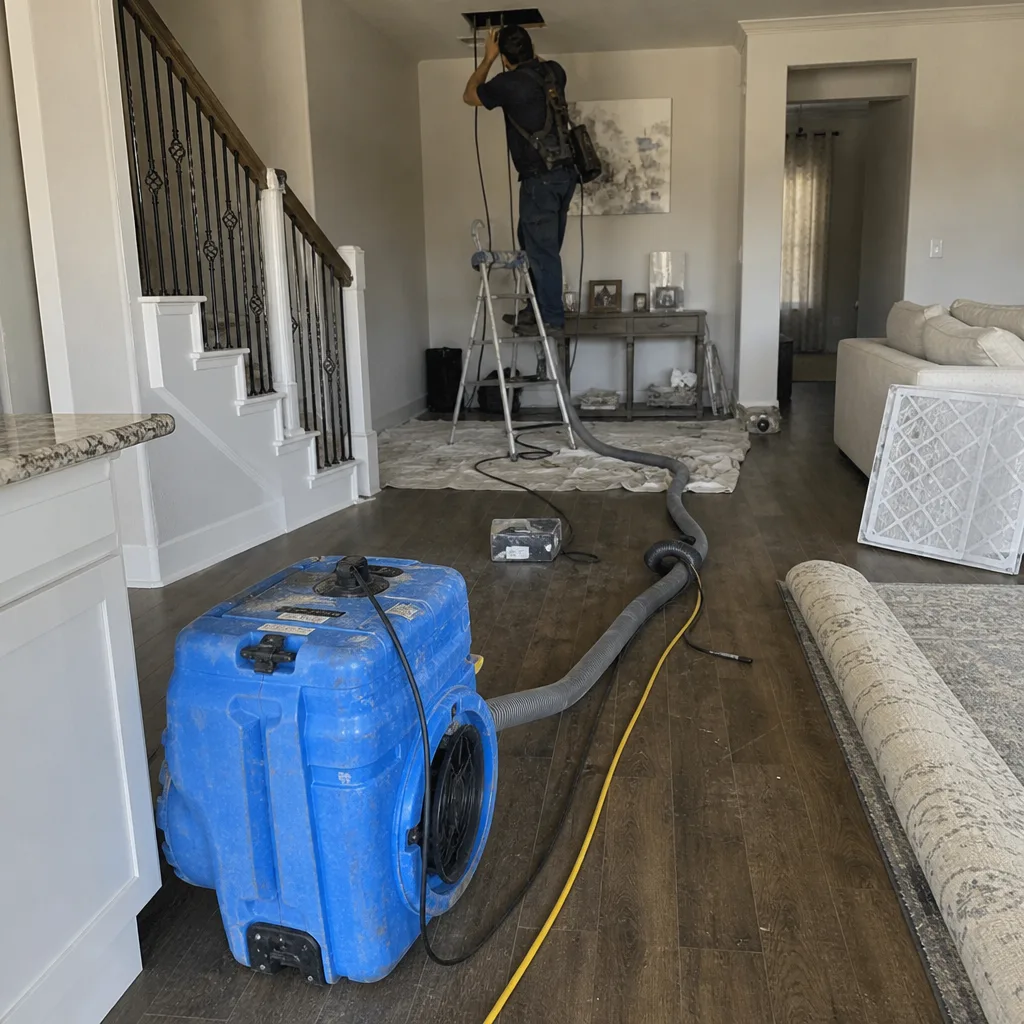 Before
 After
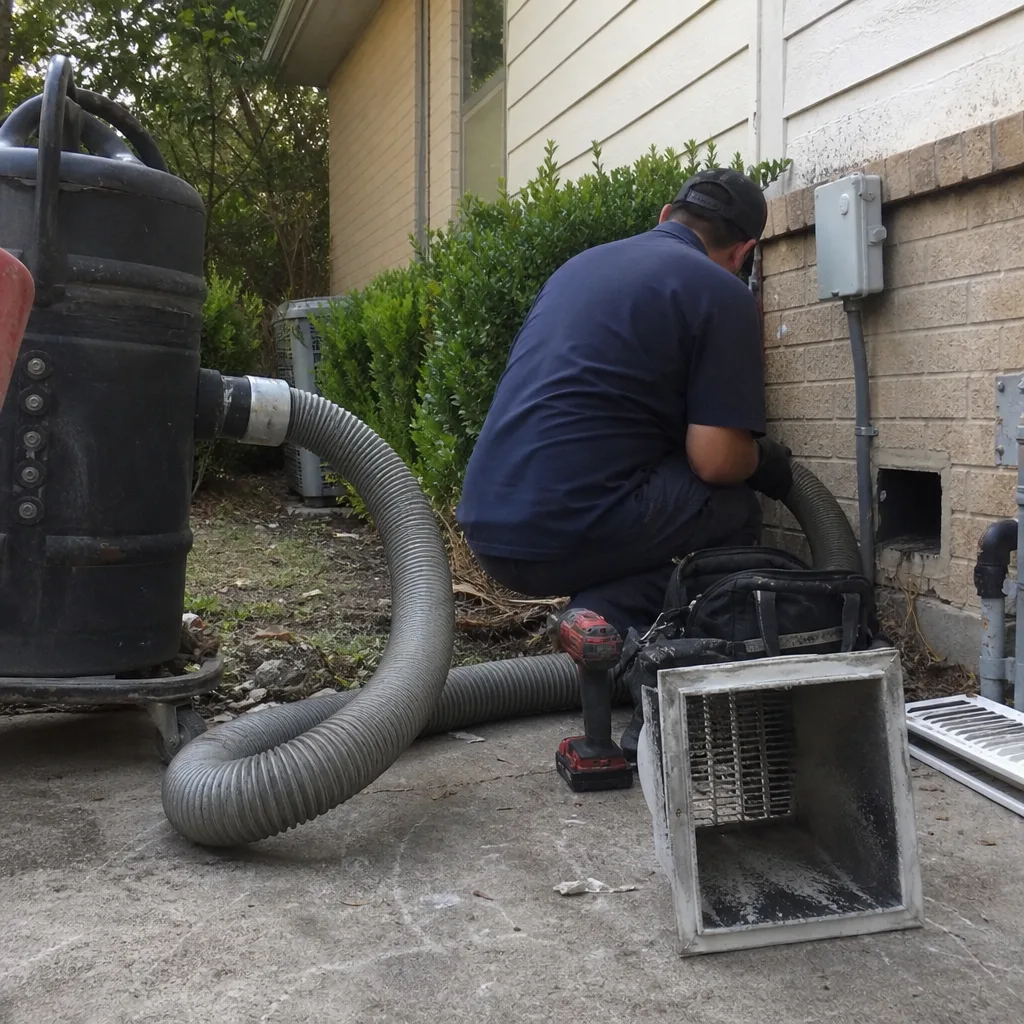 Before
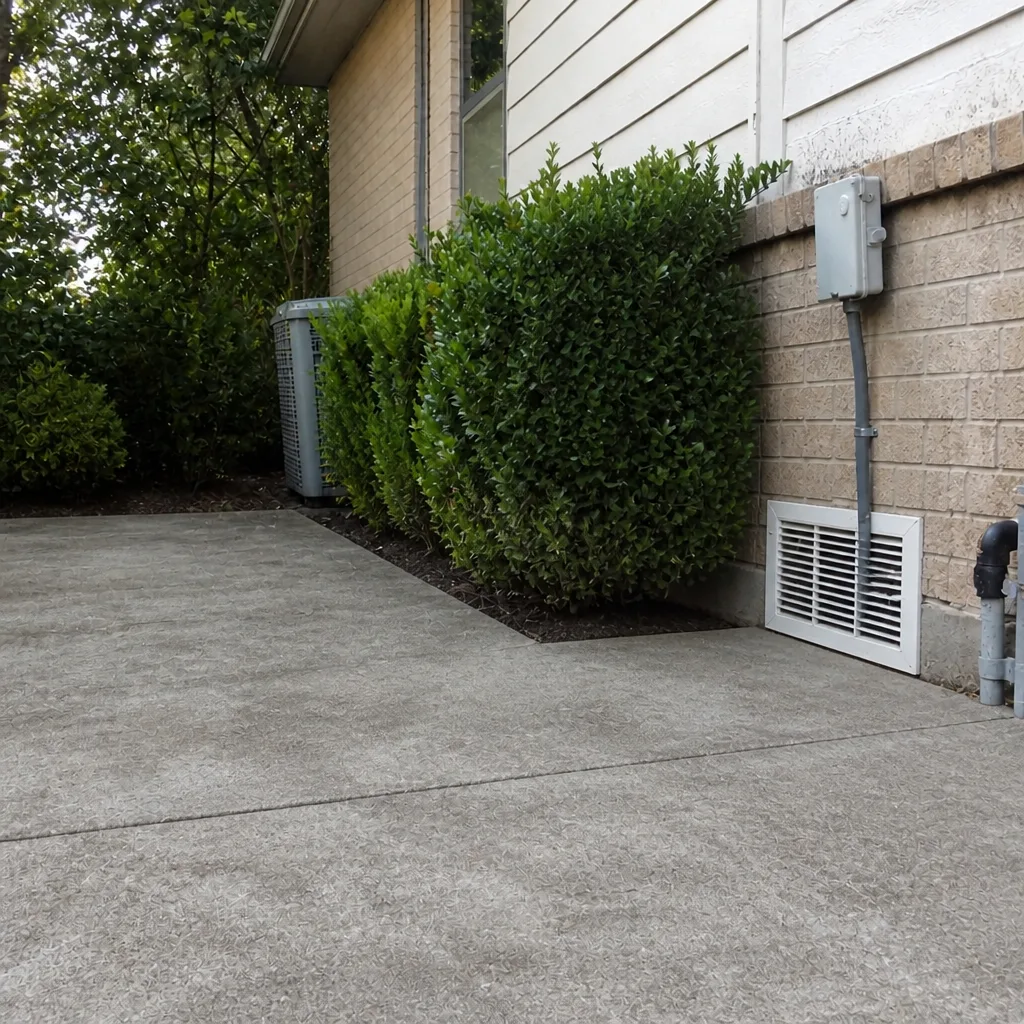 After
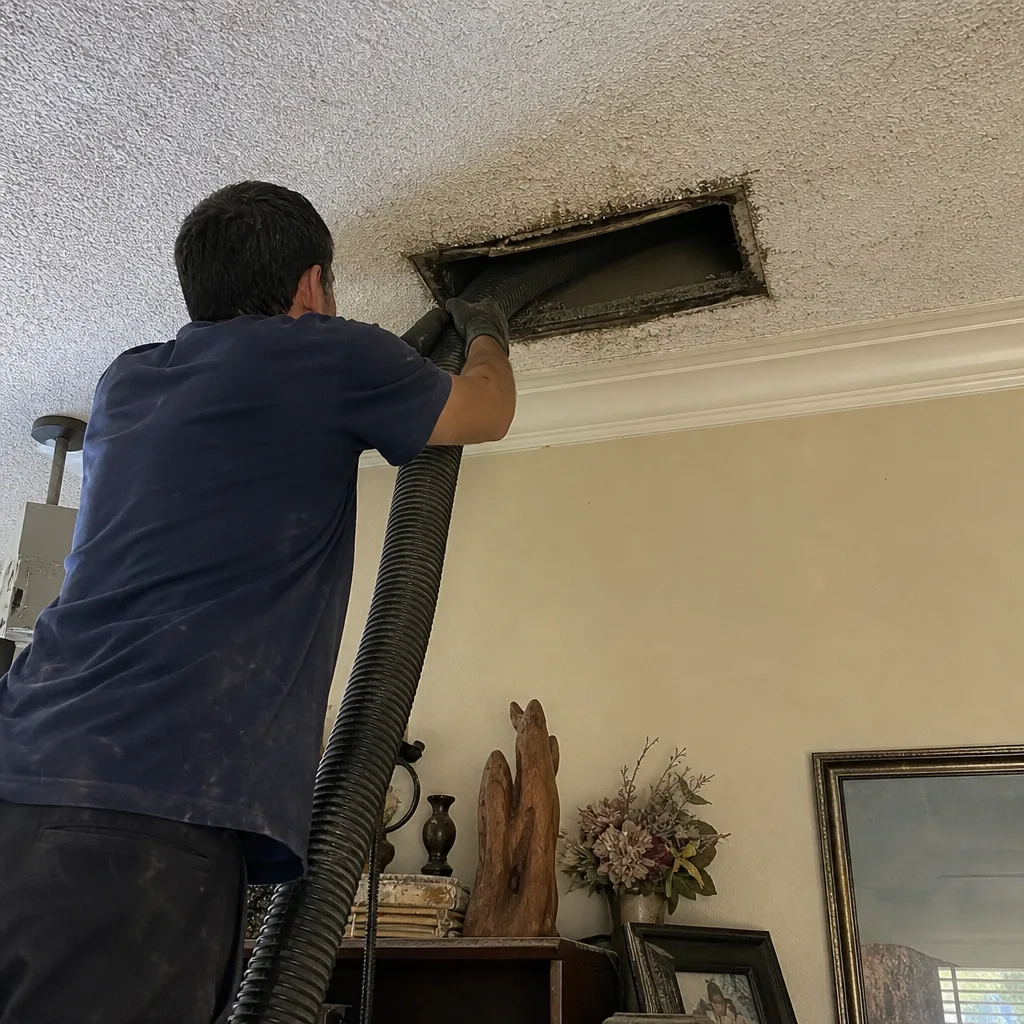 Before
 After
When to Call a Professional
Call a professional when a cleaning crew finds something they can’t legally fix on the same scope. Visible microbial growth beyond small surface contamination, a duct repair that changes system configuration, condensation inside ductwork tied to a moisture source, a collapsed flex run in a hidden chase, or damage caused by a prior contractor’s work all warrant professional eyes on the scope before anything moves forward. Air Duct Cleaning Memorial offers free estimates in Memorial, TX – call (833) 468-3620. Our technicians have up to 13 years of experience and work exclusively on duct and air-quality systems using Rotobrush and Nikro equipment; we don’t take on plumbing, roofing, or general HVAC repair work. If the project turns out to need licensed mold remediation, we’ll tell you that plainly and point you at the right path rather than sell you a sanitizing spray that doesn’t fit. We answer 24/7. Fast dispatch from 7am to 7pm, Sunday through Friday.
Frequently Asked Questions
No. Air duct cleaning is classified as routine maintenance under Texas and Houston-adopted codes, and no permit is required to clean a duct system. A permit becomes necessary when the work crosses into mechanical alteration, such as adding or rerouting duct runs, or when it triggers Harris County Public Health’s mold remediation protocol. For a clearer read on what your specific scope requires, call (833) 468-3620 – estimates are free.
Yes, applying an EPA-registered biocide to duct surfaces is a legal service that requires no permit, and it’s a routine part of a thorough cleaning when contamination is found. Encapsulation and duct lining products are a different category; they change the duct surface and may require inspection depending on the product and jurisdiction. Ask for the product’s fire rating and code documentation before approving liner work.
It depends on how much growth is found and whether a moisture source is driving it. Small areas of surface contamination can be treated as part of an in-scope cleaning with an EPA-registered biocide and documented before-and-after photos. Broader or recurring growth triggers Harris County Public Health’s remediation protocol, which means a licensed mold remediation contractor, containment with negative air pressure, and post-remediation verification testing. The correct sequence is to stop cleaning, document with photographs and moisture readings, remediate, verify, then repair the moisture source.
Section 541 governs how insurers handle claims, not contractor liability directly. If a cleaning job damages your system and you file a claim, the insurer must handle the claim fairly, but your documentation determines how smoothly that goes. Before work begins, get a written scope of work, proof of the contractor’s general liability insurance, and confirmation that you’ll receive before-and-after photos of your own ducts. With that in hand, a claim moves; without it, you’re relying on the contractor’s word.
Ask one question of the contractor: does this work change the configuration, routing, or capacity of the system, or does it restore it to its original design? Restoration (cleaning, sealing existing joints, patching with identical material) is maintenance. Change (adding runs, altering dimensions, cutting into walls or chases to access duct) is alteration and requires a permit. If the contractor can’t explain which side of the line their scope falls on, get a second opinion before the work starts. Call (833) 468-3620 for a free scope review – we’re happy to talk through what your Memorial home actually needs.
Ask for a written scope of work, a certificate of general liability insurance naming your property address, confirmation of who is performing the work (not a subcontractor arrangement), a written promise of before-and-after photographs of your own ducts, disclosure of the cleaning equipment being used (Rotobrush and Nikro are the professional standard; shop-vacs are not), and disclosure of any sanitizing or encapsulation products with EPA registration numbers. Those documents are your protection if anything goes wrong downstream.
The Bottom Line
Air duct cleaning in Memorial requires no permit, but the work adjacent to it does. The dividing line is mechanical alteration: cleaning, resealing, and sanitizing stay on the maintenance side; adding or rerouting duct, or cutting into chases to access ductwork, requires a permit under Houston’s adopted IMC. Mold findings trigger Harris County Public Health’s remediation protocol when they exceed small surface contamination, which means a licensed remediation contractor rather than a cleaning scope. Sanitizing with an EPA-registered biocide is legal without a permit; encapsulation and lining products are a different category with inspection implications. Texas Insurance Code Section 541 protects your insurer’s obligation to handle a claim fairly, but only if you have documentation before work begins. Get the scope, insurance, and photo commitment in writing; repair moisture sources before reassembly; and ask the permit question explicitly. That’s the entire playbook.
Air Duct Cleaning Memorial is a single-trade specialist working exclusively on duct, air-quality, and dryer-vent systems, using Rotobrush and Nikro equipment with Abatement Technologies filtration for sanitizing work, and Honeywell and Aprilaire product familiarity for post-cleaning filtration upgrades. Single-trade scope means one visit handles cleaning, sanitizing, repair, and sealing. Our dryer vent cleaning service is part of the same visit for homeowners who want the fire-safety side handled alongside the air-side. If you’re ready to move forward, call (833) 468-3620 for a free estimate. We answer 24/7. Fast dispatch from 7am to 7pm, Sunday through Friday. Estimates are free and every job is priced per system with a written estimate before work begins. For a broader view of our Air Duct Cleaning Memorial scope, or to ask about duct repair and sealing under one call, we’re here to talk.
Written by the team at Air Duct Cleaning Memorial.